![PortStrategy[GreenPort]](https://www.portstrategy.com/wp-content/uploads/2026/09/PortStrategyGreenPort.svg)


Progress and prospects
Neil Davidson and Erik Wehl, of the WAPPP* Port Chapter, take a searching look at the progress to date, challenges and prospects for port master concessions
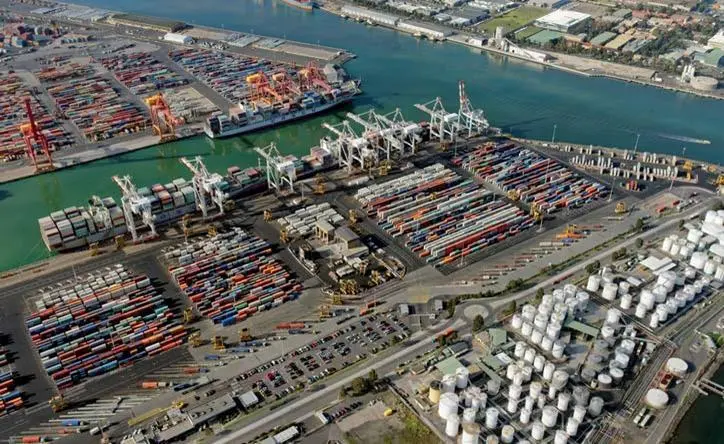
The trend in port concessions has largely been in favour of growing private sector roles in cargo handling operations and wider scope in investments under the tried and tested landlord port authority structure. Essentially, the public landlord port authority focuses on its long-term duty as guardian of the port, and private terminal operators focus on their raison d’etre – profits.
More recently though, there has been a growing number of instances where governments, mainly in developed nations, have chosen to also grant concessions to the private sector for the role of the landlord port authority, so-called port master concessions.
Table 1 (below) features some examples from Australia, Greece and Nigeria of where port master concessions have been granted.
The process of granting port master concessions continues in various places in the world. Earlier in 2022, the Brazilian government held an auction for the concession of Espírito Santo state port authority Codesa and had indicated an intention to also sell a 35-year concession for the Santos port company, landlord of the country’s biggest port. With, however, a new federal government recently installed this latter project is now understood to be under review.
COMPLEX ISSUES
A port master concession policy can be even more challenging and complex compared with “normal” port concessions as it raises a number of key issues:
- Legislation/State Development Policy: The legislative framework under which the master concession functions must be considered. Is there a requirement for an overall national policy for the development of ports in national jurisdiction?
- PortGovernance/RegulatoryOversight: The question arises of how to reconcile the duty/guardianship priorities of a public port authority with the natural profit maximising motive of a private master concession holder. Use of joint ventures can be involved but this introduces additional challenges. Granting a master concession means that the (privately-owned) landlord port authority concessionaire still has to carry out its duties in terms of safeguarding the port and its users. However, given the changed nature of the landlord company, some aspects of port regulation such as security and environmental matters might require involvement of federal or nation-wide regulators – another layer of oversight. Also, what can be done if the port master concession holder does not perform to required levels?
- Strategic/PoliticalIssues: The question of foreign ownership/control of strategic assets arises, as do national security objectives. There is also the likely change of ultimate ownership of the master concession holder during the lease period which can be very long.
- Financing: Financing of major infrastructure projects at ports is often shared between state and local government/ port authorities. Are commitments from a privatised landlord port authority required? How to reconcile the differing expectations of the level of return on investment between the public and private sectors?
- Length of lease – Given that one of the primary roles of a landlord port authority is investment in long-term infrastructure such as quay walls, a long lease period is usually called for (in Australia 99 years was used in some cases). However, circumstances can change radically over such long periods and some parties feel they are too long.
- ClawbackProvisions: There needs to be protection built into the concession so that if the master concessionaire sells off certain assets, the monies can be clawed back by the government. However, defining which assets should be subject to this provision can be complex.
- Pricing/ConservancyTariffs/RentforPortTenants: Pricing powers of master concession holders is a thorny issue, given that their primary aim will be to maximise profits (the same as the private terminal operators in the port). The question of whether to regulate or not arises. If so, how and what? Master concessions often result in the creation of local monopolies. There is also possible vertical integration across the supply chain by the master concession holder.
- IncentivetoInvest: Linked to both the length of the master lease and the pricing controls, there is the need to ensure that the master concessionaire will invest in additional capacity at the port as and when required. A private company may well take a different view to a publicly- owned one.
- Competition: Given the very long length of master concessions there may well be new competition and likely entirely new port entrants to the market. So even if a master concession has a natural monopoly to start with, this may not be the case decades down the line. Issues such as regulation and oversight may well need to be adaptable therefore.
- TerminalOperators – Relationships with existing terminal operators in the port (who may be competitors of the master concession holder) have to be considered.
ONE STEP FURTHER
It is interesting to note finally that the UK went one step further in the 1980s and 1990s and sold the freehold of the port authorities that were privatised, rather than going for a long-term lease. Perhaps surprisingly, there have been no major issues with this approach over the years, although none of the remaining UK public ports have been sold off since. Critics argue that all of the benefits of these ports accrue to private shareholders rather than the public sector while proponents point to greater efficiency and more streamlined and business-like management.
While these port master concessions might work in the developed world (e.g. Australia, Greece, UK), can these same mechanisms also be similarly effective in the less developed world?
| Country | Notes |
|---|---|
|
Australia |
State governments transferred major port assets (excluding port land) to port corporations (typically holding 99-year leases) and then sold them to private winning bidders. |
|
|
Private ownership of these corporations has resulted in a degree of foreign ownership of Australian ports, usually in the form of financial investors. |
|
|
The regulatory function following the privatisation is the public sector’s responsibility, for example price regulation where deemed necessary. |
|
|
A number of major Australian port concessions have been sold via this master concession process over the last 25 years including Geelong, Adelaide, Brisbane, Sydney(Botany), Melbourne and Newcastle, with the rate accelerating in recent years. |
|
Greece |
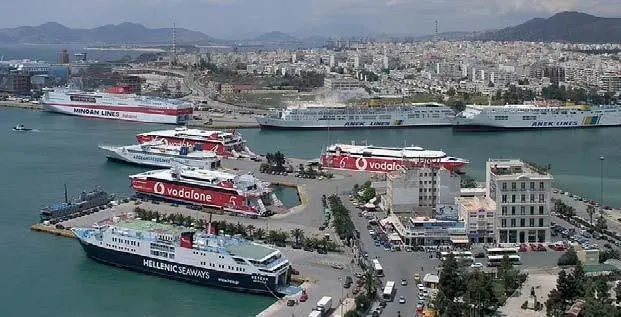
In 2002, the Greek government granted a 40-year concession to OLPSA, the Piraeus Port Authority company. |
|
|
In 2016, Chinese owned Cosco Shipping Ports was allowed to acquire a 51% stake in OLPSA, later increased to 67%. |
|
|
Cosco had already obtained a long-term concession for the port’s two main container terminals in 2009, and so now is both landlord and tenant as far as container operations are concerned. |
|
|
The control of the port authority in particular by Chinese interests has been controversial. |
|
|
In 2017, the Greek government sold a 67% stake in Thessaloniki Port Company(with a 35-year concession)to a consortium headed by French liner company CMA CGM along with financial investors. |
|
Nigeria |
A 45-year master concession for a greenfield multi-purpose BOOT portdevelopment at Lekki has been granted to a consortium majority owned by Chinese interests but with minority stakes held by local private interests, the state government and the Nigerian Ports Authority. |
|
|
This landlord company has then granted concessions for individual terminals within the port, for example a container terminal to be operated by CMA CGM. |
Based in Geneva, WAPPP* is a global non-governmental organisationthat promotes best practices in PPP to align with UN SDGs.
Related Articles
 EQUIPMENT
 OPERATIONS
 OPERATIONS