![PortStrategy[GreenPort]](https://www.portstrategy.com/wp-content/uploads/2026/09/PortStrategyGreenPort.svg)


Solent Freeport builds its trade momentum
The UK’s Solent Freeport has outlined strong early progress, with hundreds of millions of pounds in investment delivered and major freeport trade opportunities emerging across its key port locations.
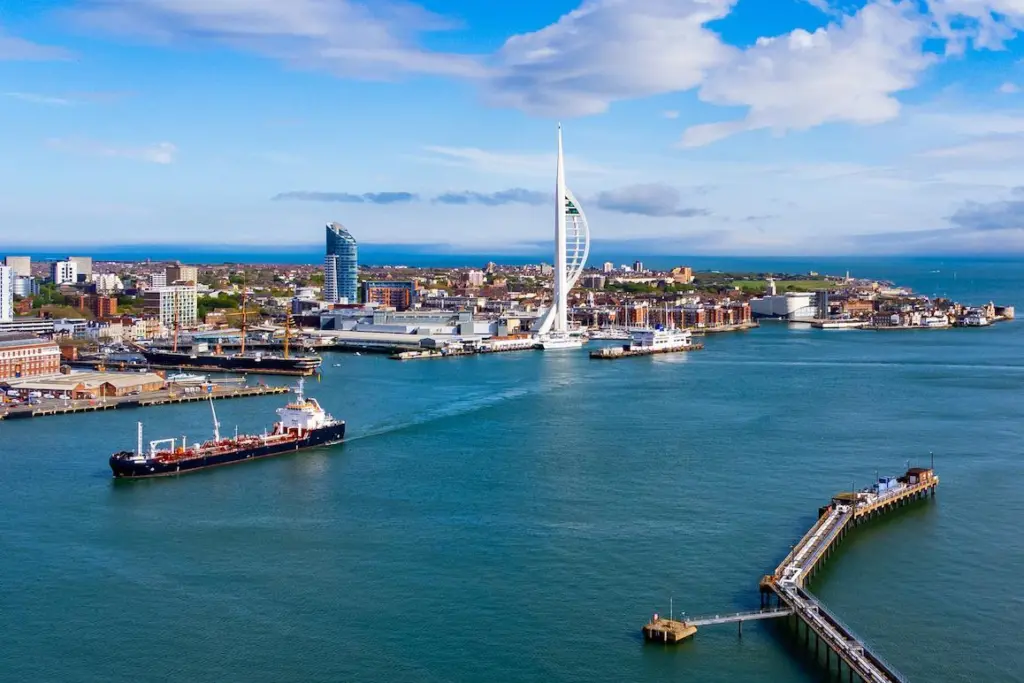
Its newly published Annual Report 2025/26 and an independent Interim Programme Review show the Freeport has secured almost GB£640 million of investment during the first three-and-a-half years of its 25-year programme.
The reports highlight GB£1.75 billion of international trade opportunities already unlocked, alongside a future pipeline including GB£850 million of private investment, more than GB£29 billion in trade opportunities and over 4,750 planned direct jobs.
“These reports provide a clear and evidence-based picture of the progress Solent Freeport is making,” said Brian Johnson, chair of Solent Freeport.
“We are still in the early years of a 25-year programme, but the foundations are now firmly in place, with significant investment delivered, major infrastructure projects advancing and a strong pipeline of future opportunity.”
Infrastructure focus
For the commercial ports sector, the reports point to Portsmouth International Port and Solent Gateway as examples of how targeted port infrastructure investment can create long-term trade opportunity.
Portsmouth International Port has completed major seed capital-backed infrastructure works, including the opening of a new customs zone, strengthening its ability to support importers, exporters and value-added logistics operations.
Meanwhile, Solent Gateway is expanding Marchwood Port into a 64-hectare port-centric logistics hub with multimodal sea, rail and road connectivity, new cargo handling capacity and flexible storage designed to attract businesses seeking Freeport tax and customs benefits.
The development aims to increase capacity for global cargoes while supporting automotive, project cargo and rail freight growth.
Together, the projects demonstrate how the Freeport model can combine customs incentives with strategic infrastructure investment to stimulate international trade, attract private capital and provide a template for other UK ports seeking to strengthen regional economic growth.
Related Articles
 EQUIPMENT
 OPERATIONS
 OPERATIONS