![PortStrategy[GreenPort]](https://www.portstrategy.com/wp-content/uploads/2026/09/PortStrategyGreenPort.svg)


Sri Lanka struggles
Good and bad news for Sri Lanka’s leading container port, Colombo. The facility ended the first half of 2024 with a 9.6% increase in transshipment cargo, due to double digit growth for the January to end of April period.
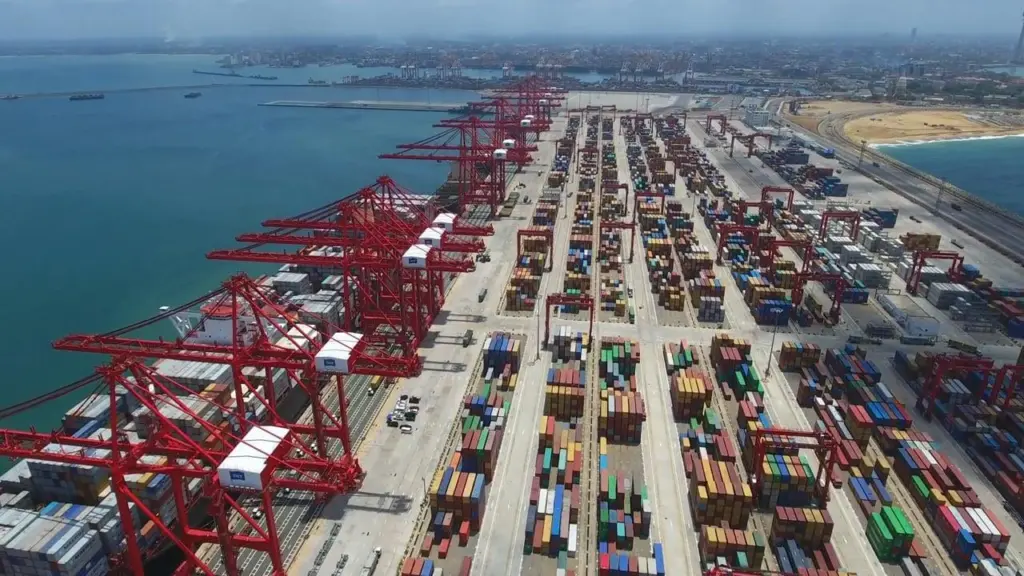
However, activity in June 2024 was down by five per cent, with July then seeing a further drop of six per cent, year-on-year.
The extent of the recent trends for this current year are more pronounced if the port’s vessel call data is noted, with containership visits falling by 18% for July 2024.
Keith Bernard, Chairman, Sri Lanka Ports Authority, put a positive spin on the situation: “The port is poised to become a key transshipment hub serving the Middle East, as many shipping lines are rerouting vessels to avoid prevailing risks in the Red Sea and Suez Canal,”
While the port has benefitted from Red-Sea ship diversions, capacity constraints at the port have challenged Colombo and resulted in reports of frequent congestion this year. As a consequence, both regular and ad-hoc shipping line customers have targeted alternate options – with some Indian ports benefitting.
For example, DP World Cochin, also known as Vallarpadam Terminal, more than doubled its container transshipments between April and July – the first four months of Indian fiscal year 2024/25 – to 70,701TEU, from 29,358TEU in the period a year ago, according to recently released port information.
Praveen Thomas Joseph, CEO, DP World Cochin, explains how the terminal was ready to take advantage of the congestion in Colombo: “In Q1 2024, we introduced new STS [ship-to-shore] cranes, e-RTGs [rubber-tyred gantry cranes] and expanded the yard space, boosting our capacity to approximately 1.4 million TEU a year, solidifying DP World Cochin as one of the largest terminals in South India.”
Elsewhere, Chennai Port saw its April-July transshipment movements jump to 35,417TEU, compared to just 6848TEU for the comparable previous period.
At the same time, Adani Group’s Vizhinjam Port in southern India is targeting a role as a potential “hub contender” by commencing a trial Maersk Line vessel call with 6900TEU moves. The new terminal is shortly to officially launch its phase-one operations.
Clearly, Colombo will remain the focal point of transshipment activity for the subcontinent trade, port competition is intensifying. Maersk Line recently stated: “As a transshipment hub, Vizhinjam will help us bring more flexibility to our customers’ supply chains that need to move cargo in and out of India.”
While undoubtedly true, the attractive service rates reportedly on offer for transshipment calls at Vizhinjam, lower than the scale of vessel-related charges at Colombo, are helping the shipping line consider its regional options.
Related Articles
 EQUIPMENT
 OPERATIONS
 OPERATIONS