![PortStrategy[GreenPort]](https://www.portstrategy.com/wp-content/uploads/2026/09/PortStrategyGreenPort.svg)






THE DOMINO EFFECT
A new report from the Royal Bank of Canada assesses the impact of current challenges to the global supply chain and considers what the likely outcome will be. A J Keyes presents the highlights
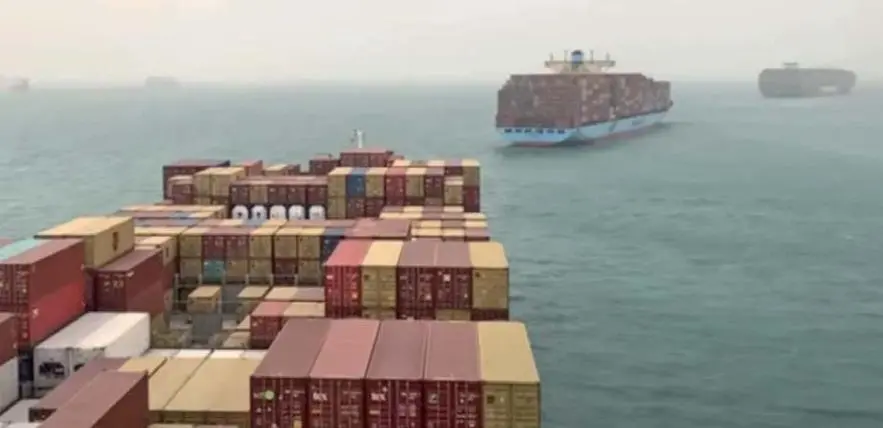
According to a new study from Royal Bank of Canada (RBC), the current global supply chain problems negatively impacting international container trade are going to worsen. The reasons? China’s COVID-19 lockdowns, Russia’s unprovoked attack on Ukraine and rising fuel costs for shipping.
The report makes a somewhat startling, though not entirely unreasonable, claim that currently around 20 per cent of the global container ship fleet was embroiled in congestion issues at ports worldwide.
ALARMING – BUT TRUE
Statistics produced in the report are alarming, but true. For example, at the time of report preparation in Q1 2022, a total of 344 ships were awaiting a berth at the Port of Shanghai (a 34 per cent increase, it rightly claims), while a shipment from a warehouse in China to a similar facility in the US took an additional 74 days compared to normal service.
This clearly highlights the extent of the ongoing problems, with delays in getting containers onto ships in China compounded by issues related to their unloading at US ports. Subsequent to this, the report points to the slow performance of the landside supply chain and then more delays at warehouses due to a combination of lack of space and workforce issues including COVID-19 illness.
However, the report underlines that these issues are not occurring just in the Transpacific trades and serving the US. Ships arriving at ports in Europe from China are recorded as being an average of four days late. Europe has also seen a lack of empty containers being available to load goods for export with the Transatlantic particularly subject to this.
Michael Tran, Head of Digital Intelligence Strategy, RBC, along with colleague, Jack Evans, succinctly explains the issues faced. “Global port congestion is worsening and becoming increasingly widespread….it is hard to say when things will improve,” before adding that the ongoing issues are creating a “domino-like negative compounding effect across various markets”.
It is clear and fully understood across the port and shipping industry that there is a need for ships and containers to be available at the right time and place to ensure the most efficient operation. The greater the mis-match the lower the utilisation of vessel capacity leading to impaired service.
PUTIN ACTIONS PUSH UP INSURANCE PREMIUMS
The Putin-led Russian invasion of Ukraine is having a negative effect on shipping insurance, the report underlines, citing how the impact on shipping activity in the Black Sea has seen insurers pushing up premiums substantially. Indeed, pre-war levels were 0.25 per cent of the value of the ship but are now running at between one per cent and five per cent.
These are costs which will, no doubt, have to be passed on to consumers. As if that is not bad enough, then another major cost that will hurt end-users is rising fuel prices. The RBC report states that marine fuel prices in Singapore have increased by 66 per cent over the past year.
The report summarises the current position by stating:
“Many market participants thought that supply chains would be untangled by now, but this scenario has failed to materialise.”
A CAUTIOUS TONE
Moving forward, RBC strikes a cautious tone. It accepts that vessel delays are improving slowly but there is still some way to go. For example, the average global delay for a ship’s arrival is traditionally 4.5 days, but in March 2022 the figure was 7.26 days.
There are delays in many of the key gateways, the report notes. It classifies vessels queuing based on ‘Time of Turnaround’ (ToT) and cites examples in the US West Coast ports of Los Angeles and Long Beach with an average wait of 6.9 days, while in Europe ships were queuing above their five-year typical averages – Rotterdam up by eight per cent, Antwerp at 30 per cent and Hamburg at 21 per cent.
Here, RBC offers a sobering conclusion: “Significant compression of ToT times is required before we can confidently suggest a path toward normalising shipping costs.
The problem? Things are getting worse”.
Related Articles
 EQUIPMENT
 OPERATIONS
 OPERATIONS