![PortStrategy[GreenPort]](https://www.portstrategy.com/wp-content/uploads/2026/09/PortStrategyGreenPort.svg)


THE SECOND COMING
DP World is sizing up a second terminal at the Port of Prince Rupert. AJ Keyes looks at why this is required and what is needed to support it
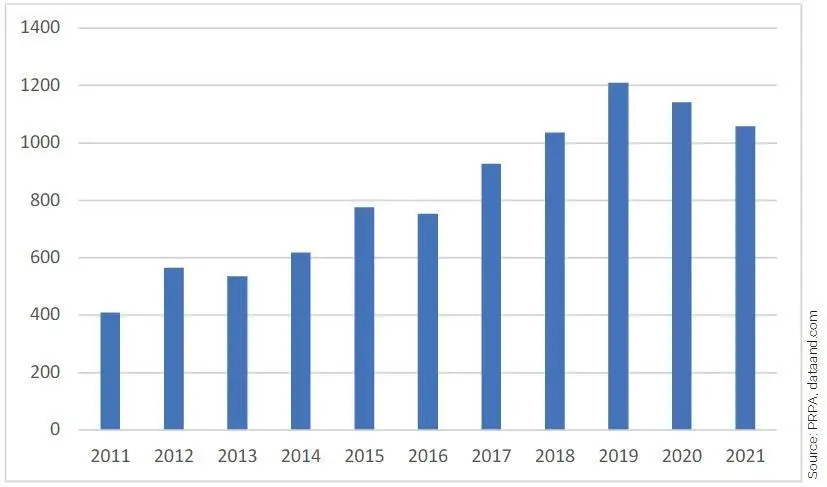
Container volumes have increased by an average of 9.9 per cent per annum since 2011 and with strong cargo growth potential, the single terminal at the Port of Prince Rupert is deemed as being insuffi cient, according to operator, DP World (DPW) and Prince Rupert Port Authority (PRPA).
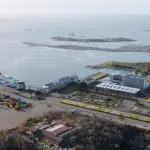
Consequently, DPW and PRPA have entered into a two-year agreement to explore development possibilities for a new container terminal in the Canadian port – a facility that could add up to two million TEU of additional annual capacity to the Port of Prince Rupert located in Canada’s Pacific Gateway region.
FUTURE PROOFING
The proposed terminal is a continuation of PRPA’s container terminal master plan from 2019 which stresses the scope for an additional box terminal, south of the existing Fairview Terminal.
Maksim Mihic, CEO and General Manager of DP World (Canada) explains: “This agreement is a clear demonstration of our commitment and confidence in the viability of a second terminal at the Port of Prince Rupert. Our vision for this proposed project will ensure the Canadian trade and supply chain landscapes are future-proofed.”
There is certainly a need for additional container capacity in western Canada (see preceding article). Accordingly, a second terminal in Prince Rupert is a potentially viable project and can seek to take advantage of delays in Vancouver (BC), especially if it can minimise environmental impact through efficient land use and infrastructure planning, rail and truck connectivity delivering as a result supply-chain optimisation.
This is a view endorsed by Shaun Stevenson, President and CEO, PRPA: “A second container terminal will help consumers, exporters and industries across the country while continuing to contribute significant economic benefit for local communities, the broader region and our Indigenous partners,” he says.
Once the extended study period is complete, both partners will confirm a definitive project development plan that will be subject to regulatory review and authorisation.
Based on the development of the existing container terminal, demand for a second facility looks solid. As Figure 1 identifies, total container throughput in Prince Rupert had increased from 410,000TEU in 2011 to almost 1.06 million TEU by the end of 2021. Volumes handled did surpass 1.21 million TEU for 2019, before the subsequent impact of the COVID-19 pandemic. The rescheduling of vessel calls in 2021 resulted in a drop in total volumes, but these are expected to return for 2022.
Until the development of a second terminal, the existing infrastructure will continue to benefit from ongoing investment. The first phase of the Phase 2B expansion of the Fairview Container Terminal is due to be finished in mid-2022 increasing capacity to an estimated 1.6 million TEU per annum. The second phase is slated for completion by the end of 2024 and will take capacity to 1.8 million TEU per annum.
CONNECTING INFRASTRUCTURE
Building terminal infrastructure is a crucial requirement, especially to interface with shipping, but one thing that 2021 has shown the industry in North America is the need to ensure that the connecting steps in the logistics network beyond the marine terminal are also able to support the movement of containers.
This is particularly true for Prince Rupert, which is currently an import-dominated facility and the fastest connection from Asia to North America. For example, for the movement of a container from Shanghai to Chicago via Prince Rupert is one day quicker than Vancouver (BC) / Seattle-Tacoma and three days faster than the Los Angeles/Long Beach complex in San Pedro, southern California.
There are several key projects to support Prince Rupert’s connectivity and development:
- The new Fairview-Ridley Connector Corridor: is on track to be completed in Q2 of 2022. This project will reroute container trucking from local transload and customs facilities directly to Fairview Container Terminal. This means improved existing container terminal truck and rail operations by reducing potential traffic congestion from provincial and municipal roads, while the more efficient routing will help lower impact on air emissions and save trucking costs.
- New modern export logistics facility. There is a need for additional transloading and warehousing facilities in the Prince Rupert area to help boost container potential for the export of key Canadian commodities, such as lumber, pulp and dry bulk grains. In early February 2022, PRPA confirmed that along with Prince Rupert operator, DPW and Ray-Mont Logistics, a new, rail-supported logistics facility on Ridley Island for exports is in the “advanced stages” of development and replicates the model successfully adopted in Vancouver (BC).
- Import logistics facility. PRPA and the Metlakatla Development Corporation are developing an import logistics facility on 34 acres near the Fairview Container Terminal. The South Kaien Import Logistics Facility will be integrated into Prince Rupert Gateway’s logistics hub eco-system.
More space, strong historic growth, improved intermodal rail and supporting logistics facilities. DPW and PRPA are putting in place the necessary building blocks to ensure that there will be no capacity crunch in Prince Rupert, or its supporting port eco-system.
Related Articles
 EQUIPMENT
 OPERATIONS
 OPERATIONS