![PortStrategy[GreenPort]](https://www.portstrategy.com/wp-content/uploads/2026/09/PortStrategyGreenPort.svg)

Transnet under pressure as it moves to privatise container corridor
Transnet is facing increasing pressure from both the African National Congress (ANC) and Economic Freedom Fighters (EFF) political parties with respect to its current activities and privatisation plans.
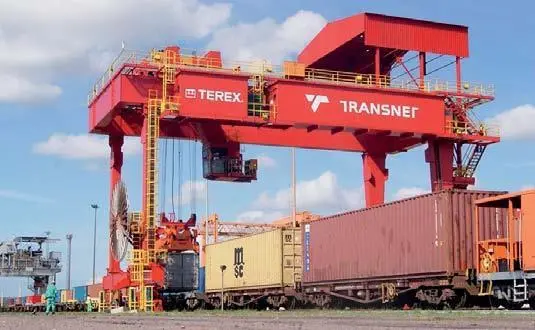
At the end of January 2023, Transnet announced it was engaging the market to invest in and grow Transnet Freight Rail’s (TFR) freight containerised business, by issuing a Request for Qualifications (RFQ) to identify parties interested in entering into an Operating Lease with TFR for the operation and maintenance of the Container Corridor (the line between Johannesburg and Durban) for a period of 20 years.
The Operating Lease aims to obtain the required investment in the rehabilitation, upgrade and maintenance of the rail network and rolling stock assets, as well as be responsible for the operation of the Container Corridor, which includes the Bayhead Back of Port Terminal and defined Inland Terminals of City Deep, Kascon and Bayhead.
However, Members of the South African Parliament are critical of the project and have made their sentiments known following a recent presentation from Transnet to the Public Enterprises Portfolio Committee about its recently announced plans.
The views were best summed- up by Judith Tshabalala, ANC Member of the Committee, who stated: “The ANC government is ridiculed by the public and voters, who say we have failed.
But you run these entities. You are responsible for implementing government policy. The ANC government never told you to privatise anything… I’m not finding much you have done to turn around the situation. Fix up this mess you are creating for the ANC government.”
In response to this public criticism, Portia Derby, CEO, Transnet Group, maintains that a number of critical challenges continue to be faced, citing the unavailability of spares for locomotives, theft, and vandalism and “systemic underinvestment,” all of which has seen a reduction in system reliability and an increase in accidents.
Talking to the Committee she further noted that the support of the private sector, and the investment it will bring, is needed to help generate a significant shift of containers from road to rail as well as achieve increased operational reliability and efficiency. The concessionaire must invest at least R3 billion in the infrastructure.
Furthermore, Derby said that Transnet lacked the financial resources to utilise the full capacity of its network: “Total available capacity is 230 megatons a year, and we are not able to move it ourselves. From a South African perspective, and even from a Transnet perspective, it is really important that we are able to move it. So, if other people can enable us to move cargo then it is essential that we bring them on.”
Privatisation has long been on the agenda in South Africa for the port business, but to date it has seen little tangible traction. The current political climate could see further delays.
Related Articles
 EQUIPMENT
 OPERATIONS
 OPERATIONS