![PortStrategy[GreenPort]](https://www.portstrategy.com/wp-content/uploads/2026/09/PortStrategyGreenPort.svg)


Turbulent waters
The Le Havre-Hamburg/Gdansk port range sees some of the largest ships in service, bringing substantial volumes to European consumers. How are these ports currently performing? AJ Keyes looks at current trends
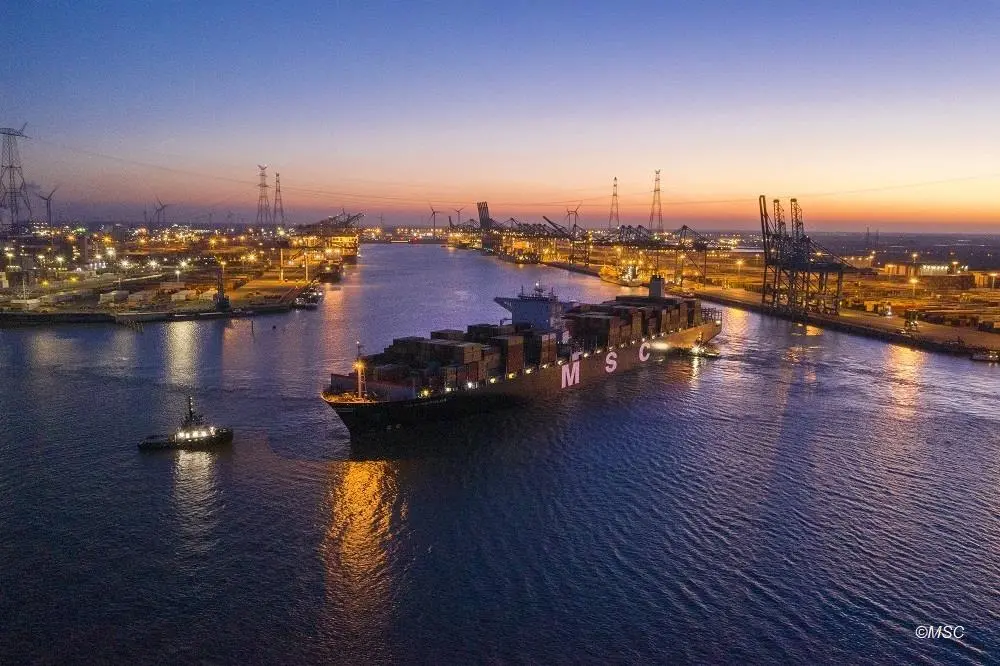
The Westbound Asia-Europe route sees some of the biggest container ships in service bringing substantial volumes of cargo to European consumers. Add to this additional East-West transatlantic route activity and all North-South trades, then it is no surprise to note the scale of container port throughput in the range between Le Havre and Hamburg/Gdansk.
So, how have ports in this critical region fared during 2023 and what is expected for 2024?
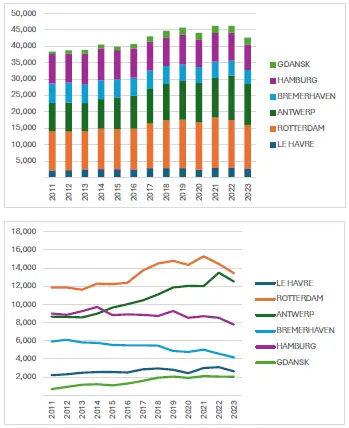
Figure 1 provides a summary of the longer-term development of the major facilities between 2011 and 2023.
While there are other ports in the region, the listed facilities represent the majority of the deep-sea options and are a very good barometer for overall European development. For example, in 2011 the collective total was almost 38.4 million TEU, which had reached just over 42.6 million TEU by the end of 2023.
There have clearly been some fluctuations in this period, with the 2020 total (of around 44.1 million) impacted by the COVID-19 pandemic and 2023 seeing a decline of over 7.8% compared to 2022, representative of global economic challenges and geo-political issues (including in Ukraine and the Red Sea). Other longer-term trends include:
- Rotterdam has always been the largest-volume container port, but Antwerp has closed the gap during the current decade, partly helped by Antwerp and Zeebrugge operating under one name going forward (initial agreement reached in 2021, with final ratification in Q2 2022 to operate as the Port of Antwerp-Bruges)
- The German ports of Hamburg and Bremerhaven were handling more containers at the start of the assessment period compared to the end of it
- Le Havre has seen small growth, but overall throughput has remained largely consistent
- Gdansk has enjoyed a successful period, although retains the lowest total throughput facility of all the ports listed
MARKET VOLATILITY…WEAK GROWTH
So, what are the port themselves reporting in their results?
For Rotterdam, a fall in container throughput of seven per cent to 13.4 million TEU for 2023 represents a continuation of a decline that began in 2022 and carried on for the most recent 12 calendar months.
The port authority referenced market volatility and, “lower consumption, lower production in Europe and the discontinuation of volumes to and from Russia pursuant to the sanctions” even though port calls in this sector were up by one per cent.
A similar picture was painted in Antwerp-Bruges, with the port stating that “weak global economic growth and lower demand for commodities is impacting global demand for container transport.” This corresponds to a drop in container throughput of 7.2% for TEU traffic handled, although the port maintains that despite this position its “market share in the Hamburg – Le Havre range rose 0.6% points to 30.2% in 2023.”
In Hamburg, container throughput fell by 6.9% for 2023 compared to 2022, although it could have been worse, with the first half of the year lower by 11.7% over H1 2022.
“When we look at the development of our throughput figures, we are on the same level as our Northern European competitors and are holding our own well compared to other ports. The decline is primarily due to the difficult geopolitical and economic situation that we all are facing,” explains Axel Mattern, CEO of Port of Hamburg Marketing.
Despite the fall in containers handled, Hamburg states that it saw an increase of 14.8% in ships of 18,000TEU and above, with 272 vessels calling at the port. Other key results included growth of eight per cent (to 653,000TEU) for US trade, albeit this was still some way behind the 2.6 million TEU from China (itself a drop of 10.9% from 2022).
HAROPA Port, which includes the deep-sea facilities in Le Havre, France, said that its results for 2023 ensured that it “stays on course.” This update comes against a backdrop of 2.63 million TEU handled for 2023, versus 3.1 million TEU moving through its facilities for the comparable period one year earlier.
Clearly, 2023 represented a challenging year for almost all container ports in this key market, but how has 2024 started and what strategies are being adopted?
ROTTERDAM: “CAUTIOUS RECOVERY”
Rotterdam is undertaking key infrastructure and development projects in 2024 and this comes at a time when the container segment is showing a slight increase in throughput for the first time in three years. For Q1 2024, throughput was up by two per cent to 3.3 million TEU, despite the situation in the Red Sea seeing a drop of 24.5% in ship calls and Asian volumes down by 13.7% in January and February due to delays and missed sailings. A rebound of more ships arriving (up 11.5%) occurred in March, with feeder traffic to the Mediterranean up by 29% as cargo moved to this area to compensate from ships bypassing ports as they divert via the Cape of Good Hope.
Cautious economic recovery is the message from the port authority with plans for terminal expansion, improved road access in the port and better vessel access all pushing ahead this year.
APM Terminals A(APMT) and Rotterdam World Gateway (RWG) are both expanding, with APMT adding two million TEU extra capacity. The completion of the quay is planned for the second half of 2024. At RWG, 45ha of terminal land and 920m of quay wall will improve capacity by 1.8 million TEU/yr. Both terminals are preparing for the use of shore power and carbon-neutral operations.
Elsewhere, the port’s Container Exchange Route (CER) went into operation in late 2023. The 17km closed road network currently connects the container terminals of Rotterdam World Gateway (RWG), the Delta terminal of Hutchison Ports ECT Rotterdam (ECT), the terminals and depots of QTerminals Kramer Rotterdam (KDD, RCT and DCS) and the State Inspection Terminal of the Customs Authority to improve security, efficiency and sustainability in the port.
Finally, as more frequent and increasingly larger container vessels pass through the Yangtzekanaal to the Maasvlakte terminals, the navigable channel of the Yangtze Canal is being widened in three sub-projects. The first began in September 2023 and involves 500m of quay alongside the port entrance, with shored-powered berths established for 12 tugs. Completion is expected in early 2025.
SUSTAINABLE GROWTH KEY
March 2023 represents the best monthly throughout for containers at the Port of Antwerp-Bruges since March 2021, with almost 3.29 million TEU handled – amounting to a six per cent rise over Q1 2023.
These results were recorded following what the port authority described as, “economic uncertainty and inflation causing a global slowdown in demand for container transport” that ran into the beginning of 2024.
Moving forward, this major European port has a clear strategy, focussed on sustainable growth, which will see a 10-year investment programme of €2.9bn on key infrastructure including a quay wall for the Europa Terminal, a new coordination centre and use of residual land on the left bank.
Jacques Vandermeiren, CEO, Port of Antwerp-Bruges explains further: “We had seen it coming for some time that: 2023 would not be a great year. After all, as a port, we are at the centre of economic and geopolitical challenges. But, with a powerful strategy, the merger and an efficiency exercise, we have managed to organise ourselves in good time and are even gaining market share in the Hamburg-Le Havre range. Especially in more turbulent waters, it is essential that we continue to sail in the right direction, with our strategic plan as our compass. That is what we will continue to do in 2024.”
HAROPA Port also confirms it is “continuing to invest” with €201 million being “dedicated to multimodality.” This includes construction supporting river access to Port 2000 in Le Havre, along with road and rail infrastructure improvements for Berth 11 and Berth 12, also at Port 2000, and in conjunction with MSC and TiL.
Times in 2023 for key European container ports have been challenging, but less turbulent waters seem to be on the horizon for 2024.
Related Articles
 EQUIPMENT
 OPERATIONS
 OPERATIONS