![PortStrategy[GreenPort]](https://www.portstrategy.com/wp-content/uploads/2026/09/PortStrategyGreenPort.svg)

Ukraine re-launches concessions
Despite the ongoing war with Russia, Ukraine is lining up a new round of terminal concessions for 2024. Oleksandr Gavrylyuk explains what is on the agenda
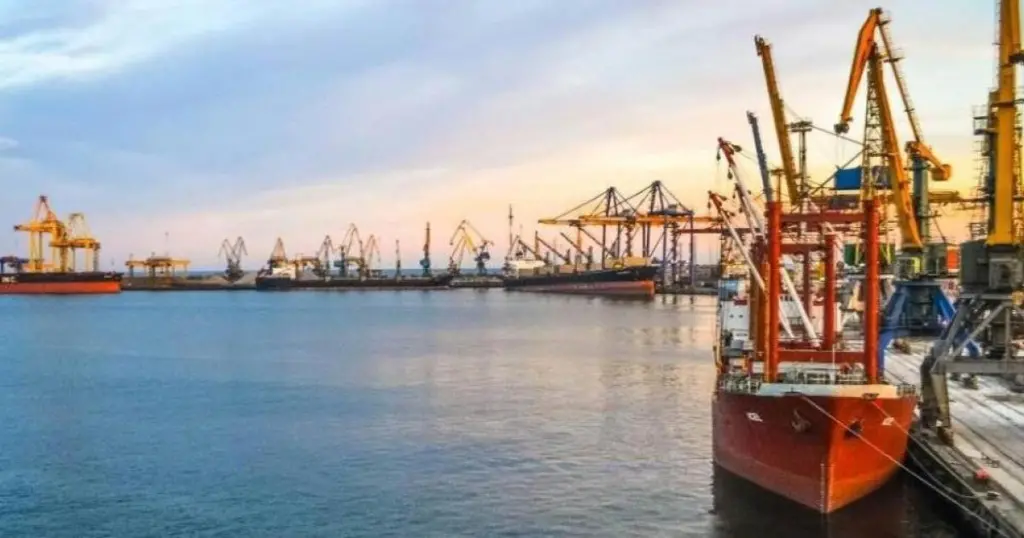
The State Agency for Restoration and Infrastructure Development of Ukraine has recently announced future concessions of state-run assets at the country’s Black Sea ports of Odessa and Chornomorsk, (located 12 miles south-west of Odessa and known as Ilyichevsk prior to May 2017) as well as at the Danube harbour of Izmail (some 55 miles from the river’s mouth). The Agency is planning to launch tenders next year.
Estimated at a total of about US$52.6 million, the Odessa-based facilities would comprise a passenger terminal with an operational area of 23,600 square meters and annual capacity of one million passengers, a 15,500 square meter-large marina for 86 yachts, 4000 square meters of outdoor spaces and an open concert and exhibition hall for 1000 places occupying 4970 square meters.
The Chornomorsk opportunity involves three cargo terminals. Thus, the port’s First Freight District is capable of handling up to six million tonnes of bulk, general and container cargoes a year. Its Container Terminal can handle both container and bulk cargoes (2 million tonnes per annum). The harbour’s Rail Ferry Terminal has an annual capacity of 4.5 million tonnes, being able to handle 250,000 motor cars and 150,000 TIR trucks a year. The project is assessed within a range of US$48 to US$160 million – depending on the number of assets under concession.
Finally, at Izmail concessions will be offered for both its cargo and passenger terminals. The former has a 2.6 km-long waterfront (24 berths and 5 jetties) with depths alongside of up to 8m and can handle 9.3 million tonnes per annum. The latter has an annual capacity of 150,000 passengers.
CONCESSION MOMEMTUM
The majority of Ukraine’s harbour operators have remained under the state control since the break-up of the Soviet Union and the nation’s independence in 1991. However, as the further development of the ports increasingly required private equity, modern technologies and up-to-date expertise, Kyiv eventually decided to open the sector’s doors much wider than ever before.
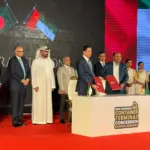
Having worked out a large-scale programme of reforms, the Ukrainian Government started inviting foreign investors into the industry. Thus in 2021, it granted concessions for its Commercial Seaports of Kherson and Olvia to Switzerland-registered Risoil and Qatar-based QTerminals respectively.
The programme implied continuation and intensification of the work, with more terminal operators to be involved in the process, according to Oleksandr Kubrakov, Vice-premier and Minister for Infrastructure Development, Ukraine.
For example, in 2021, the European Bank for Reconstruction and Development (EBRD) and International Finance Corporation (IFC, a member of the World Bank Group) agreed to help Kyiv arrange concessions at Chornomorsk, one of the country’s largest ports.
However, Moscow’s invasion of Ukraine in late February last year changed everything. The harbours of Mariupol and Berdyansk on the Ukrainian coast of the Sea of Azov, which had been part of the concession project, found themselves In the territories occupied by the invaders. In the meantime, all the country’s Black Sea ports were blockaded by the Russian navy.
The so-called Black Sea Grain Initiative launched through the UN and Turkey’s mediation in July 2022 allowed the harbours of Odessa, Chornomorsk and Pivdenny to take part in handling Ukraine’s foodstuff exports. Yet, a year later, Moscow refused to prolong the grain deal, having shelled the Ukrainian ports instead.
The war has made Kyiv pay more attention to its Danube harbours, such as Izmail, which have tripled their handling volumes since the beginning of the Russian aggression and are currently playing a key role in redirecting Ukrainian commodity exports to the Romanian Black Sea port of Constanta.
The ongoing war is preventing potential investors from entering Ukraine’s harbour industry.
There have nevertheless been some positive developments. In January this year, the Fund sold the Commercial Seaport of Ust-Dunaysk making it the country’s first harbour operator privatised through an open auction.
Elixir Ukraine, an Odessa-based fertiliser trader, beat seven other bidders in the course of the competition to buy the minor Danube port operator (about 34 miles from the river’s estuary) for around US$5.5 million. The buyer is reportedly intending to upgrade the facility to be able to export more fertilisers and grain.
In late May this year, officials of Moller-Maersk, one of the world’s leading integrated transport and logistics groups, visited the Chornomorsk harbour and voiced their interest in the would-be concession of its container terminal. In general, there are five international players showing interest in operating Chornomorsk’s terminals, according to Oleksandr Kubrakov.
Meanwhile investors such as Risoil and QTerminals have expressed their readiness to remain in Ukraine despite the ongoing blockade and shelling of their assets, as well as other difficulties caused by the Kremlin’s aggression.
Related Articles
 EQUIPMENT
 OPERATIONS
 OPERATIONS