




The big apple takes pole position: the shape of things to come?
For the first two months of 2023, the Port of New York/New Jersey (NY/NJ) was the busiest container port in North America.
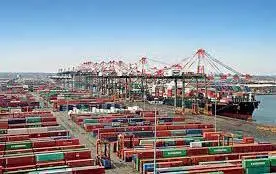
Handing a total of 1.216 million TEU in this period put this US East Coast port ahead of the two US West Coast ports of Los Angeles and Long Beach, which recorded 1.214 million TEU and 1.117 million TEU, respectively.
By comparison, for the comparable periods of 2022, Los Angeles led the way with 1.723 million TEU, followed by Long Beach recording 1.598 million TEU and NY/NJ in third place with a total of 1.524 million TEU.
Confidence in US West Coast ports, especially in Southern California, has been further undermined when operations ground to a halt across the San Pedro complex for 24 hours during the second week of April 2023. No work commenced at the start of a Thursday late shift because insufficient dock workers reported in and the same thing occurred the following Friday morning. As a result, four terminals across Long Beach were closed and all seven box facilities at Los Angeles did not work.
The relationship between employers and worker unions remains acrimonious, at best. On this occasion, and according to local media outlets, the PMA (employers association) accused the ILWU (stevedores union) of “with-holding” labour deliberately to shut-down both San Pedro ports. The union countered these claims explaining that its members were attending a monthly membership meeting on the Thursday and a low turnout the following morning was due to workers “observing” the Good Friday holiday.
The contract talks on the US West Coast continue to drag on, with little progress seemingly being made since the old deal finished at the end of July 2022. In March 2023, operations in the Port of Los Angeles stopped for one hour as stevedores and workers all took their lunch break simultaneously instead of the usual practice of staggering mealtimes.
While these specific events resulted in little loss of cargo activity at the ports, clear concerns remain on a wider basis. The PMA continues to warn the ILWU that the West Coast will lose traffic if reaching a settlement continues to drag on. “These actions undermine confidence in west coast ports and threaten to further accelerate the diversion of discretionary cargo to Atlantic and Gulf coast ports,” it has been reported as saying.
This is just a snapshot of the first two months of 2023, and Los Angeles has just released its March 2023 data that shows loaded imports were up by 28 per cent over February 2023, although the total for Q1 2023 (of 1.84 million TEU) was still down on Q1 2022 by 32 per cent.
Yes, the difference between the three ports so far in this current year is very small, but it remains reflective of an ongoing trend in which beneficial cargo owners are continuing to shift from the West Coast to East Coast gateway ports of entry, primarily for Asian-sourced cargo.
Related Articles
 OPERATIONS
 OPERATIONS
 OPERATIONS