![PortStrategy[GreenPort]](https://www.portstrategy.com/wp-content/uploads/2026/09/PortStrategyGreenPort.svg)



PORTS: A FRONT ROW SEAT
COMMENT: I must confess, over the past four years, I got a little tired of writing about the huge breakthrough “Infrastructure” investment initiatives which, as all boats rise with the tide, would benefit ports throughout the USA, writes Barry Parker.
Simply put, it didn’t happen, at least not in a meaningful way. As we are changing administrations, there is again hope for renewed governmental schemes and strategies aimed at “keeping things moving.” Though the “things” these days include electrons and such like, surface transportation (with signifi cant interfaces with ports) would certainly be a key component of any plans that might be coming.
There have been big changes in thought processes over the past few years- and ports need to plug into these external trends. Some are obvious, others less. The interactions of the trends (think of that Venn Diagram with overlapping colours), often less considered, may be where the real action is.
Futurists will tell you that “digitalisation”, already happening in a big way, will be expedited, courtesy of the horrible pandemic that required less manual input to move things around. For USA ports (and, really all over the globe), at the fulcrums of supply chains, management systems of cargo flows should be future-proofed, as much as possible. It’s difficult to predict what innovations we may see but ports occupy a front row seat (and, indeed, may be in the control room) to the feverish path towards more supply chain optimization.
Then we have the “E” in ESG. Infrastructure investing, in the USA (and, again, in other countries) will take on a decidedly greenish trend. Decarbonisation and alternative fuels are the talk of the maritime industry; yet ports don’t always have a really good seat at this table.
The optimisers do a tolerable job when the vessels are out on open waters (inside harbours) not so much. So I would expect much more in the way of dialoguing about how arrival/ departure times, berthing and undocking, and other operational factors (think about security zones and tidal flows) could be better coordinated for fuel savings.
For intra-harbour vessels, battery power (and maybe fuel cells, a few years out) are beginning to see uptake in other regions. Plus, as we get more container-on-barge activity, it may be electrically powered. Maybe, taking an example from one West Coast port, a local utility could donate the charging station.
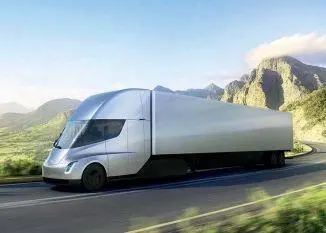
The “E” part goes further, as well. When the landside vehicles, like yard “hustlers” or drayage trucks, become electrified, in advance of the intra-harbour tugs, then digital control, the handmaiden of “optimisation” is a likely by-product. Infrastructure investment, defined a little bit differently than before, all fits together in ways that we can only begin to imagine.
Related Articles
 INSIGHT & OPINION
 INSIGHT & OPINION
 INSIGHT & OPINION