![PortStrategy[GreenPort]](https://www.portstrategy.com/wp-content/uploads/2026/09/PortStrategyGreenPort.svg)



Land of opportunity
Felicity Landon engages with Capt Pappu Sastry, CEO, ASL who sees the deployment of logistics know-how in conjunction with growing African mining operations as a land of opportunity
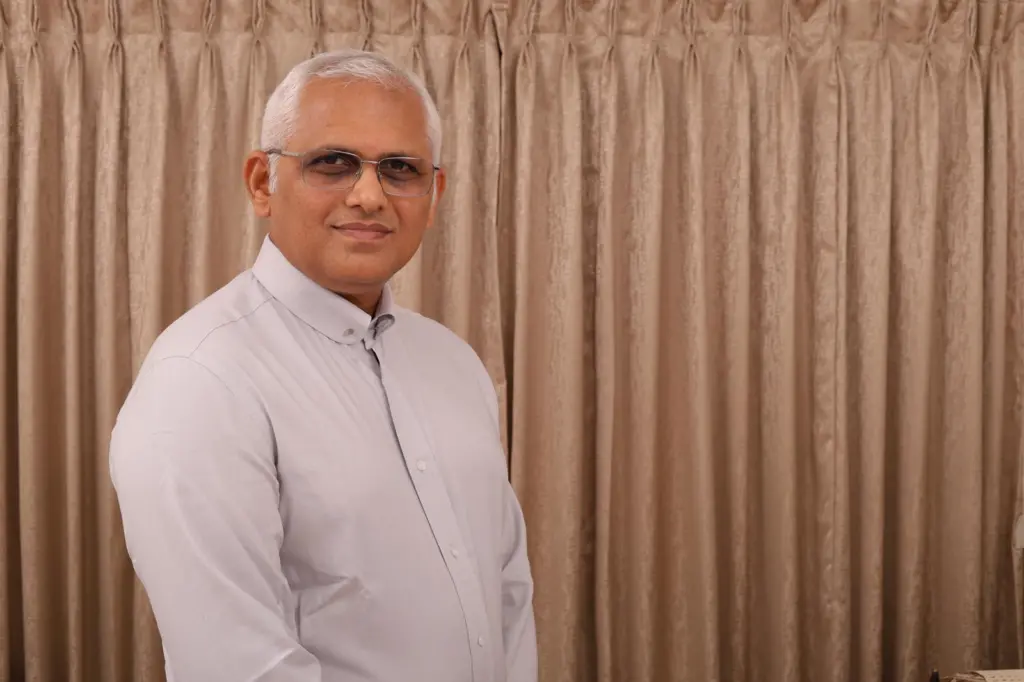
The energy transition will not happen in Africa but because of Africa, according to Capt Pappu Sastry, CEO, Adhira Shipping and Logistics’ (ASL). As a specialist in mining logistics in Africa, ASL is focusing on the ‘critical minerals of the future’ – lithium, copper, bauxite, manganese, cobalt, tin, graphite, titanium and others.
“Africa is on the brink of an explosion in the mining industry because of commodity demand, especially from China and India,” says Sastry. “There is a huge opportunity in mining and logistics in Africa in general.”
ASL concentrates on junior mines across Africa. Its biggest project currently is handling bauxite exports mined in Guinea – it is also active in Gabon, Liberia, Madagascar, Namibia, Sierra Leone and South Africa, amongst others.
As the energy transition drives demand for critical minerals, ASL is securing long-term logistics contracts with global mining companies, says Sastry. The strategy is to work in partnership with mining companies, developing and managing their logistics operations – sourcing equipment, trucking and warehousing, and providing port solutions.
CHALLENGES GALORE
There are a huge range of challenges, not least around access, safety and security, and there is no one formula or process that fits all commodities, let alone countries. For example, lithium is currently shipped in containers – the containers must be sourced, feeder services secured and equipment set up to load the containers on to the vessel.
When it comes to bulk shipments, building a multi-commodity jetty is often not cost-effective for a port, so the solution is to build a dedicated jetty for the mining company, perhaps opening it up for use by third parties. Road links between mine and port must be adapted or even built from scratch. Improved warehousing, bagging and distribution centres are required at ports. The construction of a new port in Guinea has involved relocating and compensating village residents.
The company is also approached by government ministries to help support mining companies looking to enter and invest in their countries’ new or expanding mining activities.
“Mining companies consider the costs of mining but often do not think of the logistics,” says Sastry. “Most don’t budget for buying ships or barges or even for mobilising them. Many don’t even realise they have to budget for mobilising cranes, etc.”
ASL – which describes itself as an ‘asset-light shipping company’ – goes to the market and finds the solutions, so the mining companies logistics can become opex instead of capex for the mining company, he explains. The company says its strengths are its expertise in Africa and its reach in sourcing assets.
“Africa’s landmass is larger than China, India, the continental US and most of Europe combined, meaning that effective shipping and logistics are key to success across the continent,” says Sastry.
IPO ON THE AGENDA
ASL has announced that it will offer an IPO on London’s AIM in 2025. The company expects to achieve revenues of US$1 billion through its core services in mining logistics within a ten-year timespan.
“As the new mine owners set up shop in Africa, there is an opportunity to implement better planning, optimise energy use and resources, and manage equipment and transport capacity more effectively,” says Sastry.
There is significant interest from mining groups looking for long-term sustainable projects that also enrich the communities in which they operate, he adds. “We are working with reputable and professional mining and trading companies from North America, Europe, the Middle East, Australia, South-East Asia and India. Our stakeholders and governments expect these companies to develop logistics for their mines sustainably from the start of the project.”
The focus is on employing local labour, ‘uplifting’ the communities engaged with ASL, providing safety training in the use of machinery, equipment and trucks, and the welfare of communities near the mines and along the transport routes.
A key component in developing sustainable mining logistics in Africa, both on land and at sea, is increased investment in innovation, machinery, trucking, floating and fixed equipment, and warehousing, says Sastry. “By bringing in new technology and equipment, Africa can improve efficiency and reduce costs in the long run. The opportunity to invest in Africa’s mining sector brings high returns with manageable risk.”
ASL will also replicate this model in other regions – South America being a key target. “This will also drive the changes in logistics needed to become more sustainable,” he concludes.
Related Articles
 WORLD
WORLD
 WORLD
WORLD
 PRODUCTS & SERVICES