![PortStrategy[GreenPort]](https://www.portstrategy.com/wp-content/uploads/2026/09/PortStrategyGreenPort.svg)





US tariffs may threaten UK ports
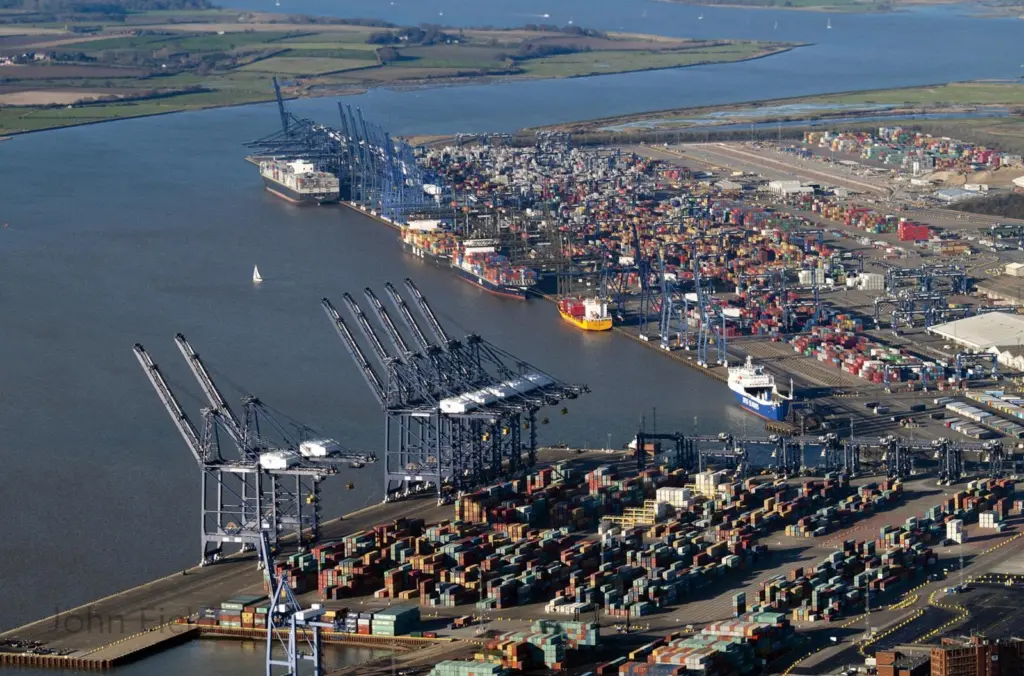
Rising tariff threats are putting pressure on UK ports as they deal with both supply chain disruption and a potential fall in exports, say industry analysts.
Many businesses are pulling forward inventory purchases, creating a challenging financial environment, says Sree Mangalampalli, vice president of Digital Transformation Solutions at FourKites.
“With interest rates already elevated, this inventory buildup places significant pressure on cash flow at a time when CFOs would typically be tightly managing inventory levels to improve their financial position,” he said.
Exacerbating these challenges is the lack of real-time inventory visibility across supply chains. Information gaps make it harder to order the right quantities and types of goods, leading to excess stock and potential obsolescence risks. This may put strain on ports as companies seek to optimise warehouse and yard operations.
“The economic consequences of mismanaging this strategy could be significant — firms that fail to adapt may face a painful inventory correction later this year as they attempt to work through excess stock,” said Mangalampalli.
“The limited bandwidth of the inventory planners to manage through this chaos can further exacerbate this situation.”
The UK car industry is particularly vulnerable to rising tariffs. A new analysis by Russell Group reveals that 33% of all UK car exports, valued at £7.43 billion annually, are under threat from a proposed 25% tariff on imported cars and parts into the US.
This could severely impact key ports such as Southampton, Felixstowe and Immingham, which are crucial to car exports. The uncertainty surrounding global trade has already contributed to a 11.6% decline in UK car and commercial vehicle production, according to the latest industry data.
“2025 promises to be a year filled with uncertainty, with global trade patterns changing at the whims of new US executive orders,” said Suki Basi, Russell Group, managing director.
Related Articles
 WORLD
WORLD
 WORLD
WORLD
 PRODUCTS & SERVICES