


3siif invests in burgas
The 3SIIF investment fund, introduced to BMF Burgas by MTBS M&A, states it stands ready to make further investments to accelerate the ports growth. Mike Mundy reports
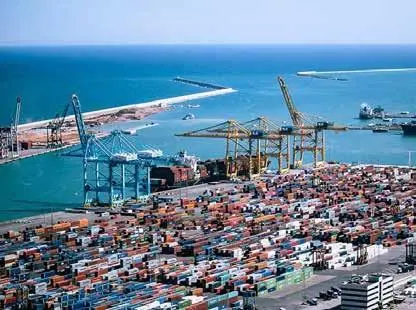
Bulgarian port company BMF Port Burgas, operator of the western and eastern terminals in the port which jointly comprise 15 berths, five piers and a total quay length of 3334m, has a new investor – the Three Seas Initiative Investment Fund (3SIIF). The deal was concluded recently with 3SIIF taking a minority position in BMF.
3SIIF is an interesting investor, essentially comprising an investment fund for the eastern European region, backed by development banks, with the stated mission of closing the infrastructure gap with western European countries. This is the fund’s first investment in the port sector and in Bulgaria. It acquired its minority stake from Advanced Properties OOD, owner of BMF Port Burgas which operates the two terminals under two long-term concessions awarded by the Government of Bulgaria. Both of which have a remaining lifetime of circa. 37-years.
MTBS M&A was appointed by Advanced Properties to find a good fit co-shareholder – MTBS M&A being a division of Netherlands-based Maritime & Transport Business Solutions B.V. (MTBS), a consultancy which engages in a wide sphere of activities in the port and other transport sectors.
Elaborating on bringing the opportunity to the market and the transaction process, Theo Dersigni, Director M&A, MTBS M&A, notes that this pursued a well charted course that took over a year to conclude. With regard to the profile of investor sought, “Nothing was off the table,” he explains, “it could have been an operating company or, as it turned out to be, a financial entity. The main criteria was that it had to be a good fit and we believe we have achieved that with the regional focus and strong influence in the region of 3SIIF,” he underlines.
The transaction process went through distinct phases – first a ‘market survey’ among potential investors presenting the opportunity but on an anonymous basis. This was to gauge the potential level of interest. Next, there was engagement with interested parties with this taking place on a bespoke basis, aiming to better understand key factors such as: preferred levels of investment; expectations regarding equity stake, approach to the collaboration and so on. And throughout the process regularly assessing the ‘good fit factors’ with Advanced Properties. Beyond this point, the process moved to the bid and negotiation stage and the eventual selection of a Preferred Bidder.
“We consider the process to have been a very successful one,” says Adrian de Gruijter, Manager, MTBS M&A, “with this aided by the fact that we knew and have worked with BMF previously, in fact for around 15 years.
”Also, in the eyes of MTBS it is clear that a strong element of the feeling of success emanates from the fact that the transaction was conducted in challenging, if not very difficult, circumstances, both nationally and regionally. In 2021, for example, Bulgaria endured three general elections, held the status of the poorest nation in the European Union and recorded one of the world’s worst Covid-related death rates. Politically, it was more or less in a state of permanent crisis and ranked as one of the most corrupt countries in the EU-bloc of 27 nations.
OPPORTUNITIES NOT NEGATIVES
Such negatives do not, however, deter all potential investors – indeed they are seen by some as opportunities, as is the requirement to undertake major new terminal investments. This latter aspect is one that independent studies assess that there is significant scope for in conjunction with the BMF port Burgas terminals, to build both capacity and efficiency levels going forward, and interestingly in this respect 3SIIF notes it is prepared for this. In a statement relating to the finalised transaction it states:
“BMF Port Burgas offers a significant opportunity for the Fund to support the long-term growth of the port with substantial follow-on investments to expand capacity and capabilities. These investments include the extension of existing berths, the construction of new berths, the further modernisation of facilities, and the ability to handle new types of cargo.”
The recent history of the multi-purpose port has seen positive cargo growth. Over the last decade Burgas port volumes recorded remarkable growth. Since 2010, container tonnage increased very strongly at 16.1% CAGR (2010-2019) to 1.0mt. Similarly, all other cargo types recorded CAGRs between 3.1%-6.1%. A restart of ro-ro services in 2014 can also be identified as a further positive development for the port.
In 2019 total freight tonnage reached 19.0mt before dropping to 14.7mt in 2020. In 2020, Liquid Bulk had the largest share of tonnage at 58%, followed by Dry bulk (23%), General Cargo (12%), and Containers (7%).
Currently, BMP Burgas is off to a good start with its new investor onboard. Traffic in the first five months of 2022 is reported to be up by 40 per cent compared to 2021, diverted Ukrainian cargo providing particular impetus in this respect.
Related Articles
 OPERATIONS
 OPERATIONS
 OPERATIONS