![PortStrategy[GreenPort]](https://www.portstrategy.com/wp-content/uploads/2026/09/PortStrategyGreenPort.svg)




Delivering value
The development and operation of outlying terminals in the regions of Luzon, Mindano and Visayas is delivering positive economic impact with this underpinned by the astute roll-out of the Landlord Port Model
The Philippines Port Authority (PPA) and other government agencies working to achieve national goals have seen considerable success.
The foundation of this success has been the increasing roll out of the Landlord Port Model, which has effectively introduced extensive private finance and expertise to build modern port capacity across the archipelago of the Philippines. As an island country the Philippines is highly dependent on sea transport both for local connectivity and for achieving its economic goals. Success is very prominent in the high-capacity container terminals in Manila but also in the more challenging environment of outlying terminal development; in regional centres and notably in the portfolio of such terminals operated by International Container Terminal Services (ICTSI).
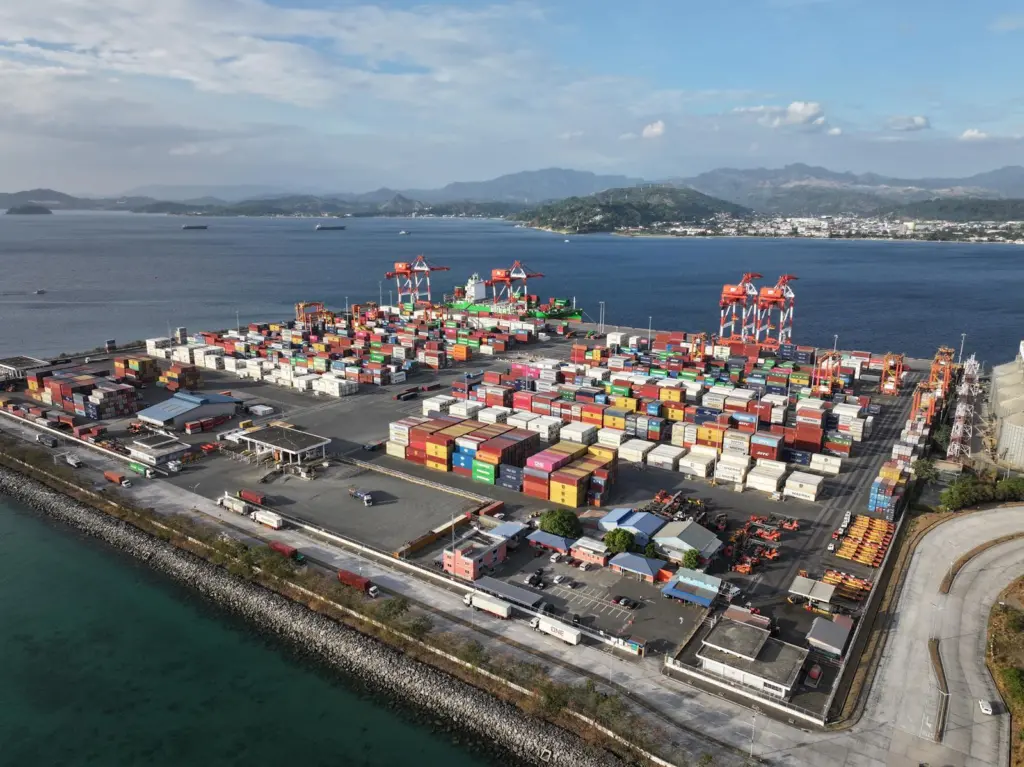
Three terminals stand out with each one positioned in one of the three main island groups of the Philippines: Luzon, Mindanao and Visayas. They comprise: Subic Bay International Terminal Corp – SBITC (central Luzon); Mindanao Container Terminal – MCT (northern Mindanao) and the Visayas Container Terminal – VCT (western Visayas).
They all fit neatly into the framework of various government initiatives – epitomised today by the Government’s Build Better More programme – designed to decentralise economic growth, enhance regional connectivity and build export competitiveness. Indeed, history tells us that the PPA and other government agencies working with ICTSI have been in the forefront of ramping up efforts to meet the latter goals. In Subic Bay, for example, under concession from the Subic Bay Metropolitan Authority (SBMA), ICTSI, through its subsidiary Subic Bay International Terminal Corp, began serving the Subic Bay Freeport in 2000, initially operating at the Naval Supply Depot. In October 2007 SBITC was awarded the contract to manage and operate the newly built New Container Terminal 1and in 2012 it also began operating New Container Terminal 2.
Each of the three outlying terminals identified – SBITC, MCT and VCT within the concession frameworks set by the granting authorities feature a bespoke approach to meeting their respective regions’ requirements and those of key stakeholders. They stand as a positive testament to the landlord port model, properly implemented, with a private sector partner able to deal with the hot inconsiderable challenges presented by such locations and able to maximise the opportunity.
Highlights of the development journey and the latest news regarding actions and plans designed to consolidate and expand their respective positions are presented below.
SUBIC BAY INTERNATIONAL TERMINAL CORP (SBITC) – CENTRAL LUZON
Against a background of the rise and rise of activity in Subic Freeport, Subic Bay International Terminal Corp (SBITC), the ICTSI subsidiary, has recently experienced strong growth and laid extensive plans for maintaining this trend over the medium to long term. The tax and other benefits provided by Freeport status have underpinned a major influx of investors with this bolstered by President Ferdinand R. Marcos, Jr. driving efforts to boost inward investment and by initiatives directed at facilitating the ease of doing business through digitalisation as well as ongoing efforts to upgrade infrastructure. A key example in this latter respect is the forthcoming Subic-Clark-Manila-Batangas (SCMB) Railway – a planned 250km, US$3.2 billion freight project intended to boost logistics, decongest Manila ports, and link key Luzon economic hubs.
Foundation stones laid by SBITC/ICTSI to facilitate growth include agreement, at the end of 2025, with the SBMA to extend the concession agreements for NCT-1 and NCT-2 by 25-years to 2058. This, in turn, has facilitated a comprehensive USD130 million development programme which will be progressively rolled out to raise capacity from 600,000TEU to 1mTEU/yr. Key components of this include: replacement of the four existing quay cranes (2032) and the addition of a fifth unit; integrating more hybrid rubber-tyred gantries, raising empty container storage and reefer capacity, more extensive use of digital systems and notably the deployment of the Navigate system which clears trucks at the rate of 15 to 20 seconds per truck.
MINDANO INTERNATIONAL CONTAINER TERMINAL SERVICES INC. (MICTSI)
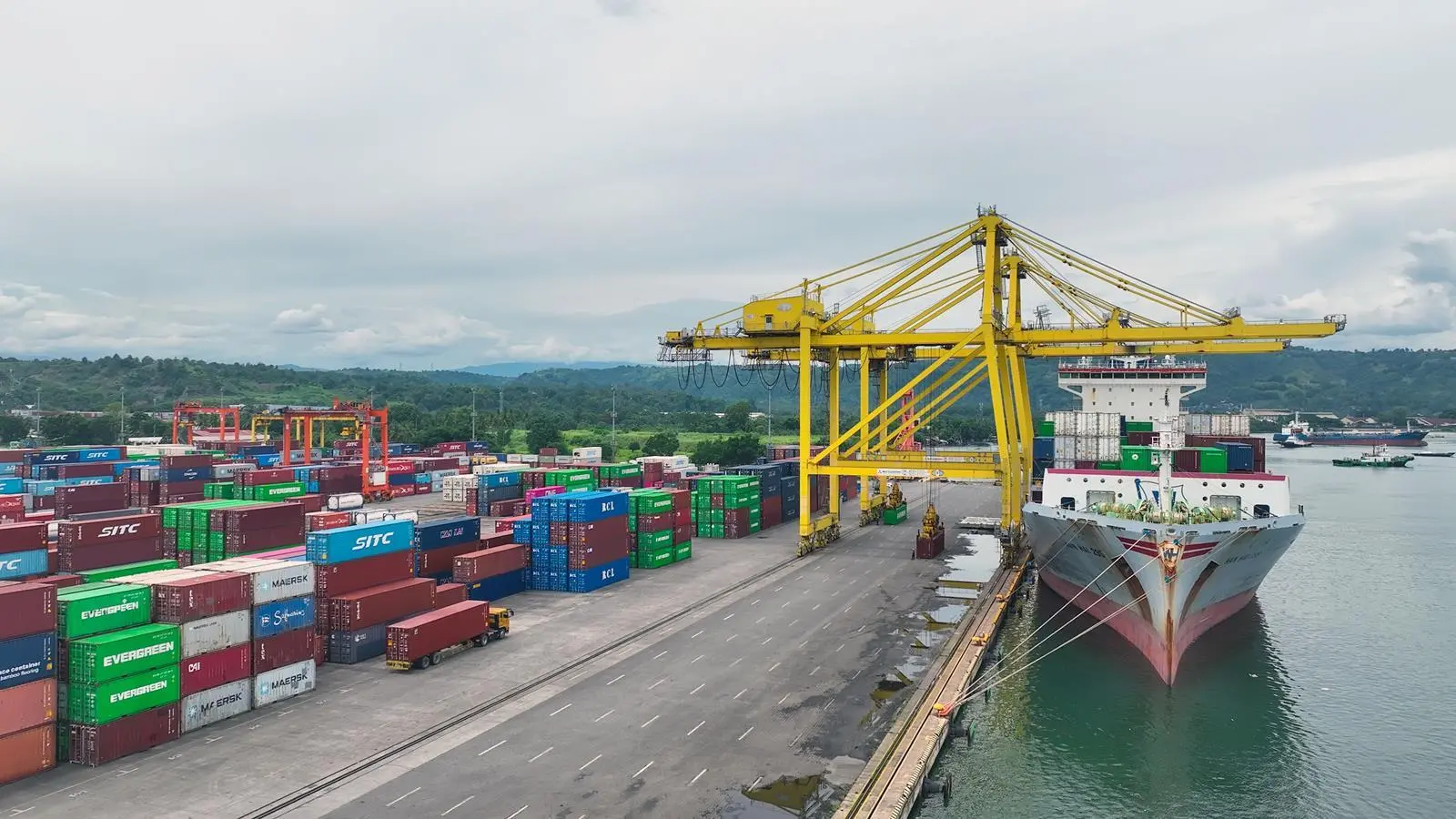
Serving as the gateway to northern Mindano in the Visayas island group, the Mindano Container Terminal (MCT), managed and operated by the ICTSI subsidiary Mindano International Container Terminal Services Inc. (MICTSI), is also enjoying rapid trade growth with refrigerated container trade a central feature of this. The terminal connects Northern Mindanao to global markets, handling increased volumes of agricultural products (e.g., bananas, fruits). Del Monte Philippines Inc accounts for approximately 75% of annual reefer trade exporting pineapples from one of the world’s largest fully integrated pineapple plantations, covering approximately 26,000 hectares in Bukidnon, Mindanao.
Like SBITC, Mindano Container Terminal has also recently been the subject of a 25-year concession extension with this supporting a USD100 million investment programme which includes a 300-metre berth extension and the acquisition of a new quay crane as well as the purchase of other equipment which will realise an overall annual capacity expansion from 350,000TEU/yr to over 800,000TEU/r, facilitating the reception of larger vessels operating a growing network of service routes.
Also notable, and highlighting ICTSI’s across-the-board commitment to decarbonisation, MCT has increased its renewable energy usage by adopting a hybrid, 24/7 solar-powered system. Since February 14, 2025, the terminal has been running entirely on solar energy during daylight with this making a major contribution to the reduction of its carbon footprint.
VISAYAS CONTAINER TERMINAL
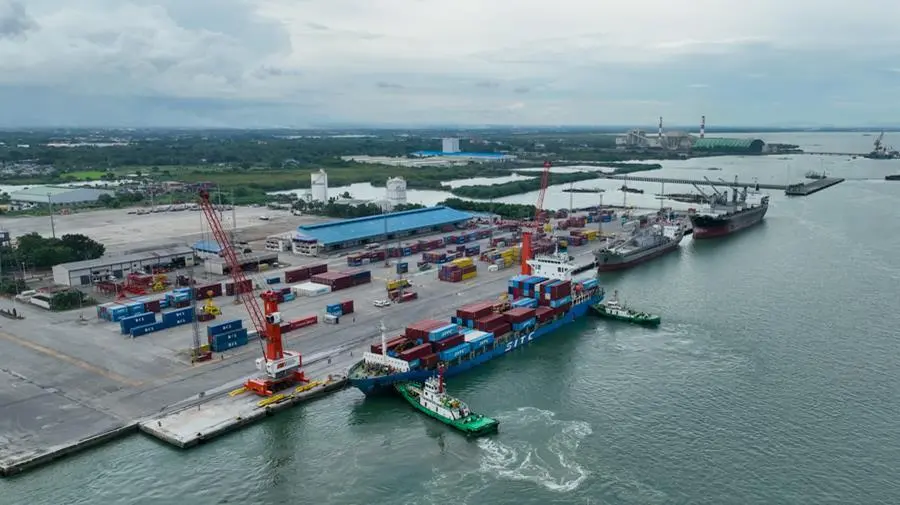
Located in western Visayas, the Visayas Container Terminal (VCT) is a relatively new 25-year concession commencing operations in April 2024. Featuring a mobile crane operation on the quayside (two units), the terminal has a strong multi-purpose role handling a variety of cargoes in addition to container traffic which is largely import driven. As a container handling unit it offers an alternative to the Manila terminals with, typically, usage saving a US$1500 truck movement from Manila. Emphasis is on building services from container lines with these currently comprising a weekly call from Regional Container Lines and a two-weekly call from SITC. Dredging in the channel and alongside the 627m quay by ICTSI has been undertaken to provide for the call of higher capacity vessels.
In terms of other cargoes, there is a strong requirement for handling bagged cement to the extent that VCT has taken steps to invest in multiple bag handling systems. There is also new investment in warehousing to facilitate the needs of cement storage and that of other cargoes. Further, there are strong prospects for reefer cargo with 66 reefer slots provided to accommodate this.
Direct access to maritime services is having a direct positive economic impact including enhancing the viability of agricultural exports as well as significantly reducing the costs of imports. Overall economic impact is seen by the area’s Board of Investments as having the potential to generate 3000 jobs, acting as catalyst for sustainable manufacturing and services in the region.
The terminal will be progressively developed on a phased basis over the lifetime of the concession.
Related Articles
 EQUIPMENT
 OPERATIONS
 OPERATIONS