



Down but not out
In early 2023 a major earthquake occurred in the region where the Turkish ports of Mersin and Iskenderun are located. AJ Keyes looks at what happened, the implications for these two ports and what has been learnt.
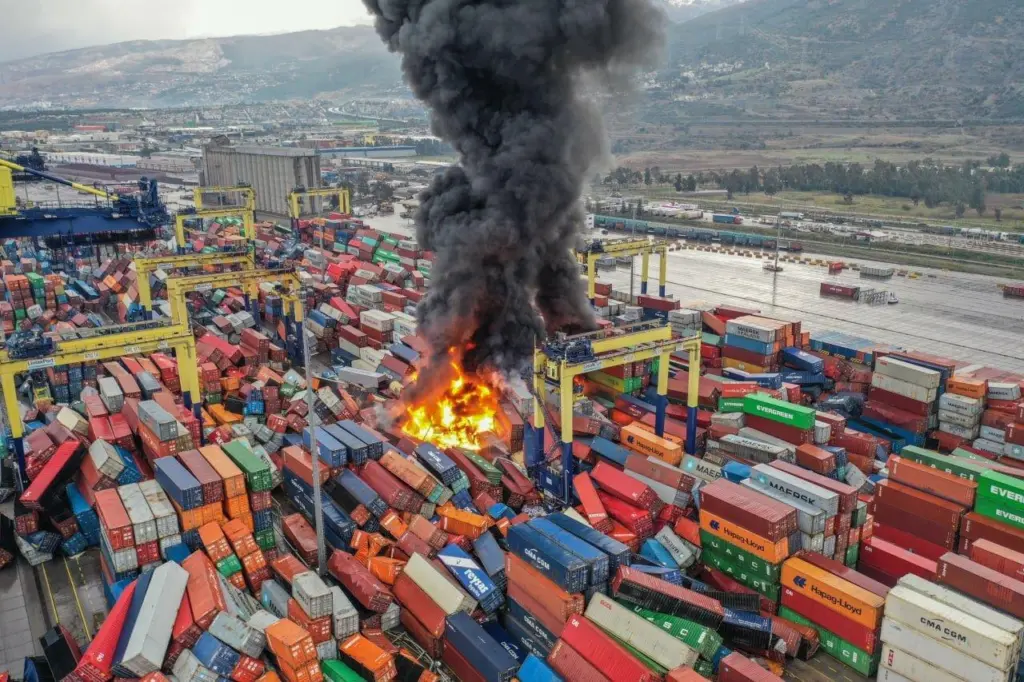
Almost 12 months ago, an earthquake measuring 7.8 on the Richter scale occurred on the border between Turkey and Syria, resulting in widespread damage, including to Turkish ports, causing carnage and operational challenges. Ports in this location on the Mediterranean coast of the country are the largescale facilities at Mersin and LimakPort Iskenderun.
Fortunately for Mersin, it was not impacted by the earthquake, but LimakPort Iskenderun was not as lucky. There was significant structural damage and a severe fire that took three days to put out, with a reported 3670 containers damaged. The stack involved subsequently toppled over.
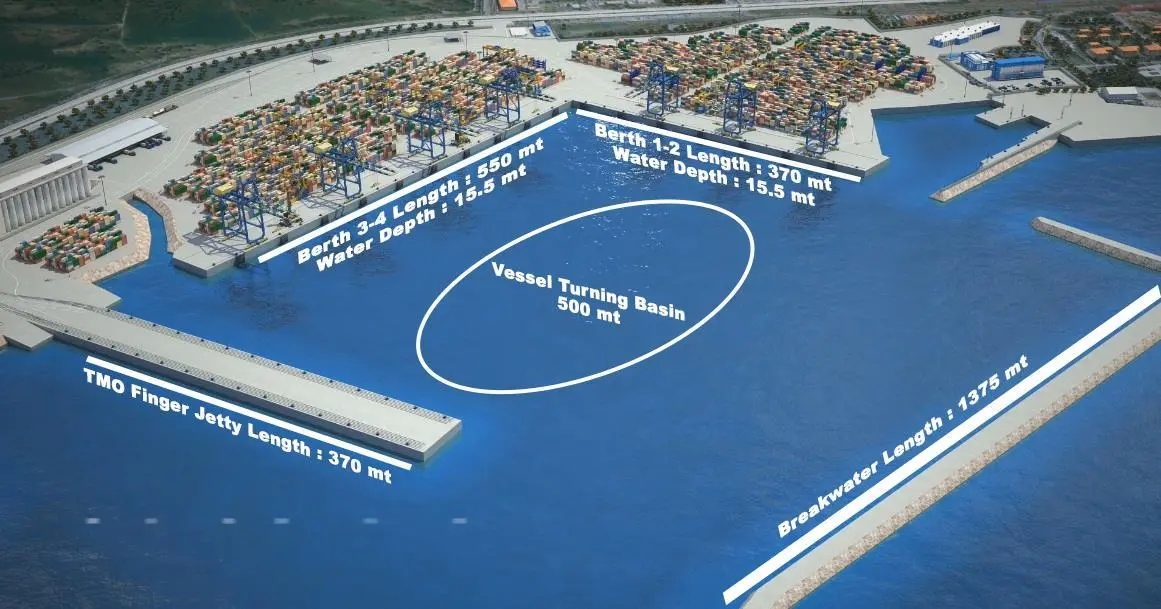
Figure 1 provides an overview of the layout of LimakPort Iskenderun and it can be seen that there are two different berths were containers are handled. From looking at the damage subsequently occurring, notably the fire behind Berth 3-4, which offers 550m of quay and four cranes, this is a major area of the port immediately out of action. At the same time, concerns over damage that may have occurred at Berths 1-2, meant a quay line of 370m and three more cranes were also out of action, along with all rubber-tyred gantries (RTGs) in the container stacks.
Overall, the sudden loss of LimakPort Iskenderun meant that the facility’s annual capacity of one million TEU per annum was immediately unavailable.
“AT LEAST THREE MONTHS”
Despite recovery efforts commencing with immediate effect, this activity was hindered by damage caused by the earthquake. As a result, management at LimakPort Iskenderun reported that it would be “at least three months for operations to return to normal.”
At the same time and to ensure a flow of goods and freight continued in the region, shipping lines had to instigate plans to offset supply chain disruption, as AP Moller Maersk explains: “In order to keep logistics operations moving, the majority of cargo was diverted to the nearby Port of Mersin before continuing its onward journey via inland services. However, this has now resulted in the terminal becoming heavily congested and nearing maximum capacity.”
Maersk Line was not the only shipping line using Iskenderun Port, with Cosco, CMA CGM, Evergreen and One Network Express (ONE) also regular callers. Collectively, the average monthly activity through the port was approximately 40,000 containers before the earthquake according to the operator.
With the shift of containers, mainly to Mersin, immediately after the earthquake occurred, the higher number of boxes suddenly arriving meant congestion occurring at this Turkish port was no surprise. Indeed, Mersin’s container yard saw heavy congestion and truck gate restrictions, resulting in vessel waiting time hitting five days according to several shipping lines.
Despite the significant damage seen at LimakPort Iskenderun, container ships returned in number just two months after the earthquake. Initially, smaller feeder vessels commenced calls as ongoing repair work continued, using one berth supported by mobile cranes, but by May 2023 larger ships were starting to return to schedule, a trend confirmed at the time by Kuehne & Nagel.
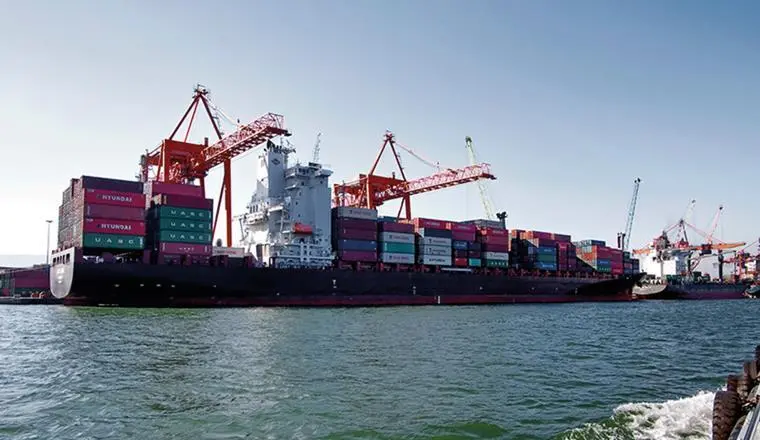
The ability of the port to commence operations in such a short space of time is impressive, especially when damage across the wider region is considered, even in February 2024.
The southern province of Hatay — the region of Turkey that took the brunt of last year’s devastating and deadly earthquake – is still in a state of disrepair. Exactly one year to the day that the earthquake occurred saw local media reports that “hundreds of people are still unaccounted for and thousands more remain displaced in tents and makeshift shelters.”
This location is just 37 miles from LimakPort Iskenderun and re-enforces just how close the port itself is from locations where some of the worst damage occurred.
POSITIVITY IN MERSIN – ISKENDERUN SHIPS RETURN
The sudden short-term surge in Mersin highlighted how quickly congestion could occur at the port. However, this threat is planned to be alleviated. At the end of 2023, the joint venture partnership of PSA International, Akfen and IFM launched the US$455 million East Med Hub 2 (EMH2) Project at Mersin International Port Management (MIP).
EMH2 is expected to increase the annual capacity of MIP’s Mersin terminal from 2.6 million TEU to 3.6 million TEU. The quay will be expanded by 380m generating a new total length of 880m with a draft of 18m.
As a result, the facility will be able to handle two Ultra Large Container Ships (ULCS) of up to 400m LOA simultaneously. MIP confirms its intention to complete the first phase by Q1 2025, with full completion by the end of Q1 2026. There will be four additional STS cranes installed and eight new automated rail-mounted gantry cranes (aRMGs).
There will also be a new logistics park covering 200,000m2, following an agreement between MIP and Mersin Tarsus Industrial Zone.
For Iskenderun, it is possible to track ship calls before, during and after the earthquake to better understand the impact of the terminal damage and subsequent return to working.
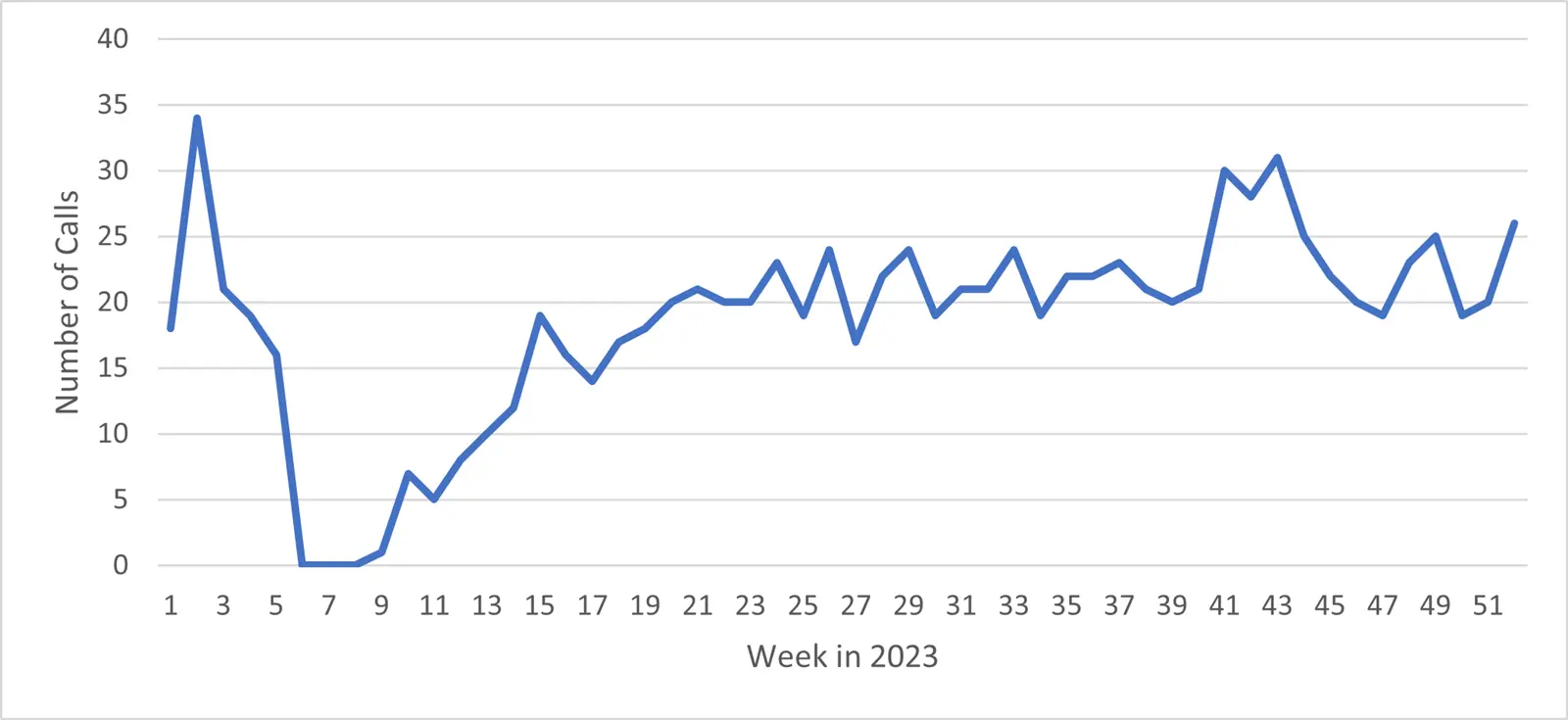
Figure 2 provides a summary of weekly container ship calls to the port for 2023, courtesy of data from Alphaliner. It can clearly be seen that when the earthquake occurred and in the immediate weeks thereafter, the number of vessels recorded was zero. However, the quick reinstatement of the infrastructure helped to see more ships return and during Q2 2023 the number of container ships using the port on a weekly basis was back up to between 17 and 25. The port even handled a seasonal spike ahead of the festive period at the end of 2023 when more than 30 vessels called in some weekly periods.
There is no doubt that the major earthquake in Turkey a year ago caused major challenges for the transport network in the affected area. However, based on the number of ships calling on a weekly basis as 2023 progressed once the port had re-opened, Iskenderun appears to have recovered quickly. However, one conclusion that can be drawn from this incident in February 2023 is the impact of a sudden loss of capacity and the need to move of boxes to Mersin. The challenges then faced certainly reinforced the need for Mersin to add capacity – which is now, fortunately, underway
Related Articles
 OPERATIONS
 OPERATIONS
 OPERATIONS