




MSC PROPELS MULTI-RIO
Rio de Janeiro terminal operator MultiRio is reaping the benefits of its “special relationship” with MSC but recovery in the ro-ro sector has stalled. Rob Ward reports
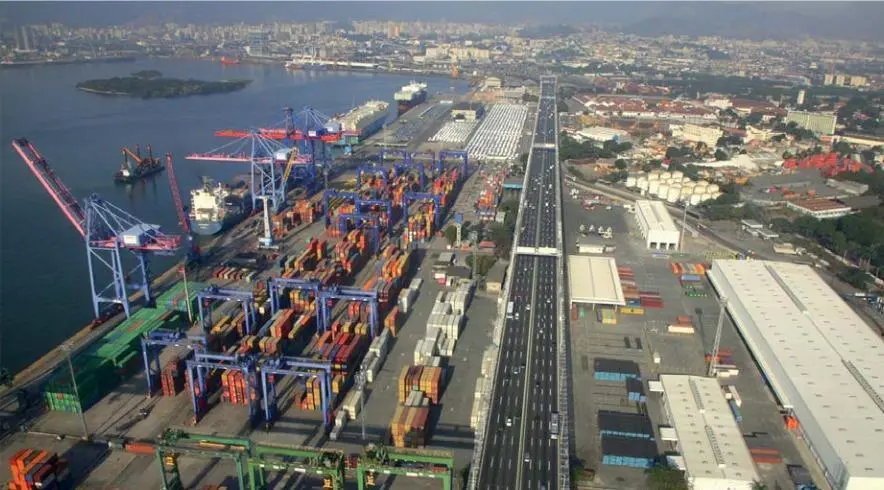
MultiRio (part of the Multiterminais logistics group), has just posted record throughput and almost doubled its handling over the past year in the container sector.
The company handled 436,000TEU in 2021, up 88 per cent over the 232,000TEU it registered in 2020 and more than 200 per cent higher than the 2019 figure of 215,000TEU. Now on track towards its capacity of 600,000TEU per annum, the company is considering ordering more equipment, including Ship to Shore Gantry Cranes (SSGCs).
The driving force behind MultiRio’s box boost has been the switch of the MSC UCLA service (to the US Gulf) from ICTSI Rio to its terminal, in mid-2020. This includes the switch of several coastal services from MSC’s recently acquired coastal operator, Log-In Logistica, which now calls in Rio as well as Santos or instead of Santos with certain services.
Luiz Henrique Carneiro, CEO, MultiRio, notes that the “special relationship similar to a joint venture” that his company has with MSC and its stevedoring arm Terminal Investment Limited (TIL), has been paying off in diverse ways but principally in a sharp uptick in boxes handled.
“In May and June of 2020 MSC decided to move several transshipment services from Vitoria to us, ones that used to go to Santos,” Carneiro explains. “Vitoria has a very narrow turning basin and so the bigger vessels currently trading along the East Coast of South America (ECSA) cannot enter so they need to transship to another port…”
These vessels used to be operated by the last surviving Brazilian container ship carrier, Log-In Logistica, but when the majority shares were bought by MSC the Swiss headquartered carrier decided to favour more calls at MultiRio.
MultiRio now holds 63 per cent of the entire Rio de Janeiro conurbation market for boxes, while ICTSI Rio has 24 per cent and Sepetiba Tecon, just 13 per cent. Five years ago those shares were 50, 30 and 20 per cent but there have been many structural changes since then.
RO-RO CHALLENGES
As reported in the preceding article, while ICTSI Rio has been gaining ground in terms of break-bulk cargoes, MultiRio has the lion’s share of container traffic and also ro-ro, although this latter area of activity has faced difficulties for several years now. The beginnings of a recovery in ro-ro – MultiCar, its sister company, handles Fiat from Minas Gerais and Peugeot Citroen and Nissan from upstate Rio – were visible from last year “until the Russia-Ukraine war started to bite,” according to Carneiro.
“We have seen a huge drop in car imports and exports since 2018 but that is because 2019 saw the Argentine crisis really start to bite and as Argentina makes up around 80 per cent of our imports and exports that had a huge impact on our business,” underlines Carneiro. “And then, of course, came Covid in 2020.”
The numbers reflect the damage: 2018 saw 117, 684 vehicles, 2019 68,500, 2020 50,441 and 2021 the first rise in five years with 81,200 units, up 61 per cent year on year.
“Our budget forecast for this year is for a 10 per cent rise but with the war between Ukraine and Russia we don’t think that is possible now,” states Carneiro. “Some component parts come from Ukraine and there is also a gas that comes from there which is used for making the chips that power the electronics in many cars.
“The first two months of this year,” he continues, “were an anomaly and gave us twice as many vehicles as last year, 20,208 compared to 8,700, but from March the numbers fell dramatically and we are no longer optimistic for increases for the rest of this year in this sector but containers continue to grow.” He points out that there is a chance of adding an Asian service to the roster and if that occurs MultiRio will open a bid for more equipment, including SSGCs. It is currently in the process of adding another 10 Terminal Tractors to the 27 it already deploys.
Related Articles
 OPERATIONS
 OPERATIONS
 OPERATIONS