



Positive pacific gateway Expansion moves
The Canadian Pacific Gateway ports of Prince Rupert and Vancouver have both confirmed project developments that will help enhance their respective competitiveness.
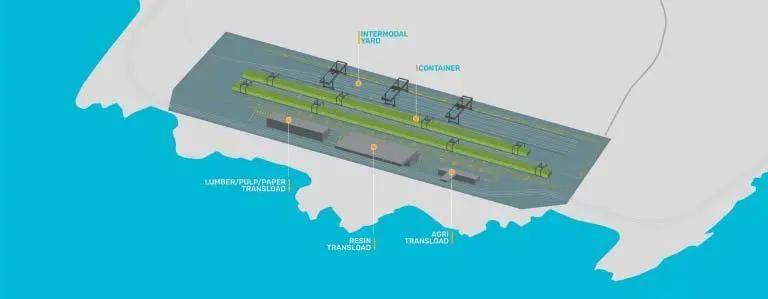
For the Port of Prince Rupert, an integral part of its long-term development plan is the ability to fully integrate intermodal activities by linking the cargo marine terminal, with logistics activities and rail. Now a critical step in the plan has been achieved with confirmation that the “Ridley Island Export Logistics Project” has received a final determination from the Canadian Government’s Federal Environmental Effects Evaluation Review.
In essence, this means that the proposed project is not anticipated to cause significant adverse environmental effects in accordance with the requirements of Section 82 of the Impact Assessment Act (IAA).
Shaun Stevenson, President and CEO, Prince Rupert Port Authority (PRPA) notes: “This project will create an innovative and competitive transloading facility for commodities such as plastic pellets, cereal grains, specialty agriculture crops, lumber, and pulp to be loaded directly from rail into containers for export, creating 400,000TEU of export capacity in the first phase.”
He added that initial site works and preparation will commence by Q2 2023, with the final investment decision between all commercial partners anticipated before the end of the year.
For the Vancouver Fraser Port Authority (VFPA), the construction component of the Centerm Expansion Project at the Port of Vancouver is now complete.
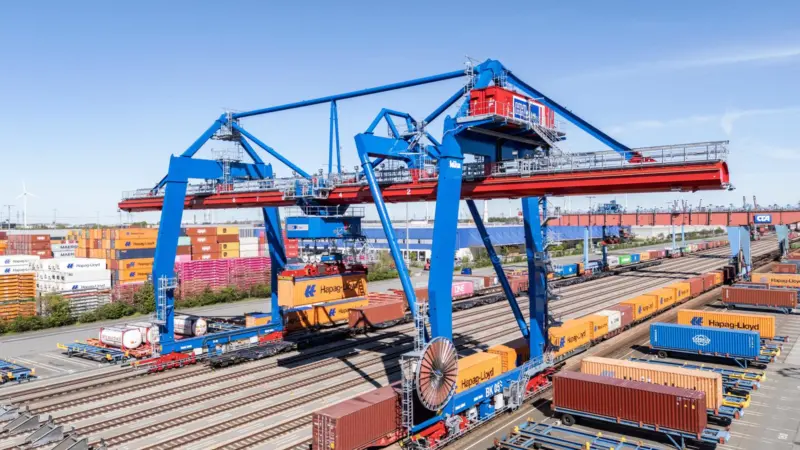
The project work included expansion of the terminal footprint, reconfiguring and expanding the container yard, extending the intermodal yard and construction of a new operations facility.
As a result of the project, terminal operator, DP World, is expecting to see capacity increase from the current 900,000TEU per annum to 1.5 million TEU per annum.
This expansion is certainly needed in Vancouver. VFPA confirms that container terminal capacity on the West Coast of Canada is expected to reach capacity during the mid-to-late 2020s, necessitating further investment in terminal space. The authority is currently awaiting environmental approval from the Federal Government to proceed with its long-planned Deltaport 2 project, which will add 2.4 million TEU capacity per annum to the port and region.
Related Articles
 OPERATIONS
 OPERATIONS
 OPERATIONS