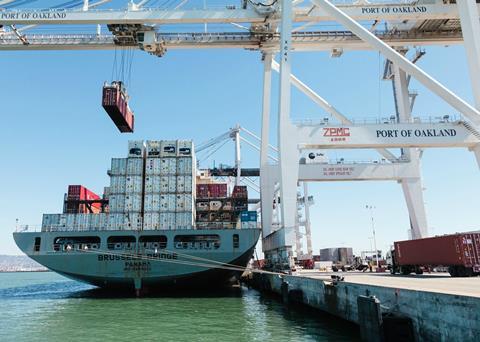
The Port of Oakland is moving ahead with a major project to widen its harbour turning basins, as larger containerships place increasing pressure on existing navigation infrastructure.
The Oakland Harbor Turning Basins Widening Project is designed to improve the ability of large vessels to manoeuvre safely and efficiently through the port. The existing basins were designed for containerships up to 1,139 feet long (347 metres) and carrying around 6,500 teu, while vessels calling at Oakland today are frequently larger.
“Investing in the Port’s turning basins is essential for moving goods through the Port safely and efficiently to support a cleaner future,” said Port of Oakland maritime director Bryan Brandes.
“When critical maritime infrastructure is improved at Oakland for ship traffic, it benefits everyone by delivering jobs and positive economic impact.”
The proposed scheme involves widening both the Inner and Outer Harbor turning basins. The project is being developed in partnership with the US Army Corps of Engineers, with the federal government and port sharing the cost.
Earlier estimates put the overall project at around US$600 million, while the port’s latest budget documents put the preliminary total at about US$700 million, including an anticipated port capital contribution of approximately US$225.5 million.
The project has already cleared a major environmental milestone. In July 2025, the Oakland Board of Port Commissioners certified the Final Environmental Impact Report and approved the project’s advancement. Design was expected to begin later that year, with construction anticipated to start in 2027.
Environmental considerations are also central to the project. The port says it has committed to measures intended to reduce impacts on surrounding communities, including the use of 100% electric dredging and beneficial reuse of material generated during the work for wetland restoration.
The widening is intended to reduce transit restrictions and delays affecting longer vessels, improving the efficiency of cargo movements through one of the US West Coast’s major container gateways.
The project also forms part of Oakland’s broader infrastructure and sustainability strategy. The port has been investing in zero-emissions equipment, shore power and clean-energy infrastructure as it works to reduce emissions from maritime operations.
Construction is currently anticipated to begin in 2027 and finish around 2030.