

Hungary’s East-West-Gate sets the standard for new generation intermodal terminal operations with its adoption of 5G and digital twin technology
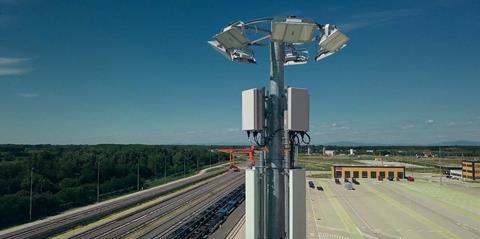
Close to the border, where Hungary’s 1435mm and Ukraine’s 1520mm-gauge rail lines intersect, crane operators at Hungary’s East West Gate (EWG) intermodal facility are no longer working in small cabins more than 30m above ground. The terminal has embraced next generation 5G and AI technology to allow the cranes’ operators to remotely control the machines and is utilising digital twin technology to increase operational efficiency.
The recently opened facility has the capacity to handle up to one million 20ft containers per year as a result of the digital transformation of the port in partnership with information and communications technical (ICT) service provider, Huawei.
The terminal operator transloads cargo from conventional road semi-trailers onto rail, as well as providing transshipment of wagons between the two gauges.
One of the key factors behind the increase in throughput at the terminal is the implementation of a ‘digital twin’ technology, known as Maxwhere. This advanced system is a virtual replica of the EWG, facilitating efficiency gains in cross-loading the containers from incoming trains and trucks, either to be transported further or moved into storage areas.
Janos Talosi, the CEO of EWG, underlines the significance of the new system, “The digital twin technology implemented gives us unparalleled efficiency in cross-loading the containers. The system scans each load coming in to the terminal, and a replica of the cargo is created online. It then allocates digitally the most efficient unloading/transloading schedule based on the positioning and detail of the cargo, and where its next destination is.”
Each container entering or leaving the terminal is automatically scanned by OCR gates, capturing its carriage number and matching it to the online manifest. Algorithms are applied to a digital model of the cargo and the terminal, which then assesses the most efficient schedule for loading and cross-loading based on the cargo’s characteristics and intended destination. This information is relayed to operators of the terminal’s four cranes which consist of three Rail Mounted Gantries (RMGs) and a Rubber Tyred Gantry (RTG). The system strategises the use of these cranes to ensure the shortest unloading and cross-loading times, resulting in a 20-30 per cent increase in efficiency.
5G AND CARBON NEUTRAL
Central to this digital transformation is Huawei’s private 5G network, which facilitates real-time tracking and management of cargo. The high uplink bandwidth and guaranteed low latency of the 5G network stream HD video images from over 300 cameras across the site, including 20 on each crane, to the remote crane operators in the control room. This real-time control system allows for precise manipulation of up to 50-ton containers and even full cargo trucks, enhancing safety and efficiency.
The operators are in the control room, rather than being stationed 20-30m above ground in isolated cabins, remotely controlling the cranes. This remote operation allows for efficient time and resource management, and provides a safer working environment with zero possibility of crane operator injury.
The digital twin technology also ensures that all requirements of security, railway operations, crane operations, logistics, and customs are met seamlessly. Algorithms facilitate smooth transitions, learning from past experiences and highlighting potential issues for human operators to resolve and recalibrate the system for future occurrences.
Moreover, the EWG is setting sustainability benchmarks, being powered by a local solar plant with plans to build its own renewable electric plant and battery storage solution. The aim is to be fully self-sufficient and carbon neutral, marking another step forward in sustainable transport operations.
The EWG exemplifies the potential of 5G technology in revolutionising the logistics and transport sector. It’s a testament to how digital twins can enhance efficiency, reduce personnel requirements, and increase safety. As we move into the future, the EWG is set to be a beacon of innovation, marking a new era in intermodal logistics.