With the change of port administration in Santos there are concerns about a return to political interference but there is universal agreement on the need for new investment. Rob Ward details the challenges
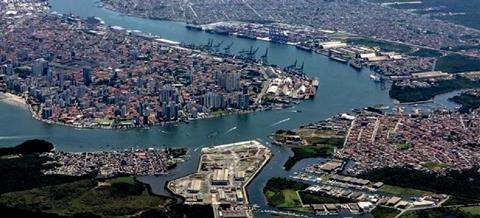
The change of government in Brazil will almost certainly lead to the cancellation of the plan to privatize the Santos Port Authority (SPA), but the tender to create a new container terminal in the port, STS 10, will go ahead in one form or another. However, fears of a return to “political interference” are widespread.
This is the view of several reliable sources in South America’s largest port, which has successfully increased volumes and profitability in recent years (see following article), but is now suffering capacity issues across several cargo categories, but especially on the container front.
Fernando Biral, the current president of SPA who is set to hand over the reins of power to a new incumbent in January, told PortStrategy that since his time on the board of SPA – initially as Chief Finance Officer, from March 2019, and then President from April, 2020 – the backing of Taricisio de Freitas, the then Minister of Infrastructure (and since then elected as Governor of the State of Sao Paulo, wherein lies Santos), meant that Biral, and his like-minded predecessor Casemiro “Tercio” Carvalho (who also had a financial services background), could run SPA as a quasi-private enterprise, “free of politics”.
This is radical by Brazilian standards as usually Brazilian port authorities (Companhias Docas, or Dock Companies) are used as political playthings for the powers that be to “divvy up” lucrative positions on the board of directors: typically five in the case of Santos. An example of this was Michel Temer, leader of the centrist PMDB party who often held the balance of power in Congress in Brasilia and therefore was “entitled” to one or two seats on the five-man board of the Santos Port Authority. The port of Santos had for decades been seen as part of Temer’s “fiefdom” despite him having no specific role in its organisation.
“During the last government we were allowed to get on with the business of making the port work better, because Tarcisio [the old Infrastructure Minister until he became Governor of Sao Paulo mid-2022] protected us,” explained Biral. “It was a policy that state-owned companies should be managed by technocrats and by people from the private sector. For instance, l am not a politician; I am a financial guy.
“In the past, each of the directors was chosen by particular political parties and we are afraid that this might happen again. That’s the worst fear.”
And that fear is shared by several other port users and Santos port watchers.
THE DANGER NOW
“The danger now is that the professionalism and solid foundation laid down by Biral and Tercio over the past four years will be ripped up and we go back to cronyism and what’s best for the ruling political parties and NOT what is best for the port of Santos and the people of Brazil,” said one veteran port consultant, who did not wish to be named for fear of repercussions. “We hope that whoever Lula appoints as SPA president will not do this, but we don’t know.”
Jose Roque, Executive President of Sindamar (the Santos and Sao Paulo Shipagents’ Association) has been a constant advocate of keeping “politicos” away from “the often inefficient running of Santos port.
“Port managers should not be appointed by politicians, but rather be competent professionals who have enough expertise on what a port is and what it entails to manage one, interacting with its users and with the city,” he told the Valor financial newspaper.
The victory of left-wing Lula over the free-market leaning maverick Bolsonaro, means that the privatisation of the SPA will almost certainly be put into cold storage and will not follow the example of Vitoria (in the state of Espirito Santo, just to the north of Rio de Janeiro, the first Companhia Docas to be privatised. It is not yet known if Lula and his team will attempt to reverse that privatisation, but the consensus is that it is “unlikely”.
There have been, during December, some manoeuvrings back and forth among spokesmen for the “government in waiting” with some sources claiming that Lula’s new team might well allow the privatisation of Santos Port Authority to go ahead as planned – to raise some cash for the incoming administration in Brasilia.
WRONG ALTERNATIVE
In the end, Lula appointed Marcio Franca as his new Minister for Ports and Airports (formerly Infrastructure), and the nominee from the left-leaning PSB party (part of the Centrao, or Centrist, block of parties that strongly influence government policies whether of the right or left are in power, due to a proliferation of parties), was soon declaring; “The privatisation of the port authorities is a wrong alternative and the control of the state is very important.”
He added that the port workers opinions had not been listened to sufficiently and there needed to be a re-balancing of power. More details of new port policy would be revealed once a new SPA president is appointed.
Various ministers in the Bolsonaro government had been insisting for the past year that if the “Trump of the Tropics” – an epithet even more valid after his supporters invaded the Brazilian senate on January 8 - won the presidential elections then “All the Companhias Docas would be privatised,” starting with Santos and then with Rio de Janeiro, Sao Sebastiao (also in the state of Sao Paulo) and Itajai (in the south), to follow shortly afterwards.
But now the political winds have changed once again in Brazil, with Lula back at the helm, although most experts and stake-holders PortStrategy spoke to said that the socialist president – now starting his third four-year term – might be pragmatic and keep some of the “right-of-centre policies” of his predecessors, if they helped raise funds for spending on social services and creating jobs.
Expanding a moribund shipbuilding sector will definitely be a priority of Lula’s new government, according to Armando Fregeido Rodrigues, a veteran Brazil expert of the Aquapar consultancy in Rio de Janeiro.
“I think, for sure, we will see the shipbuilding grow considerably under Lula and that will have lots of positive effects on ports, with all kinds of ancillary and support services being boosted,” Rodrigues told Port Strategy.
Leandro Carelli Barreto, a director with the Solve Shipping consultancy, stated that under the presidency of Dilma Roussef (President from 2011 to 2016), Lula’s successor and hand-picked protege after his previous two periods in power (2003 to December 2010), carried out several port and other infrastructure concessions and even “passed some laws to speed up terminal concessions, leading to more Private Use Terminals (TUPs].
“I am sure the STS10 concession will continue as Santos desperately needs more container capacity and this would boost foreign trade,” Barreto told PortStrategy.
INVESTMENT A PRIORITY
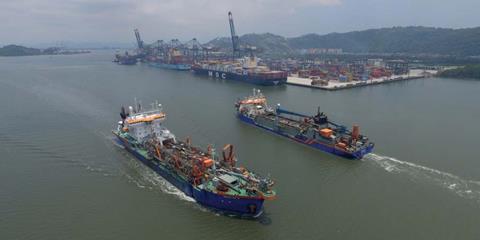
Barreto added that whichever party is in power in Brazil, the fact remains that the South American country’s ports, and especially Santos, urgently need investments in maritime access channels (especially draught and turning basins), deepening of berths and upgraded gantry cranes to deal with the arrival of the New Panamax vessels.
“The bigger New Panamax ships are already coming here and we had the first one, the Rio de Janeiro Express [operated by Hapag Lloyd and with 51m beam and 335m length, plus 14.8m draft fully loaded] berth in Santos recently,” he told Port Strategy.
“She needs nearly 16m depth but she had to come in with 14.3m due to draught limitations so 1200TEU were left behind. That means around US$3 million of wasted revenue was left behind and that will not be to the liking of the shipping lines.”
Barreto, and several others, even Santistas (denizens of Santos and neighbouring port cities) opposed to privatisation, all agree on one thing. That Santos, if it is to maintain its ambition to become the hub port for all East Coast of South America (ECSA) must improve its current draft, from 14.5 meters at high tide (13.7m at low tide).
Under current SPA plans there is the intention to gradually increase today’s depth of around 15m, to 16m in five year’s time and then on to 17m.
“Whoever runs SPA they must make dredging a top, top priority,” implored Barreto, echoing the views of the entire Santos port community.