


Coping with the crash
Alex Macinnes and Nigel Moniz discuss the procedures to consider in the event of a collision
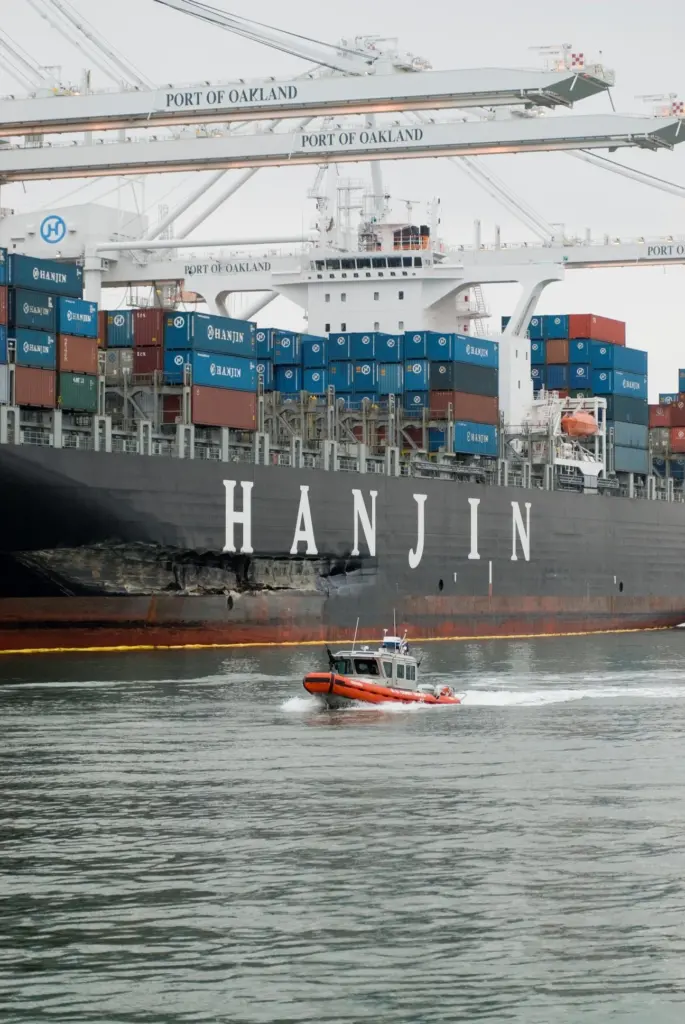
When a collision occurs in a port, various surveyors, investigators, authorities and representatives will usually descend on the scene. It is likely there will be damage caused to the ships and terminal structures involved, and there may also be injuries, loss of life or pollution to the area. The financial impact, the delays involved and the damage to commercial relationships have the potential to be significant.
The priority will be to deal with any persons injured or killed, as well as providing the necessary support to the families involved. Next, the main concern will be to clean up the immediate area and to ensure the vessels and facilities involved are reinstated with the minimum of disruption. Once those issues are dealt with, attention will then likely shift to who is liable and, more importantly, who will pay for the ensuing losses.
Although certain matters will take priority over others, in reality the various aspects of the relevant action plans need to be commenced simultaneously and immediately. For example, although issues of liability will clearly be less urgent than dealing with the situation on the ground, certain matters such as the collection and preservation of evidence, and the establishment of relevant jurisdictions, will need to be addressed without delay. The success, or otherwise, of the action plans will depend largely upon preparation. A thorough review of the potential liabilities will assist in creating these plans as well as, in addition, determining whether suitable and sufficient insurance is in place.
The parties involved are likely to be numerous, potentially including: the port and local authorities, the terminal operators and owners, shipowners, various governmental organisations, persons injured and their relatives, charterers, sub-charterers, shippers, receivers, cargo owners, salvors and insurers. From a terminal operator’s perspective, the relevance of these parties is likely to increase due to the emergence of the Rotterdam Rules and the consequent likelihood of terminal operators being considered to be a “Maritime Performing Party” under that convention (for further detail see the Port Strategy article “The Rotterdam Rules for Terminal Operators” November 2009 issue, by Craig Neame and Matthew Gore of Holman Fenwick Willan).
Liability between the various parties involved may arise in different ways. They may be contractual (i.e. arising out of an agreement). Alternatively, duties may arise without any prior ‘agreement’, such as the duty to take care under the ‘tort’ of negligence, or under government made legislation or conventions. Where English law applies, aside from potential criminal offences, the liabilities of those involved will often be determined in three main ways: liability under Statute or local bye-law, liability in negligence, or liability under contract.
In terms of liability arising under statute, one of the most significant is that arising under The Occupiers’ Liability Acts of 1957 and 1984. The principal duty owed by the occupier is set out by Section 2 of the 1957 Act, which provides:
“(1) An occupier of premises owes the same duty, the ‘common duty of care,’ to all his visitors, except in so far as he is free to and does… modify or exclude his duty…by agreement or otherwise.
(2) The common duty of care is a duty to take such care as in all the circumstances of the case is reasonable to see that the visitor will be reasonably safe in using the premises for the purposes for which he is invited or permitted by the occupier to be there.“
The Act is capable of applying to both private- and publicly-owned facilities. The damage covered by the Act is not confined to physical damage, but may also cover certain resulting financial loss – for example, the costs of hiring a substitute vessel.
In accordance with Section 4(a) of the Act, the Occupier may be able to avoid liability if they have given sufficient warning to the relevant person which “was enough to enable the visitor to be reasonably safe” Any such notices should be carefully and strategically located, and should be clear and easily understood by those likely to be using the relevant area.
Also, in accordance with section 4(b), an occupier may be able to escape liability if the damage has been caused by the faulty work of an independent contractor employed by the occupier – providing that it was reasonable to entrust the work to them and providing reasonable steps have been taken to ensure that the contractor was competent and that the work had been properly done. Therefore, a terminal operator or owner should thoroughly consider and document any act of delegation to an independent contractor.
A further important statue in the context of ports and harbours is the Harbour, Docks and Piers Clauses Act 1847. As well as dealing with the removal of wrecks, this Act holds the owner of a ship which damages a relevant harbour, dock, pier, quay or works (as defined in the Act) answerable to the ‘undertaker’ of that facility. The ship owner is liable for damage done by the ship and also by any person employed about her.
The statute creates a ‘maritime lien’ which effectively ‘attaches’ to the vessel and can be of great assistance to the port in enforcing the claim against the vessel. The damage which can be claimed is restricted to physical damage and, as a result, would not include a consequential loss of revenue arising through the inability to use the port or harbour.
In addition to specific rights of recovery provided by statute, there are certain further duties placed on those in charge of vessels, such as the duty to obey the Collision Regulations created under statutory instrument. Although a breach of these regulations may amount to a criminal offence, the breach is often relied upon as evidence of a failure to exercise the duty of good seamanship when suing a party under the ‘tort’ of negligence.
In respect of negligence, a seafarer is generally required to exercise reasonable skill and care to prevent their vessel from causing damage to others. What is reasonable will depend on the facts of the individual case. A court will look at all of the surrounding circumstances and come to a decision based on all of the available evidence. Although the duty required is to exercise reasonable care, if faced with exceptional circumstances or risks, that standard may require the taking of exceptional precautions.
Therefore, in order to properly plan and prepare for the aftermath of a substantial collision within a port or terminal, it is helpful to have an appreciation of how the various liabilities involved can arise, how they link together, and how it is possible to manage and minimise those liabilities. The fact that it is possible to modify by agreement the liabilities arising under the law relating to Occupiers’ Liability, and the ability to alter the normal position under negligence by the same means is extremely important.
Of equal importance is the need to act quickly in order to collect and preserve evidence and, if necessary, to establish a favourable jurisdiction. This can be achieved by having relationships with organisations who have in place the experience, ability and networks to effectively manage a situation, and also who have the ability to mobilise quickly and effectively.
Any substantial collision within a port or terminal will always involve expense, argument and inconvenience. However, with a moderate amount of careful planning before the event, and effective plans and professionals in place, the pain involved can be managed and any subsequent liability or recovery substantially improved.
Alex Macinnes and Nigel Moniz are associates within the Ports & Terminals Group at international law firm Holman Fenwick Willan. For further information please visit www.hfw.com/sectors/portsterminals or contact Alex Macinnes at alex.macinnes@hfw.com or Nigel Moniz at nigel.moniz@hfw.com.
Related Articles
 CONCESSIONS & INVESTMENTS
 PORT & TERMINAL NEWS
 INSIGHT & OPINION