






Emission-free hyperloop plan takes shape
The ports of Rotterdam and Amsterdam will play a key part in a plan to create a pan-European emission-free hyperloop network.
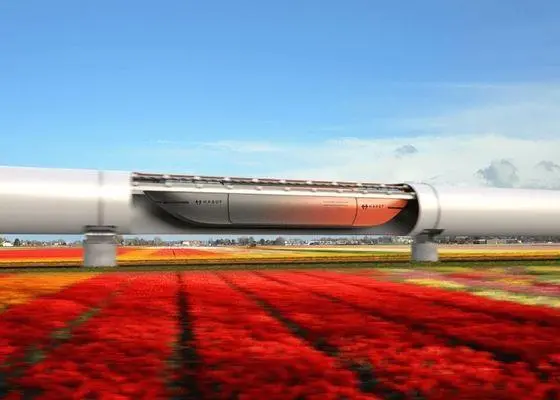
A study aiming to address how goods can be shipped more quickly is exploring a pilot route in the Randstad, Netherlands, which is due to become the first step in the hyperloop network. The study, which involves an extensive coalition of organisations, is looking at a hyperloop connection for goods between important distribution hubs in the provinces of North and South Holland. The focus is on the busy goods corridor between the regions of Rotterdam and Amsterdam.
“This partnership is an important step in the development of this new modality, which enables us to deliver fresher products more often, faster, and at lower rates,” said Rik Roeske, project manager of the cargo hyperloop. “We will be able to transport goods at a speed which is very competitive compared to trucks, with more frequent and smaller shipments.”
Taking trucks off the road
The hyperloop offers the potential to significantly reduce the need for existing forms of transport, and to greatly increase the speed and reliability of deliveries. This will improve the air quality and reduce CO2 emissions in the Randstad. This is an important step for the transport sector in achieving climate goals. The study identifies the challenges and solutions also faced by other regions in Europe. This paves the way for investments in hyperloop infrastructure throughout the continent.
The project takes place under the umbrella of the Hyperloop Development Program (HDP), a public-private partnership for the development of the hyperloop announced at the end of 2020.
Related Articles
 ALTERNATIVE FUELS GREENPORT