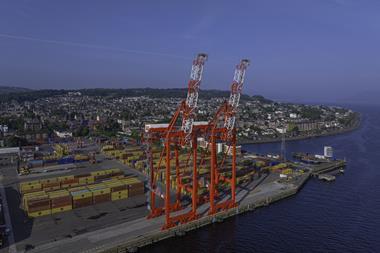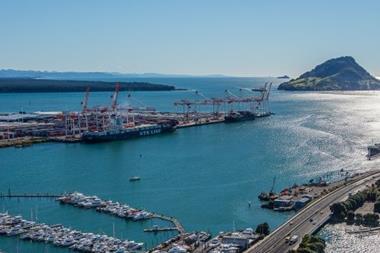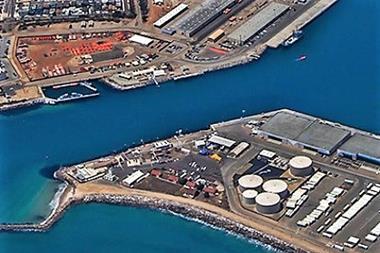



Peel Ports has launched a transformative GB£750 million construction framework that sets a new benchmark in sustainable port development across the UK and Ireland.
Spanning eight years, the framework formalises delivery for general, marine and major construction works, ensuring every project meets the group’s environmental, safety and community engagement standards.
At its heart is a sharp focus on marine civils - a foundational element that includes piling, quay wall construction, lock and sluice gate upgrades and RoRo infrastructure. This approach isn’t just about durability; the operator says it’s about embedding climate-conscious engineering into the port landscape.
“Marine civils are a core part of that,” explains Lewis McIntyre, managing director – port services, at Peel Ports Group.
“These works have direct environmental and operational impacts. By formalising delivery through this framework, we can ensure contractors meet our standards on health and safety, environmental performance and community engagement.”
The group’s strategic pivot towards marine renewables, alternative fuels and circular economy logistics isn’t an abstract ambition, it’s becoming reality through key projects like the Hunterston development, an exemplar of what sustainable port construction can achieve.
Hunterston PARC
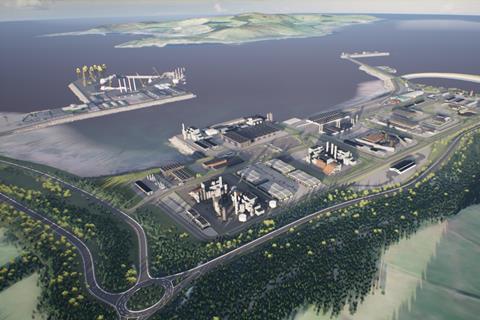
The jewel in Peel Ports’ green infrastructure crown is undoubtedly Hunterston Port and Resource Campus (PARC). Located on Scotland’s west coast, this 1,000-acre site, once a coal handling terminal, is undergoing a GB£150 million marine yard transformation designed to fuel the UK’s offshore and clean energy ambitions.
Planning consent for the ambitious redevelopment was granted in December 2024. Work is already under way to infill part of Europe’s largest dry dock, create a new quay wall and expand laydown areas, making the port capable of handling large-scale offshore wind logistics, including floating wind assembly.
“Hunterston PARC is one of the most significant regeneration projects in the UK,” says Mr McIntyre. “It’s a flagship for us in terms of enabling the energy transition.”
The site boasts over 350 acres of development land, direct national grid connections, on-site rail access and deep-water berths, all ideal conditions for hosting energy-intensive and low-carbon industries. It is already attracting a new wave of investment and innovation in marine renewables and alternative fuels.
Green campus
Peel Ports’ vision for Hunterston isn’t limited to offshore wind.
The site is being shaped as a low-carbon industrial campus, co-locating tenants in sectors such as green hydrogen, aquaculture, circular manufacturing and energy storage.
Highview Power is progressing plans for the world’s largest Liquid Air Energy Storage (LAES) facility on the campus, while XLCC has previously earmarked the site for a subsea power cable manufacturing plant.
“Our vision is to create a low-carbon industrial ecosystem,” Mr McIntyre explains.
“That means co-locating businesses that can share infrastructure - power, heat, water, or logistics. We’re not just offering plots to tenants. We’re offering the opportunity to be part of a fully integrated supply chain.”
The development also holds national strategic importance. It aligns with Scotland’s net zero targets and supports the Ayrshire Growth Deal, with backing from Scottish Enterprise and North Ayrshire Council.
Peel Ports anticipates the creation of over 5,000 jobs and GB£3.5 billion in inward investment.
Marine renewables
Hunterston’s evolution reflects the growing role ports must play in the UK’s clean energy transition.
As UK offshore wind capacity targets ramp up to 50GW by 2030 and green hydrogen gains momentum, the demand for fit-for-purpose port construction, like strengthened quays and laydown zones, has never been greater.
“The site has the physical infrastructure needed for large-scale renewable deployment,” Mr McIntyre points out.
“There are very few ports in the UK that can accommodate that kind of operation without major redevelopment. Hunterston is already close to being fully capable.”
This capability isn’t accidental. It stems from Peel Ports’ belief that marine civils must be designed with the future in mind accommodating everything from massive turbine blades to hydrogen bunkering systems.
This green-first mindset is also visible at other Peel Port sites including Liverpool, where the operator is busy expanding shore power and multimodal logistics.
“Ports are not just gateways,” Mr McIntyre adds. “They are the backbone of the energy system and the foundation for new industrial activity.”
Green construction framework
The new construction framework plays a pivotal role in standardising sustainability across all Peel Ports projects. From using recycled aggregates and low-carbon materials to enabling modal shift through better rail links, every detail is engineered for long-term environmental performance.
“Even routine works are being aligned with sustainability,” Mr McIntyre says.
“We’re using carbon-efficient surfacing and construction methods that reduce emissions. The bigger picture is that the framework is increasingly being used to support renewable energy, clean fuels and circular economy tenants.”
This commitment is evident in current and future initiatives. Shore power installations at Liverpool, London Medway and Dublin are reducing emissions from berthed vessels. Across sites, quay wall reinforcements and infrastructure upgrades are making room for new-generation energy tenants, especially those in hydrogen production.
Active role
Peel Ports is redefining the role of port operators in the climate era. Rather than acting as passive landlords, the group is proactively building infrastructure ahead of demand, an approach Mr McIntyre sees as essential to success.
“For port operators, the opportunity is to move from being passive infrastructure owners to active participants in the energy transition,” he states.
“By enabling clean industries, ports can lead this shift. That is what we are doing at Hunterston and across our network.”
The group’s strategy is anchored in five core construction principles: Using low-carbon and recycled materials, designing for clean energy operations, measuring whole-life carbon, protecting marine ecosystems and enabling circularity.
Mr McIntyre is clear about the stakes: “The shift to net zero isn’t achievable through wind and solar alone. A resilient energy mix needs marine renewables, and these technologies are only viable with the right port infrastructure in place.”
Future-proofing
As the UK accelerates toward a low-carbon economy, Peel Ports is placing marine civils and port construction at the centre of its transition.
From the sprawling campus at Hunterston to new multimodal logistics in Liverpool and beyond, the company is laying the groundwork for a cleaner, more circular industrial age.
With its GB£750 million construction framework steering the delivery of sustainable infrastructure and a clear commitment to marine renewables and alternative fuels, Peel Ports is helping set a powerful example of what future-ready port development looks like.
At the heart of it all is a conviction that the ports of the future aren’t just about moving goods, they’re about generating growth, reducing emissions and powering the clean industries that will define the next industrial revolution.
Unlocking port investment, growth and green opportunity
By Claudio Veritiero, CEO of Peel Ports Group
Ports are often overlooked in discussions about national infrastructure, because they play their part beyond the public and political gaze on the whole. But they are nothing short of economic powerhouses – enabling trade, industry, regional regeneration and clean energy.
That’s why the UK Government’s proposed amendments to the National Policy Statement for Ports (NPSP) are a welcome and timely move. Regulatory frameworks need continual revision to avoid creating unnecessary friction in the development of our maritime infrastructure. These proposals mark a potential turning point, recognising the urgent need to simplify the planning process and provide ports with the certainty they need to invest confidently in the future.
At Peel Ports Group, we’ve already committed more than £1 billion over the past decade to upgrading our facilities – from deep-water terminals to smart logistics hubs. We plan to exceed in the years ahead. And we are not alone in the sector.
But for ourselves, and other port operators, to invest effectively, we need a policy environment that moves at the same pace as industry ambition. We need clarity, not complexity; certainty, not delays.
The government’s intent to streamline the regulatory process will help unlock further private investment, which in turn will generate new jobs, revitalise coastal economies and create a ripple effect of opportunity well beyond the quayside. Every £1 contributed by the port sector adds a further £2.67 to the UK economy.
The recently published draft revisions to the NPSP show an appreciation of the evolving role ports play in national resilience. They recognise the strategic importance of ports not just in facilitating imports and exports, but in supporting energy security, decarbonisation and supply chain transformation.
Critically, these proposed changes also align with wider reforms like the Planning and Infrastructure Bill, and the government’s Plan for Change. Together, they represent an inflection point – a chance to redefine how we deliver port infrastructure projects in the UK, making them faster, greener and more economically impactful.
Ports, by their very nature, are connectors – between land and sea, producers and consumers, local economies and global markets. But they are also hubs of innovation. As the UK drives towards achieving its net zero targets, ports are already playing a central role in offshore wind deployment, hydrogen production and cleaner logistics.
To fully realise this potential, we must eliminate barriers to progress. If these draft amendments to the NPSP are implemented with ambition and clarity, they will do more than reduce red tape: They will enable ports to go further, faster. That means more high-quality jobs, more secure supply chains and more regional growth. Every job in the sector creates a further 6.35 in the wider economy.
The evidence shows anything that is good for the maritime sector is good for all of us. We stand ready to work with government, industry partners and local communities to shape a more dynamic and sustainable future for UK ports.
Read more about the changes and have your say (the deadline is 29 July) by visiting the UK Government’s consultation page.