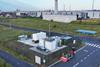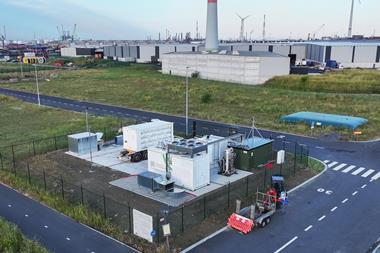


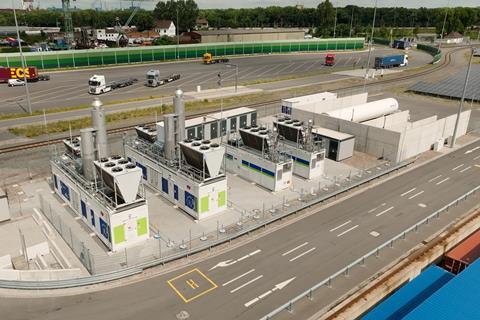
The groundbreaking development marks the world’s first deployment of mtu combined heat and power (CHP) units designed to run on 100% hydrogen.
Integrated with fuel cells, a photovoltaic system and battery storage, it sets a new benchmark in sustainable energy supply for large-scale port infrastructure.
“The launch of this carbon-neutral energy system at the Duisburg Gateway Terminal is a big step toward a more climate-friendly, resilient energy supply,” said Dr. Jörg Stratmann, CEO of Rolls-Royce Power Systems.
“Together with our partner duisport, we’re showing how scalable technologies from Rolls-Royce can really help transform critical infrastructure.”
Self-sufficiency
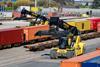
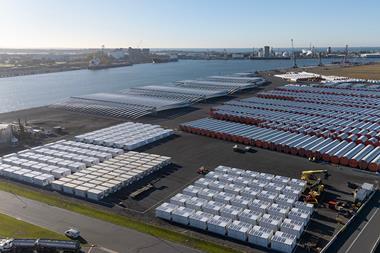
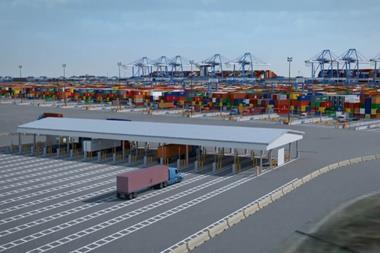
Part of the Enerport II flagship project, funded by Germany’s Federal Ministry for Economic Affairs and Energy, the system supplies clean energy to terminal operations including cranes, EV chargers and shore power.
It is also designed to potentially support nearby neighbourhoods.
At the heart of this innovation are Rolls-Royce’s mtu Series 4000 hydrogen engines, each delivering one megawatt of power, demonstrating the viability of alternative fuels in industrial applications.
Markus Bangen, CEO of Duisburger Hafen, added: “Sustainability is an integral part of our corporate strategy that compels us to act responsibly and with a view to the future.”
”With this self-sufficient and CO₂-neutral energy system, we also have a clear competitive advantage.”
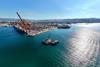
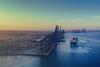
The intelligent microgrid shows how hydrogen and hybrid systems can stabilise energy flows, offering a resilient, scalable model for global logistics hubs striving for decarbonisation.