


Brexit aftermath
Brexit has resulted in a clear shift in trade at Dublin Port.
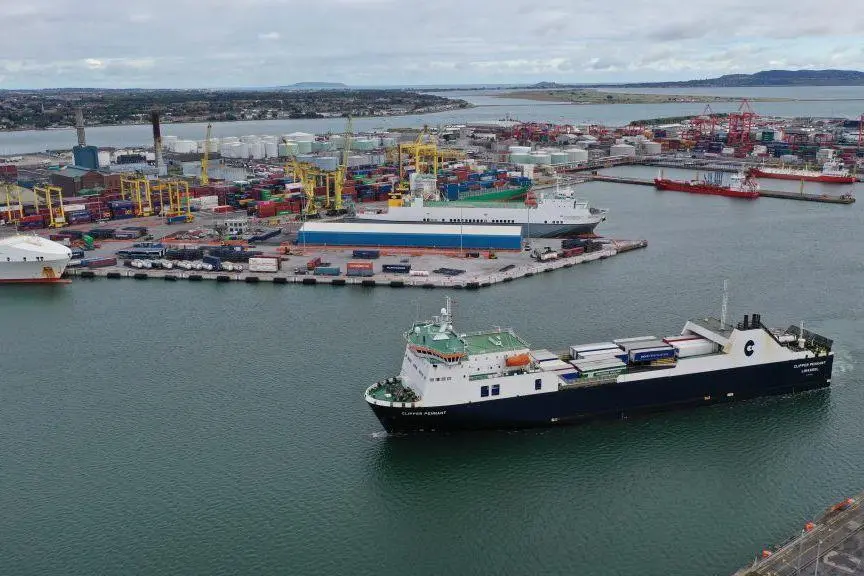
Volumes on routes to Great Britain declined by -21.2%, while volumes on routes to Continental Europe increased by +36.3%. The geographical shift was reported as trading figures were released for the nine months to the end of September 2021.
Commenting on the figures, Dublin Port’s chief executive, Eamonn O’Reilly, said: “After nine months, the impact of Brexit on the profile of Dublin Port’s trade has become clear with volumes on unitised services to Great Britain declining by just over one-fifth while volumes on services to Continental Europe increased by more than a third. Because of this, our unitised volumes are now split 50/50 between GB ports and ports in Continental Europe. Before Brexit, GB ports accounted for almost two-thirds.”
Brexit drives continental volumes
There has been a large and consistent change in the geographical mix of Dublin Port’s trade since the introduction of Brexit border controls in January 2021.
Whereas overall unitised volumes were down by just -0.5%, volumes on routes to Great Britain declined by -21.2% to 537,680 in the nine months (primarily Holyhead, Liverpool and Heysham).
On the other hand, volumes on routes to Continental Europe increased by +36.3% to 522,765 units (mainly Rotterdam, Zeebrugge, Antwerp and Cherbourg).
As a result, unitised volumes on routes to Great Britain now account for just over one half (51%) of all unitised trade where, before Brexit, they accounted for approaching two-thirds (64%).
Overall port throughput declined over the period from January to September 2021 by -3.3% to 25.9 million gross tonnes compared to the same period in 2020. Imports from January to September increased by +0.4% to 15.7 million gross tonnes but exports declined by -8.4% to 10.2 million gross tonnes.
O’Reilly added that “the different patterns in UK trade compared to EU trade are creating capacity pinch points in some parts of the port”.
He continued: “To remove these capacity pinch points, we need to continue our capital investment programme to increase port capacity in the short-term. This includes relocating the last four empty container depots from Dublin Port to Dublin Inland Port in order to free up six hectares of land for cargo handling.”
Related Articles
 EXPANSION & DEVELOPMENT
 PORT & TERMINAL NEWS
 PORT & TERMINAL NEWS