




Everyones a critic
What are the best ways of monitoring port performance? John Bensalhia finds out.
In the past, opinions on television programmes or restaurants were delivered by employed journalist critics. With the stroke of a pen, they could make or break a new soap opera or Waldorf salad in seconds.
But as times have changed, opinions have expanded to virtually every corner of society. Furthermore, they are no longer the exclusive prerogative of professional critics. TripAdvisor features tales of blissful hotel luxury or grumbles of dirty bathrooms. Amazon customers can critique clothes, technology, books, CDs and DVDs. Even journalists’ opinions are given the thumbs up or down on newspaper websites.
So how do ports fit into this performance picture? Today, port progress is rated both from the inside and outside. While ports have introduced their own initiatives to assess performance, outside reports from port-related consultancies and organisations are also published.
For example, shipping consultancy Drewry published a report on the operational performance of worldwide container terminals. Container Terminal Capacity and Performance Benchmarks, published in 2014, looked at performance aspects like container terminals’ quay lines, yards and ship-to-shore gantry cranes for around 500 global terminals between 2011 and 2013.
A more recent example of performance reports is the first BIMCO report on global dry bulk terminal performance, which was published in early 2017. The findings from the international shipping association are the results of dry bulk terminal information collated between 19th January 2015 and 1st December 2016. Feedback from 94 shipowners provided 443 reports relating to 231 global terminals.
“BIMCO’s membership includes shipowners, operators, managers, brokers and agents,” explains Aron F Sorensen, head of maritime technology and regulation at BIMCO. “We aim to help our members to operate ships efficiently and to minimise liability of our members. The report and the published information on our web page is one of the tools we offer to achieve this.”
Meeting demand
Mr Sorensen says that the dry bulk terminal vetting scheme was launched to provide information about what ships can expect to meet when calling at a certain port/terminal. “The BIMCO port database is a popular service to our members. It gives detailed information about more than 1,500 ports worldwide. The dry bulk vetting scheme adds information to our port database based on the experiences of bulk carriers during their stay in the port.
“The dry bulk vetting scheme gives our members the possibility to see if the port in practice follows the Code of Practice for the Safe Loading and Unloading of Bulk Carriers (BLU Code), which has been developed by the IMO with the aim of preventing accidents or loss of ships carrying solid bulk cargoes because of improper loading and unloading practices. Members will also get a quick overview of the quality of specific services (for example pilot services and waste reception services).
The vetting scheme gives an opportunity to evaluate potential risks to the ship and the competency of the terminal and port before a contract is signed.
“At the same time, the data gives BIMCO an opportunity to publish information about the performance of dry bulk terminals based on statistics directly provided by ships.”
Because ships have been vetted for many years, the BIMCO report signals that efficient, safe shipping also depends on the terminals. “Until now the shipping industry has lacked a mechanism that gives a picture of how the dry bulk terminals are performing,” explains Mr Sorensen. “The main purpose of the annual report is to provide that picture.”
Although there has not been any feedback from ports so far, Mr Sorensen says that BIMCO has discussed the scheme with its port members. When starting out in 2015, BIMCO presented the vetting scheme to the International Dry Bulk Terminals Group. “The reactions from terminal representatives were mixed. Some saw this as an opportunity to know more about their customers while others were negative because they saw the vetting given by ships as too subjective,” he says.
“It is important to emphasise that the dry bulk vetting scheme has not been developed to point fingers at anybody. The aim is to have a basis for dialogue based on real data.”
Detailed picture
The BIMCO questionnaire has been designed in such a way that the questions can give a detailed picture on how each dry bulk terminal performs. Mr Sorensen says that should a terminal receive poor feedback, then that terminal may be informed. “In case a terminal receives a poor rating (which represents a safety problem) we have the possibility to issue an alert to our members. Fortunately, this has not been necessary so far. We would in such a case naturally also inform our members about any improvements made by the terminal. In a worst-case scenario, BIMCO will seek to improve matters, for example, by contacting port authorities.
“We have offered to co-operate with terminal owners to give them feedback based on our vetting scheme. The purpose of such an agreement is to discuss ship and terminal interactions based on the reports made by the ships participating. We believe that an open, honest dialogue is in everybody’s interest and we need to learn from the good examples, which we now know are out there.”
Ports have also found ways to monitor and analyse their own performances. Take the Port of Vancouver’s Supply Chain Performance: a multi-year, port stakeholder-supported series of initiatives, designed to accomplish sustainable growth in all cargo sectors.
This Supply Chain strategy has three aims: to lead and influence new operating practices; to measure and monitor service performance; and to drive investment and participation in the network. By analysing and reporting on the collated data, the port can see how well the gateway operates. Specific areas include daily updates on container terminal rail performance, which gives up-to-date information on import rail footage on-dock, estimated planned car supply, and rail car production.
Another example is container truck GPS data. The port’s container trucks include GPS units. Data is given and updated on a weekly basis for aggregated average turn times, which reflects regular and speed gate reservations. There is also the Container Vessel On-time Incentive programme which is supported by the Vancouver Fraser Port Authority. Providing monthly reports on gateway vessel on-time performance, the port authority’s contribution supports the programme that actively encourages vessel operators to arrive on schedule, thus helping overall supply chain consistency.
Monthly accolade
The European Sea Ports Organisation (ESPO) has also provided scope to find out about port performance. A feature of the ESPO website is ‘Port Of The Month’, involving a presentation of the chosen port to the public through a selection of questions, including how the port monitors its performance.
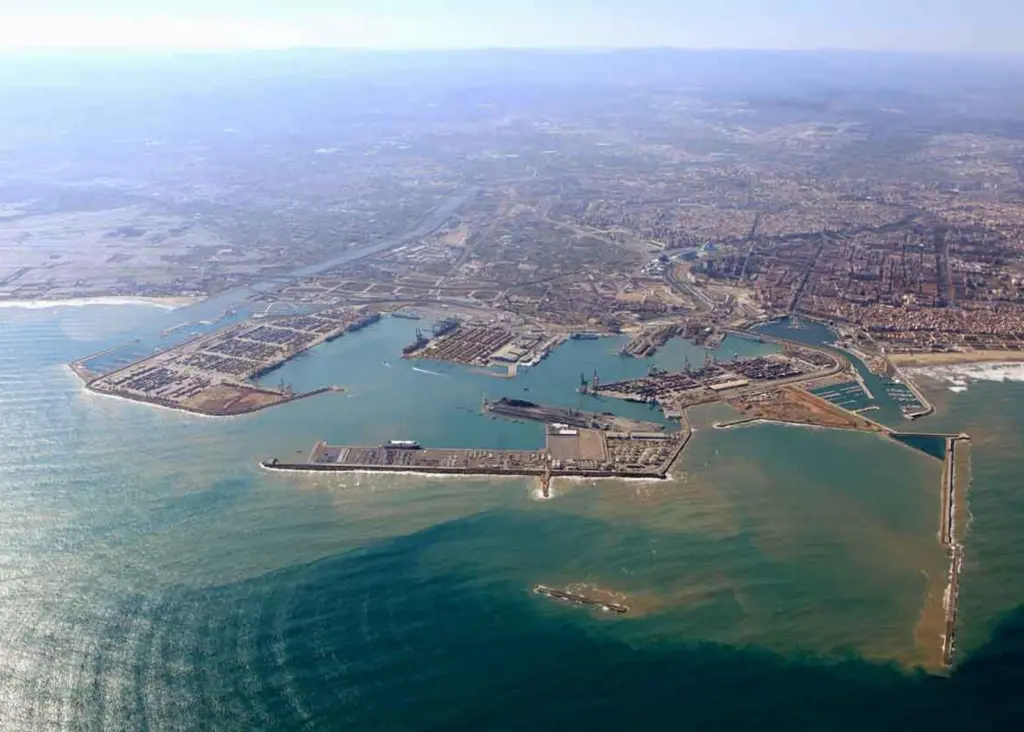
This feature has yielded a number of interesting responses. The Port of Valencia, for example, launched a Balanced Scorecard which focuses on operational goals and indicators. It also publishes a yearly sustainability report, covering environmental, social and economic factors.
Yearly reports also record progress at Spain’s Port of Algeciras Bay. The port publishes annual, sustainability reports in addition to a regular service quality perception index. The Port of Thessaloniki, meanwhile, monitors sectors including cargo volumes, vessel statistics and operations efficiency.
With regards to BIMCO extending the report to terminals that handle other kinds of cargo, Mr Sorensen says there are currently no plans to do so.
He concludes that dry bulk terminals must be aware of ship feedback reports (both positive and negative): “The report gives the general picture for all stakeholders and should be read by terminals as well. “Each data run used for the annual report can also generate reports that can be used by individual terminals, as well as individual shipowners. When the data is more solid than it is currently, we will be able to offer these special reports for sale to interested parties. A terminal or port will be able to use a special report to benchmark against other terminals but also to gain knowledge on how their own performance varies from year to year.”
ANALYSING REAL-TIME ROUTINES
Technology is helping ports to look at many aspects of operational routines. From vessel arrivals and departures to noise levels: these can be monitored thanks to technological developments. Consequently, performance can be looked at and acted upon.
The Port of Vancouver, for example, uses technology to monitor real-time operations. These include web-cams which provide live video feeds from around the port. Meanwhile, the eHub app can give real-time insight into operations at the Port of Vancouver. These include the status of cruise and container terminals, as well as road and rail activity. The port can get real-time updates on the status of these operations, thanks to the eHub app.
The app boasts a number of features including interactive maps for the terminals and facilities, plus railways and vessels; live monitoring from the port’s operations centre; and real-time data which is collected from GPS transponder units on drayage trucks.
Noise is also monitored at the Port of Vancouver thanks to a programme that uses real-time facilities to record and analyse the noise environment. The results of these findings can then allow the port to look at where improvements to combat the noise levels may be possible.
The port currently has 11 long-term noise monitoring stations placed in various locations. The Brüel & Kjær noise monitoring terminals include a microphone that can measure and record sounds. This is then linked to a secure wireless network that can transmit the data in real-time, every day at all hours.
Related Articles
 BULK HANDLING
 BULK HANDLING
 PORT & TERMINAL NEWS