The blockade of Ukraine’s grain export ports represents a ticking timebomb for some of the poorest nations in the world cut-off from the supply of essential foodstuffs.
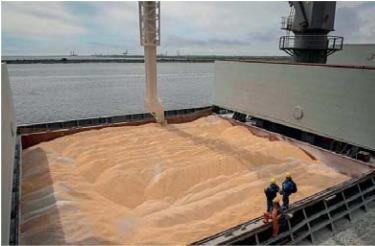
The human cost of the Russian invasion of Ukraine is mounting on a daily basis – but the final tally promises to extend well beyond the tragic fatalities and wounds caused as a direct result of battle.
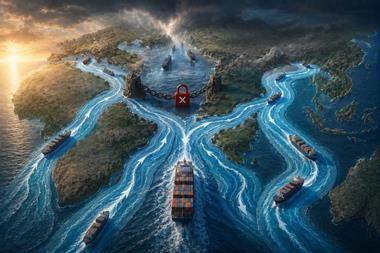
This is directly linked to the Russian imposed closure of Ukraine’s principal ports, Mariupol and Odessa, traditional gateways for the export of Ukraine’s agricultural products which play a major part in ‘feeding the world.’ The closure of these ports, through blockade as a result of Russian naval superiority, will have an impact far beyond the parameters of the physical conflict and one which may ultimately, if the current direction of travel doesn’t change, end up as the keynote of Vladamir Putin’s legacy – the death of hundreds of thousands, even millions, of citizens in the emerging world that are deprived of access to food supplies.
The World Food Program estimates that Russia’s invasion has catapulted the number of hungry people in the world to 323 million from the previous level of 276 million – a near 50 million uplift. Ironically, with the Ukraine registering regular successes in the on-the-ground war, despite its success in sinking The Moskava, the Russian flagship vessel, it is not in ascendancy with regard to the maritime war zone. The bottom-line reality is that even if Ukraine was to achieve naval superiority Russia could still enforce a blockade of Ukrainian ports via missile and aviation coverage.
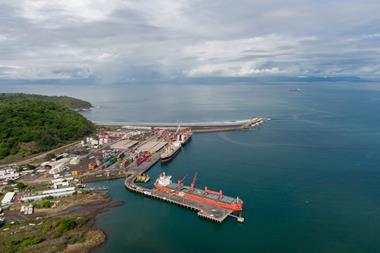
Putting Ukraine’s grain and other agri-products back into the supply chain cannot be achieved on a large scale by using alternative ports, both within Ukraine and those of neighbouring countries. As highlighted in the news pages of this issue, use is being made of Ukraine’s river Danube ports, Izmail and Reni, to move grain by barge to Constanta for export but the volumes concerned are relatively small. In addition to Constanta other export gateways are being looked at, Klaipeda, Lithuania for example, but getting product there by truck is problematic – there are damaged roads and bridges in the Ukraine and border crossings are not straightforward.
Rail is another alternative that is being looked at to access new port gateways. The EU has come up with a plan but this too has its pitfalls, notably severe bottlenecks at the borders with Ukraine’s EU neighbours due to the use of different rail gauges.
The problems are also about to get larger. While Ukrainian Farmers only expect to be able to harvest four million hectares of the 6.5 million hectares of the 2022 harvest due to the war conditions, this new crop will join much of the last harvest which is still in storage. Equally, this new harvest and those of Romanian, Bulgarian and other farmers will place added pressure on the limited available port capacity.
THE OPTIMUM SOLUTION
Experts agree that by far the best solution to getting Ukrainian agri-products moving again is the creation of a protected maritime zone enforced by international interests. Various methods of achieving this have been put forward but one that seems to enjoy particular favour is the establishment of a humanitarian navigation corridor policed by NATO vessels and aircraft. A variation on this is to have a coalition of participating countries to serve the same purpose.
This type of thinking is not a new concept it has been implemented before, a prime example being the UN-mandated naval escorts that protected merchant vessels from pirate attack off Somalia. There are still problems, however, the Montreux convention which regulates shipping through the Turkish straits limits warships from non-littoral states to being in the Black Sea to no more than 21 days. Thus, to maintain an effective convoy system would necessitate a very large western fleet stationed in the Mediterranean to rotate through the Black Sea. There are also concerns that a NATO policed convoy system may, inadvertently even, bring NATO vessels into conflict with the Russian navy and thus spark a wider level of conflict – an argument that has shades of the thinking behind not providing air cover to Ukrainian forces.
There are other issues. While Russia has faced severe setbacks with its war on land it is the dominant force at sea – Ukraine’s navy compared to Russia’s navy is tiny, a lot of its ships being lost in Russia’s earlier annexation of Crimea. Against this background, why would Russia want to back down from the dominant position it holds, a positive that the Kremlin can play to the Russian people?
Overall, the situation remains very problematic – around 20 million tonnes of grain and other agri-products remain ‘locked up’ in Ukraine. New harvests will add to the problem compounding shortfalls in delivery of essential foodstuffs to some of the poorest nations in the world. With prices rising there are no easy substitute sources of supply and as a result there is a real prospect of famine and starvation leading to millions of deaths. To say the least, not a pleasant scenario!