![PortStrategy[GreenPort]](https://www.portstrategy.com/wp-content/uploads/2026/09/PortStrategyGreenPort.svg)


GLOBALISATION STUMBLES UNDER COVID-19 PRESSURE
The COVID-19 pandemic is putting pressure on globalisation beyond the Trump Administration impacts, writes Ben Hackett. The question is: What has gone wrong?

Globalisation and international trade came under significant pressure as a result of the USA’s inward-looking economic policies under the Trump Administration. China, Europe, South Korea and Japan came under scrutiny and tariff rules regardless of whether friend or foe.
The pressure on companies was to look for increased opportunities of home sourcing. Not an easy task in a world that has developed with highly integrated logistics management and low inventory, both a means to control costs.
Initially the trade war highlighted that there were no winners but only costs, mostly for the consumers. It did put some impetus to switch production away from China, in particular, but in many cases that went to Chinese companies.
Nevertheless by 2019 we did see that trade growth on long haul routes was beginning to weaken after a very long run of growth. Then came the COVID-19 pandemic and things went wrong as economies began to lock down by February 2020.
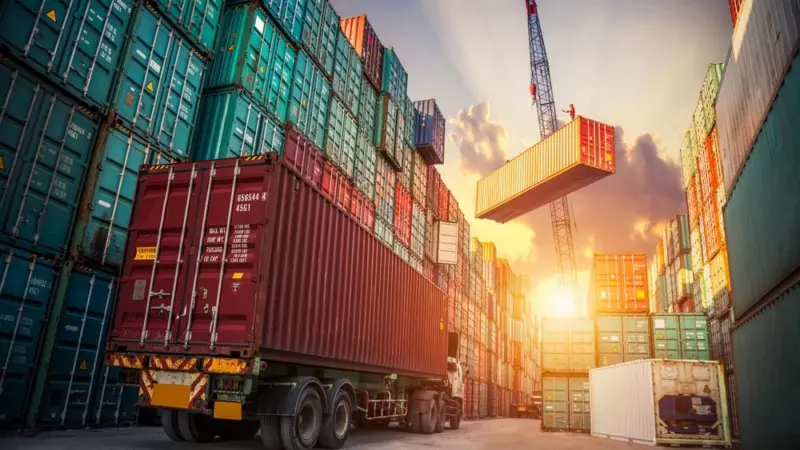
Global trade collapsed from 14.5 million TEU in December 2019 to 11 million TEU, a drop of 24 per cent according to Container Trade Statistics, UK. Trade recovered in March, faltered in April but then grew steadily to reach a high of 15.4 million TEU by October 2020.
Then lockdowns returned and trade weakened for a few months before consumers began an on-line buying spree that put pressure on ports and carriers struggling with congestions and lack of capacity.
Some things went wrong, however, as nations began to turn to introversion and nationalism in their attempt to maintain their supply lines to reduce dependence on global trade. This is particularly true for vaccinations as both the USA and the EU moved towards export restriction – in the EU mainly through incompetence of the EU Commission leadership.
Globalisation however is here to stay, at least in the medium term and wars aside, for the long term. Industry is built on sourcing goods, whether consumer or raw materials globally. The impact on ports, current congestion aside, will be minimal and carriers appear to have coped exceedingly well to keep supplies flowing and profits up.
Related Articles
 INSIGHT & OPINION
 INSIGHT & OPINION
 INSIGHT & OPINION