![PortStrategy[GreenPort]](https://www.portstrategy.com/wp-content/uploads/2026/09/PortStrategyGreenPort.svg)




Not a smart policy
The weaponising of trade strategically to achieve political supremacy is being honed by the Trump Administration globally, irrespective if the country at the receiving end is friend or foe, writes Ben Hackett

Trump initially picked on his immediate neighbours Mexico and Canada and came up with a new free trade agreement that is not much different to the NAFTA version. After much bluster and threats of immediate tariffs the new agreement lies in limbo in the US Senate.
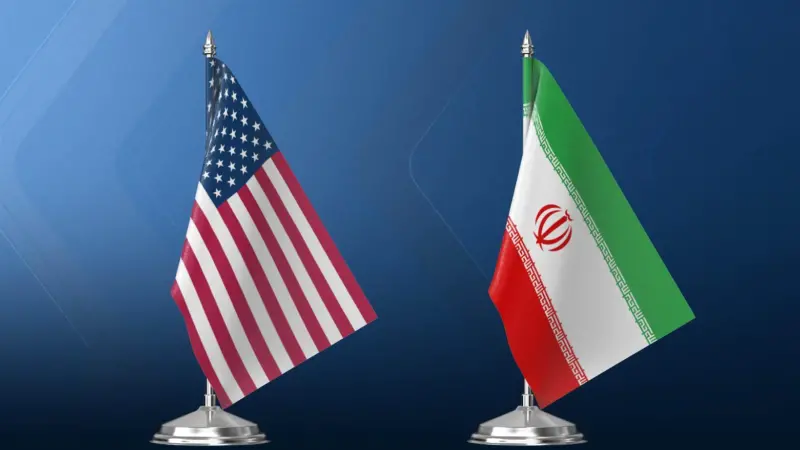
There is, currently, no China agreement and allies South Korea and Japan have had to bend the knee. The use of sanctions as a backstop to tariffs have been applied to Venezuela, Russia and Iran, to name but a few.
The EU is under attack with tariffs applied to a host of products. The sanctions interfere with normal trading relations of third-party states that are not involved in the dispute, because the US dollar is the currency of international trade.
The WTO (World Trade Organisation) ruled that Airbus was subsidised by EU countries and it awarded the US with the ability to levy US$7.5bn of tariffs on EU goods selected by the US Trade Representative. Amongst the first to be hit are Scotch Whiskey and the automobile industry. As Boeing is unlikely to be innocent in the subsidy game, there will soon be a counter case.
And with Brexit on the close horizon, we will possibly see WTO tariffs applied to trade between the UK and the EU. Who pays for this? The consumer of course. The tariff income is usually squandered on subsidies to industries worst hit, such as agricultural exports in the US and soon to come, requests from the motor manufacturers.
Most signs are pointing to a looming recession with industrial production around the world in decline, global trade weakening and financial pressures pushing interest rates into negative territory.
Germany is sitting on the brink of recession and with negative borrowing costs, while in the US the ISM index of manufacturing industry slumped deeper into contraction in September to 47.8, its weakest level since 2009.
So, we see tariffs and sanctions damaging trade and economic growth as well as acting as a hidden purchasing tax. Not a very smart policy.
Related Articles
 INSIGHT & OPINION
 INSIGHT & OPINION
 INSIGHT & OPINION