Bangladesh has signed a major concession agreement to develop the Laldia Container Terminal in Chattogram, marking one of the largest public private partnership investments in the country’s history.
Valued at more than US$550 million, the deal involves the Chittagong Port Authority, APM Terminals and local partner QNS Container Services. Under the agreement, APM Terminals will operate the new terminal for 30 years, with the possibility of extension based on performance benchmarks.
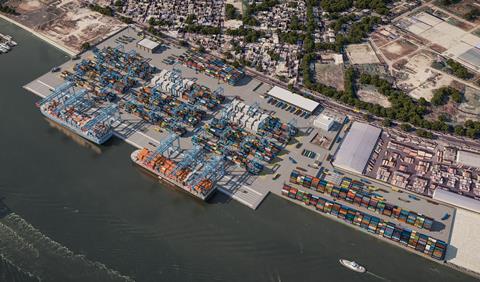
The project is notable for adopting a full design–finance–build–operate model led entirely by private investors, a first for Bangladesh’s port sector.
“It is with great honour that we enter this agreement with Bangladesh, which underscores the great potential that this important market has,” said APM Terminals chief executive, Keith Svendsen.
“This greenfield project enables us to play an active role in supporting the growth of the local manufacturers, exporters, importers and the broader Bangladeshi economy.
“We are strengthening our commitment to the country with an aim of creating a safe and efficient terminal as well as creating skilled jobs for the future prosperity of the region.”
Expected to be operational in 2030, the terminal is projected to add more than 800,000 teu of annual handling capacity and eventually accommodate vessels of up to 6,000 teu, more than double the current limit at Chattogram. Officials say this will ease congestion, cut logistics costs and improve global market access for Bangladesh’s textile, apparel and manufacturing industries.
Construction is expected to create over 1,000 jobs and more than 500 long-term operational roles. The facility will also feature electrified equipment, solar installations and shore-power capability to support Bangladesh’s climate goals.
The investment forms part of the Sustainable Green Framework Engagement between Denmark and Bangladesh, which aims to boost green infrastructure, strengthen trade partnerships and drive low-carbon economic growth.