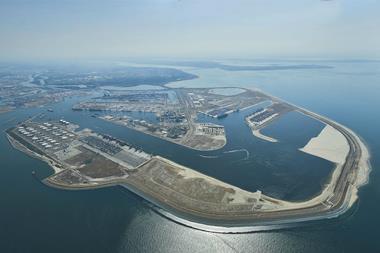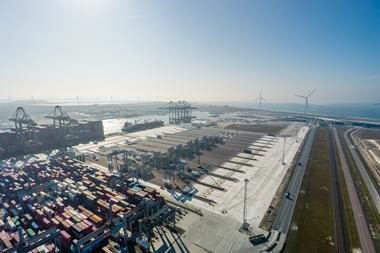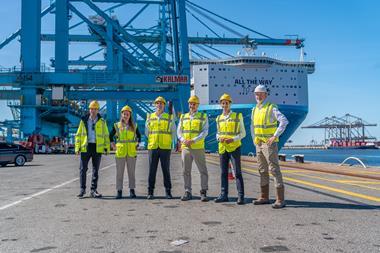
A new joint study has concluded that existing port safety and risk-management frameworks could provide a credible starting point for assessing nuclear-powered commercial vessel calls in major European ports, using the Port of Rotterdam as a case study.
The report, Enabling Nuclear-Powered Feeder Ships: A Joint Development Project on Port Call Feasibility and Regulatory Pathways, was produced by Lloyd’s Register, the Port of Rotterdam Authority, CORE POWER and A.P. Moller-Maersk. It examines the regulatory, operational and safety considerations that would need to be addressed before nuclear-powered ships could be routinely accommodated at commercial ports.
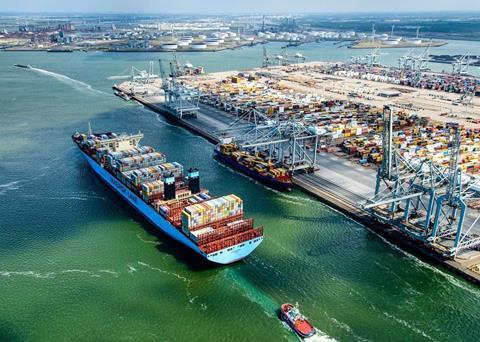
According to the report, existing risk-based port safety systems already used across Europe could form the foundation for future assessments of nuclear-powered vessels, provided nuclear-specific requirements are integrated into those frameworks.
“Together with Rotterdam, LR and Maersk we’ve identified a port safety framework and created a credible starting point for assessments by the IMO as it revises the Safety Code for Nuclear Ships and for the IAEA as it launches its flagship ATLAS program this summer,” said Mikal Bøe, chief executive of CORE POWER.
Bøe added that ‘trust and confidence’ from port communities would be essential if civil nuclear propulsion were to play a future role in global shipping.
The report highlights several areas requiring further work, including regulatory alignment, governance coordination, emergency preparedness, security arrangements, liability and insurance frameworks, and public engagement.
René de Vries, harbour master of the Port of Rotterdam, said: “Ports need to understand how emerging energy and shipping technologies may interact with future port operations and industrial systems.”
He described the study as ‘an initial case-study assessment’ designed to improve understanding of the implications of nuclear-powered commercial shipping within a European port environment.
Meg Albrecht, senior engineer for Nuclear Technology and Alternative Fuels at Lloyd’s Register, said the work helps establish ‘a structured basis for further discussion and analysis’ as the shipping industry evaluates a range of future propulsion options.
A.P. Moller-Maersk stressed that the study does not represent a decision to pursue nuclear propulsion but contributes to understanding what would be required for authorities and ports to assess such vessels responsibly.