
APMT’s lawyers are busy nowadays fighting offensive and defensive actions but is right on their side or is it ‘lawfare?’ The Editor assesses the situation
I had lunch with my legal eagle barrister friend the other day and we fell into talking about the law and its right and wrong use. I wasn’t entirely surprised to hear that my friend – who specialises in civil litigation – holds the belief that the law will deliver a result but not always justice. “Are you saying that the law is an ass,” I questioned him deploying the famous phrase. “Undoubtedly,” came back the rapid response, “time and time again.”
Interestingly, while he backed up this point of view with several lines of argument, the one that he was strongest on was the growing trend dubbed ‘lawfare’ – effectively the weaponisation of the legal system in the context of using it to gain a certain commercial or political advantage. Lawfare, he argues, distorts the positives on which the rule of law is based – justice, predictability, equality and so on. And worryingly, he adds, it is on the rise.
It was an interesting discussion and set me thinking about two legal interventions implemented recently in our sector by APM Terminals (APMT) – one in conjunction with the award of the concession for Durban Container Terminal Pier 2 (DC2) and another by way of an objection to Terminal Investment Limited (TIL), an affiliate of MSC, concluding a deal with the Aarhus Port Authority to set up a new terminal in its Ominterminal port area.
APMT is, of course, an affiliate of the Maersk Container Line and it is well known that APMT’s first priority is to support Maersk. In South Africa had APMT been successful in its bid for DC2 then it is clear that this would have leant massive support to Maersk building market share in the key European and Asian container trades. More control of the supply chain = more opportunity to leverage to its advantage. But it was not successful – reportedly US$100 million behind the winning bid from International Container Terminal Services Inc (ICTSI) and so it has resorted to legal action on a number of technicalities.
APMT’s main point is that ICTSI did not meet a mandatory requirement for bidders to meet a minimum solvency ratio via a specific formula. There is no real suggestion that ICTSI does not have the cash to meet its obligations in terms of concession fees/investment etc, just that it does not conform with this specific ratio. Transnet used other means to satisfy itself regarding ICTSI’s technical solvency and was fully comfortable with the results.
SPEAKING CANDIDLY
In the real world, therefore, and speaking candidly, APMT appears to have sought and found a element in the bid process whereby it can try and get back in the game – leveraging a technicality or as my learned friend puts it employing ‘lawfare.’
As my learned friend also underlined, the trouble with lawfare is that it is by nature disruptive. Indeed, that is why many parties employ it!
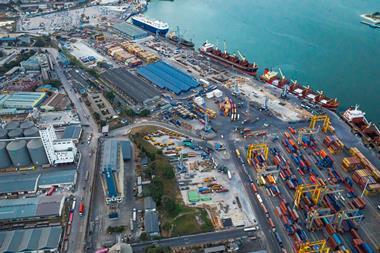
In South Africa APMT’s legal action against Transnet is basically holding up economic progress – the advancement of infrastructure to facilitate more efficient and cost competitive trade. One example, the upgrade of DCT2 would basically free up berthing space to facilitate the presence of more competitive liner services. As it stands, Maersk and MSC are the dominant berth users, effectively barring other players from a new or stronger presence. With this in mind, the current legal challenge also works in Maersk’s favour just by maintaining the status quo.
Of course, technically speaking, APMT has the absolute right to launch a legal action but in the land of common sense is such an action well founded or more a case of sour grapes? There are many who believe the latter.
THE AARHUS QUESTION
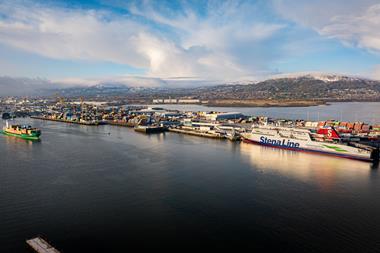
It has been reported that APMT has filed an injunction in a local court to temporarily prevent the entrance of a second operator into the port of Aarhus, where it operates its own container terminal. It contends that it has an agreement with the port authority which gives it first right of refusal on any new development and that discussions with another party have taken place without due process.
This doesn’t sound like an entirely convincing argument if only on the basis that other operators have previously tried to depend a monopoly situation without too much success. Indeed, for example, I believe this was the case in Callao, Peru when DP World took on the port authority as a result of it awarding a concession to APM/Maersk! APM/Maersk prevailed!
The issue of ‘lawfare’ – the effective weaponisation of the legal system is a serious one. As my friend suggests, it has a corrosive influence which needs to be taken account of properly in order to achieve fair and well balanced judgements.