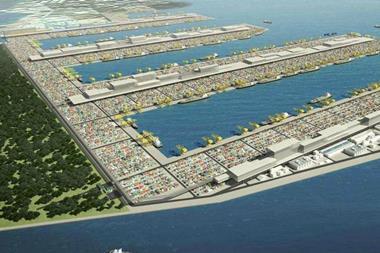

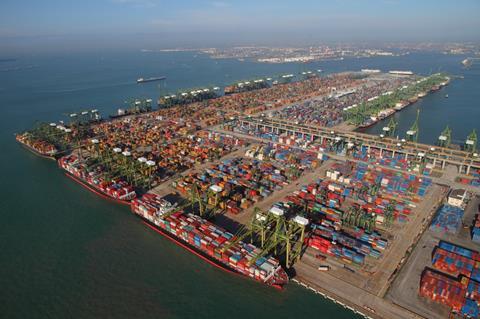
Singapore has been named the world’s leading container port in the first edition of the Leading Container Ports of the World (LCP) report, published by DNV and Menon Economics, with Shanghai and Ningbo-Zhoushan following in second and third place.
Rotterdam and Busan round out the global top five, highlighting the continued dominance of Asian and European ports in container trade.
“Container ports quietly underpin much of the global economy,” said Knut Ørbeck-Nilssen, chief executive of Maritime at DNV.
“Every year, they move more than 930 million teu, supporting the flow of goods that keep businesses running and communities supplied.”
The LCP report evaluates 160 ports across five pillars: enablers, connectivity and customer value, productivity, sustainability, and overall impact. The assessment combines objective data, including throughput volumes, berth productivity, emissions per teu and alternative fuel availability.
According to the report, Singapore leads in all five pillars, thanks to its advanced infrastructure, extensive mainline services and early adoption of automation and green shipping initiatives. Shanghai and Ningbo-Zhoushan score highly on connectivity and throughput, with Ningbo-Zhoushan noted as the fastest-growing container port globally.
The report emphasises the need for ports to invest in scalable infrastructure, boost digitalisation and take the lead on sustainability while maintaining strong customer relationships. It also highlights the importance of strategic planning and transparent communication for long-term competitiveness.
European leader Rotterdam and Northeast Asia hub Busan are singled out for operational efficiency and regional connectivity, while several ports, including Singapore, Shanghai, Busan and Rotterdam, appear in the Leading Maritime Cities report as well, underscoring their dual role as trade gateways and integrated maritime hubs.
Regional leaders include New York & New Jersey, Hamburg, Tanger Med, Jebel Ali and Sydney, showing that global container port excellence extends beyond the Asia-Europe axis.