



Pushing Port Development in Indonesia
A World Bank project in Indonesia is seeking to reduce costs and improve supply-chain reliability – but are ports the chokepoint in the system, asks Gordon Feller.
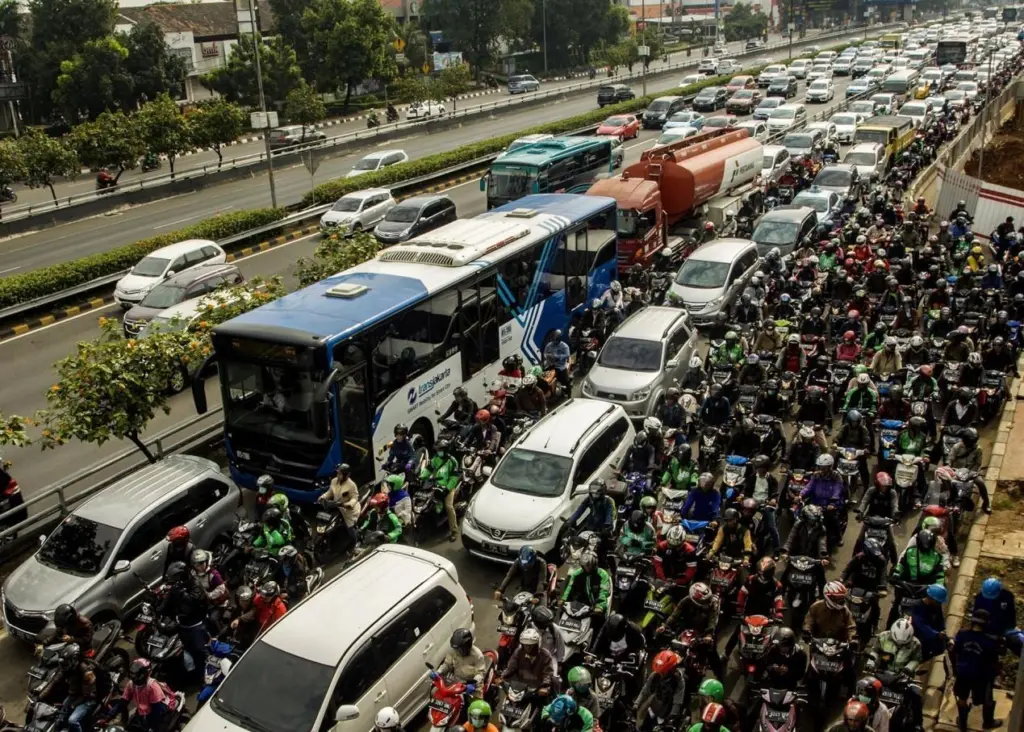
A large-scale World Bank project in Indonesia wants to reduce the costs and improve reliability of the country’s logistics chain. Underlying the project is one key assumption – enhancing the movement of goods within and across this large country’s borders is the key to furthering the medium-term economic development and poverty reduction goals.
So, will it work?
This new US$400m project is the first in a planned series of two such projects, both of which are designed to support critical reforms that address bottlenecks at various points in the supply chain.
Spending the Money
The World Bank and Indonesia’s national government is using the funds to focus on strengthening port governance and operations, enabling a competitive business environment for logistics service providers and trade processing being more efficient and transparent.
This ambitious project is structured around three sets of objectives, each one being aimed at a specific area of reform:
1) Enhancing port performance:
Strengthening port governance and operations by better clarifying the role of port authorities vis-à-vis port operators. It means that the emphasis is on facilitating the entry of port services operators and enhancing the coordination of documentary and container examination in ports. These actions are expected to increase in the share of Pelindos’ ports with internationally certified management systems, raise the number of applications for the Build-Operate-Transfer scheme for port development and reduce the average turn-around time in Tanjung Priok and Makassar ports.
2) Dramatically improving logistics services:
Enable a competitive business environment for logistics service providers by increasing competition in freight forwarding services, storage and distribution services. Also, increase competition in auxiliary shipping services and reduce inventory costs of imported materials for producers. This project is expected to help increase the number of new foreign licenses for freight forwarders, warehousing and cold storage services, support new shipping agents’ (SUKK) and foreign maritime cargo handling licenses and raise the amount of logistics bonded centres.
3) Strengthening trade processing:
To make the processing of trade flows more efficient requires many changes, including a greater degree of transparency that comes from reducing licensing requirements for imports. The main aims are to reduce licensing requirements for imports, facilitate traders’ compliance with trade regulatory requirements, expedite the submission of trade documentation and improving risk management by border agencies. These actions are expected to help reduce pre-clearance time in Tanjung Priok port, increase in the share of relevant regulations included in the Indonesia National Trade Repository, reduce dwell time in the two main ports at Tanjung Priok and Tanjung Perak and lower pre-clearance time for food and drugs imports in Tanjung Priok.
Exposing Structural Weaknesses
Over the last decade, Indonesia has seen strong growth and job creation, and this has resulted in poverty reduction. But the end of the commodity boom has exposed the economy’s deep structural weaknesses, with other sectors not able to take up the slack of commodity exports. As a result, growth slowed.
The need for efficient logistics is now seen as a vital element of Indonesia’s overall effort to boost competitiveness in all of the country’s trading sectors. In the opinion of both the government and World Bank, smarter and cleaner logistics can help to reverse the slowing of poverty reduction, especially in the country’s more remote regions.
The Need to Rebalance
Indonesia needs to rebalance the economy away from commodity production, since those prices are declining. The shift must be towards manufacturing and modern services. Efficient logistics is one vital tool to make that happen, since smoother logistics move cheaper products from the source to those who should use them, whether it be the producers or the final consumers.
Large inefficiencies plague the logistics sector in Indonesia, which acts as both a drag on growth and a contributor to inequality. Logistics costs (transport, warehousing and inventory) are higher in Indonesia (25% of manufacturing sales) than in neighboring countries, including Thailand (15%) and Malaysia (13%). A large share of these costs is connected to carrying high inventory levels, due to a lack of predictability and due to the logistics chain’s chronic unreliability. On average, 19 out of 100 orders will either be late or (with some units) missing, which is a higher share than countries enjoying a similar level of income.
Almost two thirds of Indonesian manufacturers have in-house, as opposed to outsourced, logistics activities – a clear signal of the lack of trust in the capability of local logistics service providers. Traders who wish to have their freight sent from Java or Sumatra to other islands are likely to be confronted with long supply chains, uncertainties in delivery time and high costs needed to compensate for at least 70% empty volume on the return voyage (backhaul).
Indeed, it is cheaper to ship a container of Chinese mandarin oranges from Shanghai to Jakarta than to send similar freight from Jakarta to Padang in West Sumatra, despite the distance between the former cities being six times further than the latter.
In a relatively remote archipelago such as Indonesia the logistics supply chain is typically long and fragmented. This project is trying to address the main chokepoints along the chain. At the port of entry the aim is to facilitate more efficient investments and port services, while at the border the focus is on improved clearance procedures and before/beyond the border the emphasis is on the final destination of goods through better logistics services.
Consider, for example, imported inputs used by a manufacturer in South Sulawesi. Inputs produced in a third country are first shipped to an Indonesian international port, often Jakarta, with the shipment typically managed by a logistics service provider (e.g. a freight forwarder) responsible for contracting the shipping service via a shipping agent.
The shipment has to be offloaded at the port and go through trade processing, which verifies its compliance with Indonesian regulations. This may involve as many as 12 ministries/agencies and multiple inspections for one product. Once the goods are “cleared” they may be loaded on another vessel for carriage to the Port of Makassar.
The container is then offloaded and loaded on to a truck inside the port, which may deliver it to a warehouse from which the consignment to the final destination would be arranged. Again, the delivery process may be organised by a third-party logistics service provider, which arranges the services of various other providers.
Bottlenecks in this chain, whether in terms of inefficient port operations, restrictions on core logistics services or delays in trade facilitation, have a particularly negative impact on manufacturing productivity both internationally and within Indonesia.
Inefficient Port Operations
Inefficient port operations, uncompetitive logistics services and lengthy trade procedures are at the core of the country’s inefficient logistics activities. Ports are often a bottleneck in the Indonesian logistics chain, hampered chiefly by inadequate infrastructure, although both burdensome regulations (in trade processing and investments) and low labour productivity do play a role.
The quality of port infrastructure, across the entire country, is a weak factor in the overall country’s competitiveness. Detailed work on 18 ports throughout Indonesia by the World Bank confirmed numerous infrastructure gaps. A key reason behind under-investment in the country’s port infrastructure is the lack of clarity on the respective roles of the port landlord and the port operator.
Cumbersome regulatory requirements and inefficient procedures make trade processing a further weak link in the logistics chain. Indonesia ranks 105 out of 189 national economies in the “Trading across borders” indicators which are assessed within the World Bank’s “Doing Business” project, a successful global effort to benchmark countries against each other’s performance vis-à-vis ease-of-business.
The national government’s Medium-term Development Plan for 2015-2019 (aka “RPJMN 2015-2019”) includes “efficient logistics” as one of the priorities of its economic development strategy. The effort is guided by two high-level strategies, i.e. the national logistics blueprint (aka “SISLOGNAS”), and the implementation of the Indonesian National Single Window (INSW), which aims to facilitate trade flowing into and out of the country.
Improving logistics performance, especially maritime, can have important poverty reducing effects in an archipelago like Indonesia. More efficient logistics would also allow greater domestic market integration. As poverty is relatively higher in remote regions, especially in Eastern Indonesia, lowering prices there would have a particularly important poverty reduction effect. Unemployed and poor workers can have access to greater income earning opportunities and small and medium enterprises are able serve a larger number of clients and have greater access to inputs. Two national priorities are under intense scrutiny – reducing container handling time in selected international and domestic terminals and lowering travel time for selected links to the ports. Both are clearly needed.
Related Articles
 EQUIPMENT
 PORT & TERMINAL NEWS
 PORT & TERMINAL NEWS