





Rates redemption
HFW’s Richard Wilmot and Andrew Williams discuss options to challenge unreasonable business rates
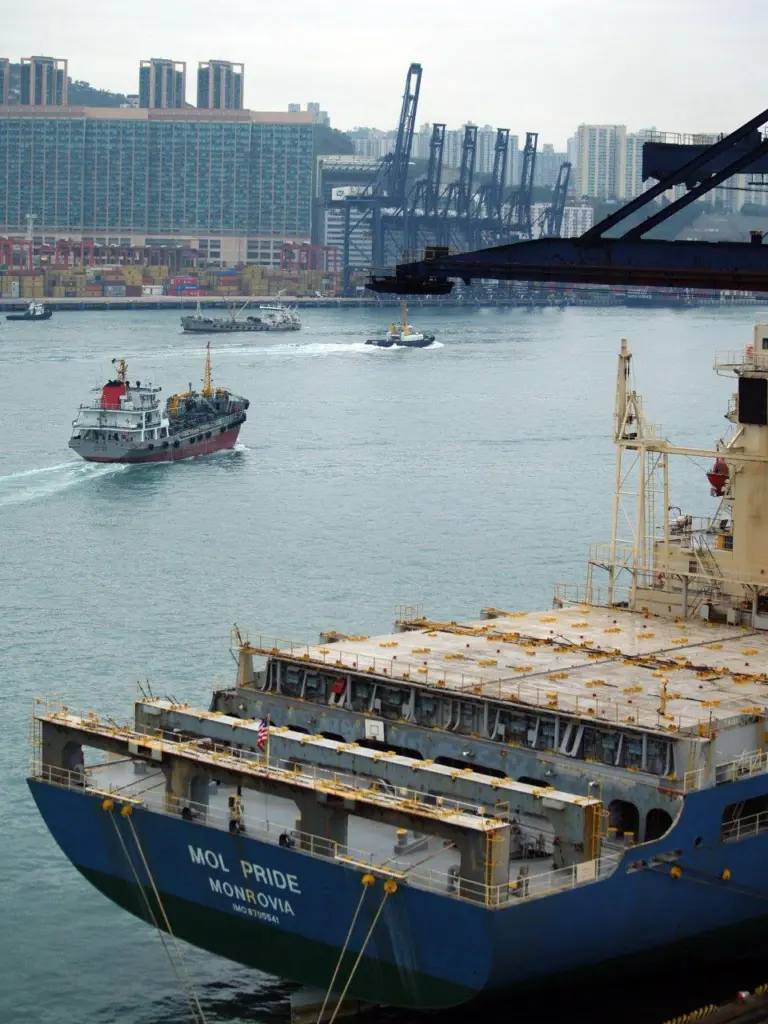
In 2008, the badly considered and poorly implemented introduction of uniform business rates to the statutory UK ports left many port businesses facing difficulties.
The subsequent credit crunch and recession fuelled an already weak economic situation and sadly, many port businesses found themselves being targeted by insolvency practitioners offering their services.
However, the announcement in the recent Budget by UK Chancellor George Osborne that funding will be given to waive £175m of backdated business rates demands levied on ports businesses across the country should be welcome news to an estimated 3,000 business properties, including some 700 properties in ports who have had the dark tax cloud hanging over them since 2008.
This, together with similar revenue pressures in other jurisdictions, highlights the need for businesses to review carefully their business rates assessments and to challenge them where appropriate.
Business Rates are indirect taxes which are calculated by assessing the rateable value (“RV”) for each property. The RV of a property is based upon its market rental value on the relevant valuation date and is determined by supply and demand and general market conditions at that time. The RV is also dependent upon the statutory and legal assumptions about the property which may have an artificial impact on the RV.
Rates can, of course, vary from country to country. For example: rates are charged at 5% of the rateable value in Hong Kong together with Government rent which is charged at 3% of the rateable value of the property; while in the UK rates are charged by multiplying the rateable value of the property by the standard multiplier (currently 41.4 pence). In Hong Kong business rates are assessed annually whereas in the UK they are assessed every 5 years.
If assistance is needed in making the payments of business rates it is the responsibility of the port operator to raise the matter with the local rating authority.
On receipt of rateable values, port operators should take the opportunity to critically examine the assessments for their properties. The mechanics of the assessments are quite technical. It should be remembered that current UK assessments are based on market rental values as at 2008.
With the difficulties experienced in the UK economy and the commercial property market over the last two years, there was much discussion about whether the rental evidence on which the revised values have been reached could have been vulnerable to challenge. With this in mind, it is worth considering how such a challenge should be approached.
There are a number of arguments that can be used to challenge a business rates bill, e.g.:
· material change in circumstances affecting the financial performance of the business;
· partial occupation of the premises/premises temporarily disused;
· physical changes to the property;
· external factors such as disturbance from major building or road works; and
· utilising the various transitional reliefs that are available.
Even if a business rates bill appears reasonable, the above factors can still be used to reduce the liability to rates.
Recently in Hong Kong two substantial utility companies launched legal proceedings to challenge their business rates assessments.
The Hong Kong Electric Company (HEC) was recently awarded HK$148m (US$19m) in compensation as well as over HK$26m (US$3.3m) in interest for being overcharged by the Hong Kong Government’s Rating and Valuation Department for the company power supply system’s rents and rates in the assessment year 2004/05.
HEC argued that the previous rating practice that had been followed since 1994 was outdated and did not take into account the material change in circumstances affecting HEC’s business, in particular the Scheme of Control that placed various financial and regulatory constraints on the business. HEC has also launched legal proceedings to challenge their business rates assessments for the years 2005/06 to 2009/10.
China Light and Power (CLP) has also launched legal proceedings to challenge its business rates assessments by the Hong Kong Government’s Rating and Valuation Department. HFW are acting for CLP in its legal proceedings against the Rating and Valuation Department.
HFW understands that a number of other large infrastructure companies have launched legal proceedings in Hong Kong to challenge their business rates assessments.
The UK has also seen a number of cases where businesses have challenged their business rates assessments. As well as the challenge to the 2005 Rating List assessment by the 30 port companies which resulted in the recent funding by the Government given to waive £175m of backdated business rates demands, as mentioned above, a number of power stations have challenged their business rates assessments with many of the claims currently being processed through the courts following their entry into conventional assessment in the 2005 Rating List.
It is also expected that the 2010 Rating List will see the advent of a number of claims by businesses challenging their business rates assessments. The 2010 Rating List is based on the net rental values of properties as at April 1, 2008 which was prior to the major economic downturn. Indeed, at the time, construction costs for buildings, plant and machinery were at a high and mineral and landfill royalties and gate prices had shown a sustained increase since April 1, 2003 (the 2005 Valuation Date). Further, property rental charges continued to escalate throughout the period of revaluation. This could mean many of the RVs in the 2010 Rating List being grossly inflated and thus businesses may end up paying excess tax in the form of business rates.
Observers tend to overlook that the nature of port operators businesses severely limits the choice of location from which to operate. Port owners unlike most land owners have a very captive market. It is also fair to say that there is a lack of transparency in the taxes/levies that port operators and other businesses conducted at the ports have to make to the port owners and this has and does cause problems.
The storm over UK port business rates was a very good example. Arguably with a more transparent charging system a port operator would have been able to assess the cost to its business of contributing to the port owner’s liability for business rates at the port. In some instances there is no apparent link between port owners’ property costs and the port operators’ payments.
Businesses should also be aware that their business rates assessments are open to challenge and appeals against an RV should be raised as soon as possible. HFW has experience in handling large scale rating appeals in both Hong Kong and the UK and have a team of experts who can advise on all aspects of rating revaluations.
If you would like further information on business rates or help in formulating an appeal please contact Andrew Williams (UK) on +44 (0)20 7264 8364 or by email: andrew.williams@hfw.com or Richard Wilmot (HK) on +852 2522 3006 or by email: richard.wilmot@hfw.com.
Related Articles
 CONCESSIONS & INVESTMENTS
 PORT & TERMINAL NEWS
 INSIGHT & OPINION