




Room for two
Undeterred by neighbouring Dubais bid to build a regional superport,Abu Dhabi is breathing new life into a decade-old port development plan. Alex Hughes reports
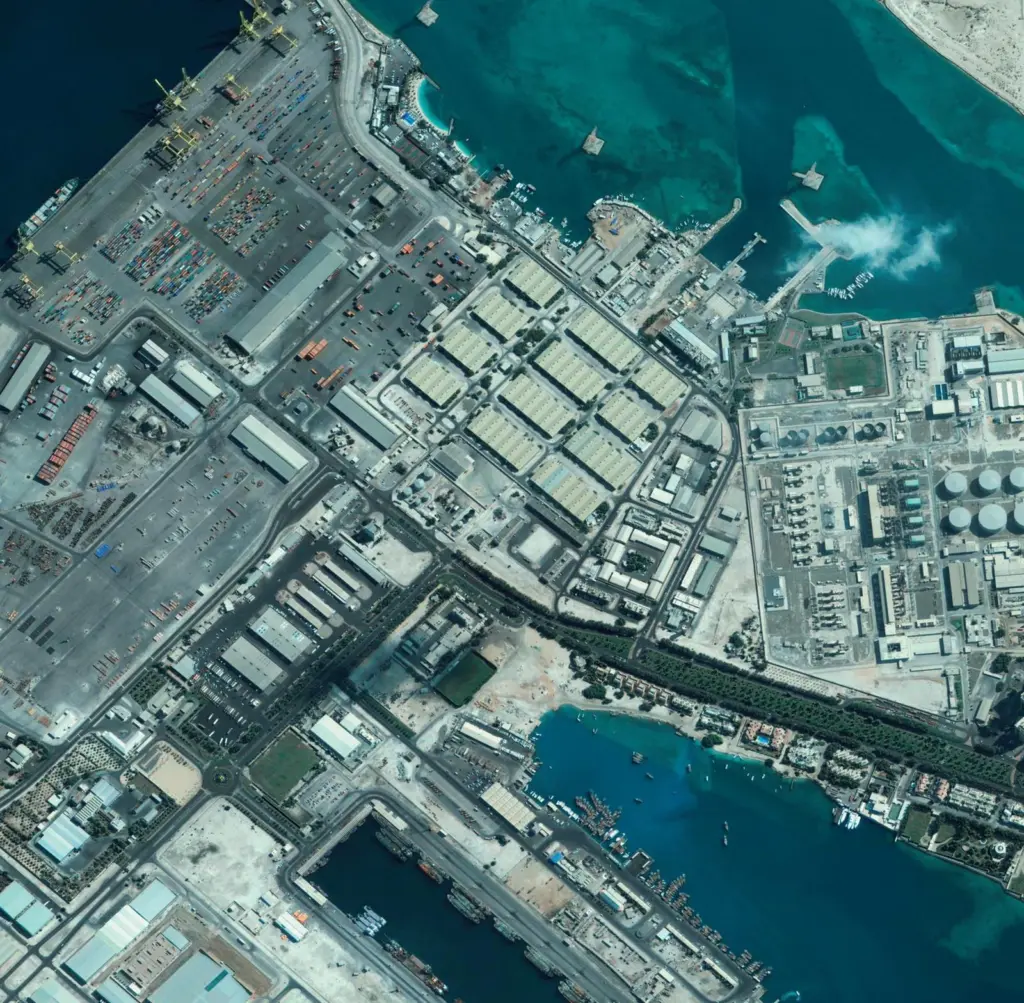
With Dubai taking something of a gung-ho approach towards adding container handling capacity, not just at Jebel Ali, but also at port terminals around the globe, neighbouring Abu Dhabi’s recent announcement that it too is to build a major new port came as something of a surprise. Abu Dhabi Ports Company (ADPC) has decided to resurrect a ten-year old plan to build a brand new port at Khalifa, which will include development of Khalifa Port & Industrial Zone (KPIZ). International Bechtel Company has been appointed as programme manager, with primary responsibility for management and co-ordination of the master planning, design, and construction of the port and associated infrastructure.
KPIZ will be located in Taweelah, midway between Abu Dhabi and Dubai.It will include the construction of a world-scale industrial and container port, and the development of over 100 sq km of industrial, logistics, commercial, educational and residential zones. Commenting on the project, a port authority representative noted that it would reinforce Abu Dhabi as one of the most important port and industrial zones in the region, able to compete with international ports around the world.
When Abu Dhabi undertook its original feasibility study almost a decade ago, the plan was to build the port on land reclaimed from the sea, leaving the substantial available area on land for industrial development. However, the site would have required extensive dredging to enable vessels drawing at least 16m of water to call.The substantial cost of the project was, however, somewhat undermined by prevailing economics, since this was an era when the oil price had dropped to $20/barrel. The contrast with current conditions could not be more striking.
Significantly, Khalifa is notably closer to Jebel Ali than the existing port of Mina Zayed, where operational responsibility was earlier transferred to DP World as a means of both boosting productivity and realising synergies between the two adjacent ports. One local commentator noted that Mina Zayed is now very professionally managed, with more freedom to market facilities, since day-to-day management is no longer handled via a government department. However, throughput has not notably increased.
Nevertheless, there is speculation in the region that, now that box traffic in Abu Dhabi has stabilised, the port authority is more confident that it can attract new customers to the planned new port, which could also potentially handle overspill traffic at Jebel Ali, where short term congestion will only eventually be eased as a massive expansion programme begins to take effect. Indeed, the relationship between the two ports could be further strengthened if a proposed rail link between Jebel Ali and Khalifa goes ahead as planned.
The implementation schedule envisages the new port fully operational by 2010, with the cost being fully assumed by the government of Abu Dhabi.The existing box terminal at Mina Zayed, which only opened in 1972, will then be redeveloped as a leisure port and as a naval base.
Work on Khalifa has already started, with the project being in the design and procurement stage. In early 2006,HPA/Halcrow was appointed to develop the port master plan and conduct an Environmental Impact Assessment. In addition, ACES was appointed to perform onshore geotechnical investigations for the port and industrial zone areas.
Much of the anticipated traffic for Khalifa,it is hoped, will be generated by the planned surrounding Industrial Zone, to which both light to heavy industrial companies have already made a commitment, as have a number of commercial trading companies. A 1.2m ton/year aluminium smelter is already planned, as is a steel mill.
Two years ago, Abu Dhabi also took a long hard look at developing Mussafah Port, which lies to the south of the island.However, this project, which might also have including container handling facilities, seems to have been downgraded. Even with construction of the new port and industrial zone in Tawilah, present traffic to Musaffah is not going to be affected.The industries in that region will continue to use Musaffah port for their private needs, despite existing infrastructure deficiencies.
Related Articles
 NEWS
NEWS
 CONTAINER & CARGO HANDLING
 OPERATIONS