


Scenario planning: Korean hostilities
In a scenario where military hostilities between North Korea and South Korea breakout and Seoul is shelled, “Incheon port would likely suffer collateral damage”, says IHS Fairplay’s senior analyst, Gary Li.
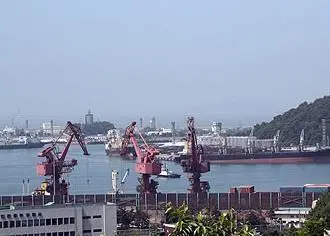
Mr Li has looked at the impact of strike on Seoul’s Incheon Port, which is the second largest port in South Korea and supplies large quantities of goods and energy in the form of LNG to the capital. His analysis has been based on real time ship movements in and out of Korea’s ports via Fairplay’s AISLive software.
“Due to the relative inaccuracies of missiles in the North Korean arsenal, a hit to the port area cannot be ruled out. The Circular Error Probable (CEP) of a Scud-B is around 1km and the port is only a few kilometres from Seoul. Incheon Port is out of range of DPRK tube artillery and long range rockets”, he explained.
According to Mr Li, in this low probability, high impact scenario, North Korea could also impact the shipping sector as a whole if it were to use its submarine force, including midget subs or threaten or claim to have mined the narrow approach to Incheon.
Mr Li added: “The result of these threats would have a substantial impact on shipping going into South Korea. Large quantities of LNG and container shipping would have to be diverted to ports further south such as Busan, potentially disrupting supply chains and the services sector in Seoul.”
Any disruption would have a significant impact on a number of commercial sectors such as auto and electronics. While Busan Port deals with the majority of ROK import/export, as well as trade with Japan, Incheon has more of a focus on trade with China. Together they form the first steps of a global electronics supply chain.
Mr Li told Port Strategy: “So far we have not seen any large impacts or disruption to traffic heading into ROK ports and therefore do not think it likely that large scale evacuations will take place. There has also been a recent wind-down of rhetoric from the DPRK which might be the first signs of de-escalation.”
Related Articles
 EQUIPMENT
 PORT & TERMINAL NEWS
 PORT & TERMINAL NEWS