



Vertical thinking
There’s a growing bag of goodies for ports willing to invest in ERP, finds Stevie Knight
While the list of benefits from Enterprise Resource Planning (ERP) systems range from simple efficiency and control to ‘data mining’, beware the easy sell: try putting a generic ERP system into a port environment and you’ll quickly find “the shoe simply doesn’t fit”, says Arne Deenekamp of Ultimate Software.
Accenture’s Fox Chu underlines that “the usual” solutions, which bring back-office functions together with a company’s production or service operations are typically aimed at more ‘horizontal’ businesses; these tie just a few strands together into a single node on the supply chain “so whether it’s accounting or manufacturing or distribution services… it can be serviced by a fairly standard ERP”.
By contrast, ports, live in a “deeply vertically linked” world says Mr Chu, complex workflows are coupled with huge numbers of connections that run up and down the supply chain; the ocean carriers, cargo owners, agents, stevedores, customs organisations, trucking companies and so on “plus of course the tenants and leaseholders”, adds Mr Deenekamp, an element that’s far too often overlooked despite being “the main income” for a number of landlord ports.
While container port ERPs have their own complexities, implementing a standard system in a multipurpose facility risks running straight into a bottleneck: “General cargo can be absolutely anything – and you often have specific techniques, specific equipment, so each cargo flow has its own contract, it’s not just gross tonnage. A tonne of lead or a tonne of feathers requires a different charging structure… and it’s all strategy, strategy depending on what the port wants to accomplish.”
However, it’s enormously fluid: “You might start off charging by weight, but then slide across to charging by volume. Then of course, you have the oversize and out-of-gauge products and associated surcharges.”
Further, occasionally a port wants to seize an opportunity for a new cargo flow, but the billing, not the physical operations, can leave them lagging. He’s seen bulk ports that were ready to bring a few containers into the mix but while they had cranes and handling equipment, “at quite a late stage they still weren’t on top of the multiple invoicing for the different parties”. So for Mr Deenekamp, an ERP needs to be able to handle the shape-shifting nature of contracts.
Main attractions
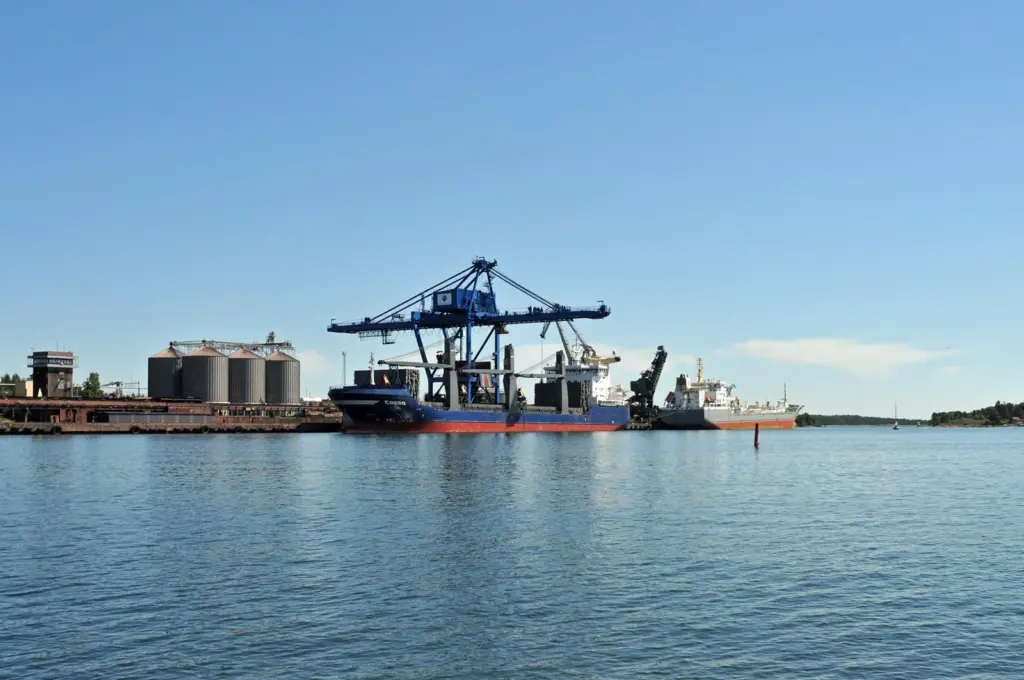
There are a myriad of reasons a port might consider ERP implementation: Håkan Folkesson of Sweden’s Oxelösund Hamn multipurpose facility explains: “We kept our data all over the place… individual Excel-sheets for everything, systems for keeping track of the man hours and so on”. Installing Ultimate Software’s FlexPort meant, quite simply, saying “goodbye to all of those separate systems once and for all”. On the other hand, Mr Deenekamp explains Ghana “had working solutions” but visibility was the issue: “They wanted more control. If a person has a system just sitting inside an office, it’s far too easy to hide things.”
More, Mr Deenekamp says he’s seeing, a big demand to expose information to other stakeholders, “but you can’t always do it with old, legacy systems…and bespoke solutions are usually set in concrete”. So, he says the overriding need is for a flexible underlying platform that allows for fairly straightforward integration.
This brings up another point: for ports, integration is not just internal – it should include agents, trucking companies and so on. Not so easy given the numbers of stakeholders but it’s the nature of the industry, says Mr Chu. He adds it’s important to find a balance of interests: “You have to find out how to bring people onboard, ask ‘what’s their game-plan?’. Only based on that can you get the technology right.”
However, in Mr Chu’s view as there’s no single, off-the-shelf software product that can handle absolutely everything a port usually has to assemble its own solution from different parts. Like it or not, “this means buying in software to fit some of the functions and building bespoke systems around others”. This is, he says, the “only way to construct a solution that will fit around the entire industry process… end to end.” So, it takes a fair amount of clarity and work to deliver an architecture and infrastructure flexible enough for information sharing. Get it wrong, and despite the time and effort the data will remain in disconnected silos “and this means it’s of limited value”, says Mr Chu.
But get it right, and you can dig much deeper than has previously been possible; putting information side by side yields far greater results than the sum of its parts. “Data mining is a coming trend,” says Mr Deenekamp, one that’s poised to make a big difference to port operations. For example, Ultimate Software is developing predictive algorithms able to take on long range planning against both the orders a port already has and forecasts based on potential contracts. “So not just what’s turning up next week, but what will happen to your cash flow, to the space in the yard, if you sign up for a two-monthly visit from a scrap export vessel. What it could mean if you charge more for keeping containers longer.”
However Mr Chu delivers a word of warning: “You can’t just fire up the software and expect it to deliver real change; it’s the other way round. You have to work on the transformation, the organisational readiness.”
Phased or piecemeal?
It’s a big ask. So, it might seem the safer option just to ‘see how it goes’ – start off with office functions and bring in the other elements piecemeal – piecemeal definitely not being the same as a phased approach that’s been planned at procurement. However, Mr Chu says: “If the ERP software is only focusing on improving the efficiency of back-office, then unless you are a multi-facility and multi-geographical organisation, the impact won’t be enough to drive it or even make it worthwhile.”
On the other hand, while “taking baby steps will never get there” a failure to retain or build a big enough vision “to make that transformational journey” means potential benefits will crumble away. If this happens it won’t just be expensive, “it will bring down some of the organisation’s momentum”. Further, it also erodes stakeholder’s goodwill and makes further changes far harder.
But if a port sees it through, an ERP doesn’t just lead to better planning, it also enables real-time adjustments and keeps partners in the loop. “You can sit in the control tower, see the potential hotspots and handle the exceptions, and you can decouple the need of specific pools of workers from where the operations are physically located,” he says. “Giving updated information alerts to your customers and allowing them to feedback to you could lead to better utilisation of your services – a win-win for all parties.”
WHEN TIMING IS EVERYTHING
The challenge for advanced analytics is that “like refrigerated products, data is basically perishable”, says Accenture’s Fox Chu. “If you only extract it at the end of the day or a week later, then you can’t do things like predict behaviour or interact in real time for more dynamic services, and the full power of your data engine is not being utilised.”
It’s even more frustrating for a port’s partners: “With the amount of money walking through ports it’s almost comical that the supply chains don’t have real time information; they should know right then and there what’s happening,” says Tommy Barnes of project44. “The core issue is that if we can’t see what’s going on in real time, we are effectively blind.”
The answer, according to him, is APIs, or Application Programming Interfaces: “These are things that enable smart phones to use Facebook,” he explains, and they’re everywhere – apart from the supply chain where they are desperately needed.
It promises to sidestep the old, clumsy Electronic Data Interchange (EDI) methods which can take anything between 30 minutes to a couple of hours to complete and are plagued by errors. According to project44 around 20% of all EDI transmissions are displaced, not to mention late. “In fact most of the supply chain’s information is somewhere between 24 and 48 hours out of date,” says Mr Barnes. By contrast API’s run “a pipe” directly between servers to allow limited but very fast communication.
And they can be bolted on to virtually any ERP interface, he adds, with a single, one-time set up that typically takes less than a week to complete.
The interest, he says, “is growing” and though he adds he can’t disclose which organisations are actually involved, “large shippers and big logistics companies are pushing the envelope and starting to enforce these requirements”.
Related Articles
 BULK HANDLING
 BULK HANDLING
 PORT & TERMINAL NEWS