



Drewry: Greenfield projects in decline
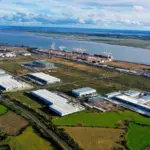
There are relatively few greenfield projects currently in the ports sector compared to the past, despite there now being a larger market for them, Drewry has said.
Drewry’s Container Ports briefing ‘Where have all the greenfields gone?’ shows that there are only 80 greenfield projects in the pipeline now compared to over 130 in the past.
In addition to this, stated Neil Davidson, senior analyst in Drewry’s ports and terminals practice, the average planned terminal size has dropped to 650k teu this year from 800k teu in 2013 after growing from 470k teu on average in 2009. The focus is now on smaller facilities, he said.
JV working
M&A is the major attraction for the ports sector now, explained Mr Davidson. He said that notable trends include pure carrier global terminal operators being in decline, while hybrid global terminal operators are growing the most.
Global terminal operator strategies are focused on diversification and cooperation.
Diversification continues to be popular with trucking and rail services; warehousing and distribution; and supply chain management, blockchain and digitalisation amongst the initiatives undertaken, alongside the more ambitious industrial and free zones and the Port-Park-City concept, as seen in China.
Drewry’s research has also found that there is a trend towards terminal operators with shipping line connections, that liner-affiliated terminal operators are increasing in prominence and there are more joint venture agreements for terminals between non-liner affiliated terminal operators and shipping lines.
However, Mr Davidson pointed out that individual shipping lines are not in complete control of port/terminal choices due to liner alliances. He added that the politics of liner alliances is complex and the aims of the terminal operator and line may conflict.
There is also increasing intertwining and joint ventures amongst terminal operators with PSA, CMA CGM and China Cosco Shipping having the highest number of ownership inter-connections respectively.
Overall stats
In Q1 2018, global container throughout was 6.1% and in Q2 2018 it was 5.5%, with Asia is seeing the strongest growth, said Mr Davidson.The forecast global capacity increase as a percentage of existing capacity is at its lowest proportion ever.
Drewry’s five-year global container port demand forecast was 5.7% per annum, however, the threat of trade wars has prompted a revised forecast of 4.3% per annum.
Mr Davidson stated that projected port capacity expansion is just 2% so average utilisation levels are expected to rise regardless.
The port with the largest increase in mainline service connections per week is Antofagasta in Chile, with 166% and the port with the largest decrease is Manzanillo in Mexico at -32.3%.
Related Articles
 BULK HANDLING
 BULK HANDLING
 PORT & TERMINAL NEWS