




High stakes ‘game’ in play
It is interesting to speculate what will happen when DP World’s two terminal contracts at Jawaharlal Nehru Port – India’s second biggest container gateway in volume terms – come to the end of their concession lifetimes in 2028.
The question of extension or renewal of the existing concessions doesn’t appear to be on the agenda. Indeed, were it to be a possibility then at this stage, six years out from the end of the concession terms, it is usual to see some sort of activity. It makes sense to conclude a concession renewal early so as to maintain investment flow and thereby keep terminal performance at the optimum level.
The recent letting of a concession for the Jawaharlal Nehru Port Container Terminal (JNPCT) represented an opportunity for DP World to confirm its presence in Jawaharlal Nehru Port via another route – winning the bid process for JNPCT. It was not, however, successful at achieving this – the bidding was extremely robust with the winner, a consortium of J M Baxi Ports and Logistics, and CMA Terminals, pitching a high bid off the back of the strategic value of the terminal in conjunction with the affiliated shipping line operations of CMA CGM.
It can additionally be seen that the recent JNPCT bid process and the high return it has delivered to the port management body provides an incentive to it not to extend the existing concessions. A bid process is seen as the proven method via which concession fees can be maximised.
The future thus looks most uncertain for DP World’s two Jawaharlal Nehru Port concessions beyond 2028.
It gets worse – DP World’s terminal concession at Mundra port will end in February 2031. The prospect is ‘hanging there’ of DP World’s strong presence on India’s Western Seaboard slipping away.
Against this background, it is hardly surprising that a strong bid is expected from DP World to secure the concession for a mega container terminal to be established at Deendayal Port* in Kandla. The facility, when fully built out, will offer an annual capacity of 2.19 million TEU. Initial bids were submitted at the end of August with DP World joined in the pursuit of this prize by local operator Adani Ports and Qatar-based QTerminals
There was a suggestion that Adani would be unable to qualify due to the company’s potential disqualification arising out of the termination of a concession contract at Visakhapatnam Port – indeed this was the case in conjunction with JNCPT. This ruling will, however, not apply to the new Deendayal Port container terminal. A recent Supreme Court decision states that the firm’s disqualification arising from termination of a contract at Visakhapatnam Port “shall not bar or act as disqualification for the petitioner (APSEZ) for future tenders floated by public bodies”.
Overall, the response to the Deendayal container terminal offer did not match expectations. Even so, the process looks set to be a highly competitive one with Adani back in the game and always a strong competitor, and QTerminals making strenuous efforts to expand its international operations.
TERMINAL SCOPE
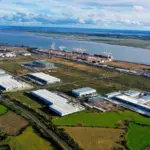
Deendayal Port Authority manages the country’s largest state-owned port by cargo volume at Kandla in Gujarat and Tuna-Tekra is a satellite facility located some 15 kilometres away.
The new terminal will have the ability to handle the largest container vessels in service today. Initially the terminal will work with a depth of 14.5m without tidal restrictions. Subsequently, the plan is to increase depth to 18.5m.
Three vessels will be able to be handled simultaneously supported by a landside area of 55ha.
The successful bidder will be free to set rates based on market conditions, a positive change of direction from the rate regulation which took place in the past.
Significant geographical advantage is claimed for the new terminal. Deendayal Port is the closest port to the northern hinterland including NCR Delhi, UP, Punjab and Haryana. Additionally, Tuna-Tekra offers a shorter distance to the inland container depots in Northern India plus a significant overall rail advantage – distance to the main market areas is shorter and thus overland costs will be competitive.
Bidding for terminal concessions is invariably a tough business. For DP World with this particular process the stakes look to be even higher!
Related Articles
 INSIGHT & OPINION
 INSIGHT & OPINION
 INSIGHT & OPINION