



Mobiles: Bigger and better for business
Ports are investing in bigger and better mobile harbour cranes as means ofconsolidating and expanding business. John Bensalhia reports.
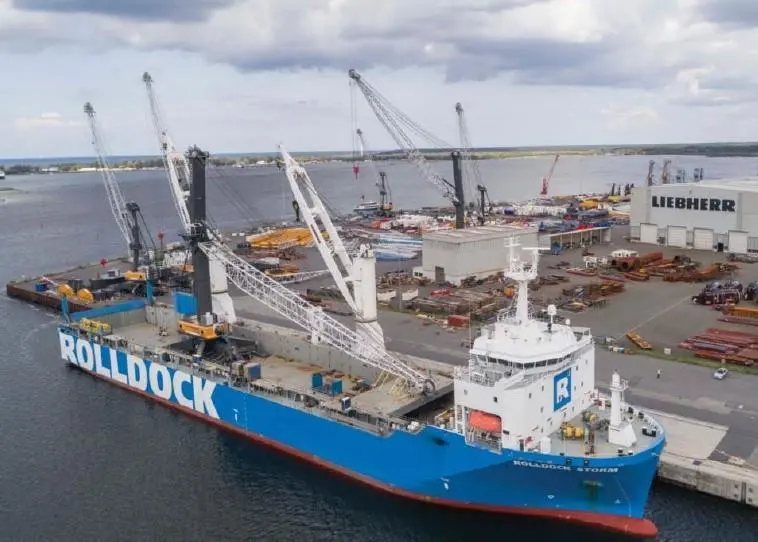
Congratulations – your port performance has shone in the past year! Boosted levels of growth and efficiency are cause for celebration. But how to build on that success? With ports achieving impressive figures, the next step is to seek ways of making sure that the statistics are even bigger and better the next time around.
In accordance with this notion, crane manufacturers are also providing bigger and better innovations. Take the mobile harbour crane, which is capable today of achieving heavier load and greater distance capabilities.
Belfast Harbour recently took delivery (via Cooper Specialised Handling) of a Mantsinen 300M crane. With 2018 growth (the harbour handled over 24 million tonnes of cargo), Belfast Harbour looked to a machine that would be capable of handling that level of demand. The 300M – mounted on six axles and 24 rubber tyres – is capable of handling high levels of cargo (bulk and breakbulk) for vessels that reach up to 36000 deadweight tonnage.
Michael Robinson, Port Director, Belfast Harbour, praised the impressive facilities of the Mantsinen 300M, explaining that the investment would help the port’s aim to provide its customers with “highly efficient and flexible cargo handling solutions”.
The Port of Philadelphia’s Packer Avenue Marine Terminal is also looking to the future. Packer Avenue is the Philadelphia Port’s main container terminal, and is currently undergoing improvements which are said to be worth US$300m. As part of the investment, two new ZPMC Zhen Hua 16 cranes were acquired, with another one set to follow.
The new cranes can tackle container vessels of considerable size, even Ultra Large Container Vessels of up to 18,000 TEU. Greater vessel size is one of the chief considerations of mobile crane manufacturers.
Sennebogen’s Port Mobile Crane 9300 E is an example of equipment that can manage massive vessel sizes of up to Panamax class. Distance is not a challenge with the 9300 E, as it encompasses a working radius of 40m. It is also a crane that can reach up to two rows higher than other cranes.
The 9300 E’s port-cab allows the driver a good deal of flexibility. An adjustable facility results in whatever view of the surrounding port environment the driver wishes. The mobile crane also considers the environment, most notably in its electro-hydraulic drive that provides emission-free usage. while at the same time reducing operating costs by up to half.
Speed is an essential consideration when selecting the right mobile crane. It is one of the reasons why Ership Terminal in the Spanish Port of Cartagena recently took delivery of the 2000th Mobile Harbour Crane from Konecranes Gottwald.
Gonzalo Alvargonzález, CEO of Ership, cited the reliability, high performance, solidity and speed of the cranes as reasons for the choice of mobile harbour crane. “That helps us to serve our customers, who expect their cargo to be unloaded quickly. Time is a very important factor in our work. So, the faster a ship is unloaded, being careful with the cargo, the better.”
The milestone delivery of the Model 6 Mobile Harbour Crane occurred in May 2019, and will be used for the terminal’s handling of bulk, project and general cargo.
Heribert Barlage, Senior Vice President, Konecranes Mobile Harbour Cranes, explained that the company’s offerings provide added value for the port industry, with the 2000th delivery signifying its commitment to this field. “But just like every other important milestone we reach, this one is also an incentive for us to constantly develop our cranes and in so doing, make them fit for the future.”
At the time of writing, another port had ordered the Model 6 Mobile Harbour Crane from Konecranes to boost its cargo handling output. New Zealand-based Northport wanted the crane for its deep-water facility, which is due for delivery and commissioning in the first quarter of 2020.
The continued interest in the mobile harbour crane again comes back to port desire to grow and expand, and Northport is no exception. The New Zealand port is looking to increase the facility’s container, general and bulk cargo handling capacities.
The new Konecranes model will work in tandem with the port’s existing Konecranes Model 4 mobile crane, which has been in operation since 2015. The new crane will be able to handle container vessels of up to post-Panamax level, as it boasts a maximum lifting capacity of 125t.
A welcome bonus is that the machine fully complies with New Zealand’s environmentally-conscious guidelines on the use of sustainable energy. Not only does the Model 6 crane feature an ecologically sound diesel electric drive, it also includes an external power source feature, which provides the alternative option of potential back-up power.
Northport’s CEO, Jon Moore said that Konecranes has given “outstanding support” since it began handling containers. “They’ve provided a high-performance crane that gives us wide flexibility in handling any kind of cargo. Once we had decided to expand our capacity, it was an easy decision to work with Konecranes again.”
Flexibility is a key factor to the Florida-based Port Canaveral, which opted for the Liebherr LHM 600 crane, regarded as the biggest of its kind in the US. Having started work in the second quarter of this year, the LHM 600 is employed to help increase Port Canaveral’s handling flexibility and supporting the rise in port cargo levels.
Growth is also occurring at Mozambique’s Port of Maputo. Having reaped the rewards with the performance of the port’s original Liebherr LHM 550s, two more of these were acquired in May 2019 to drive greater productivity levels.
The recent double investment was augmented by special training for both operators and technicians with respect to handling and maintaining the cranes.
A similar situation of two LHM 550s is relevant to West Africa Container Terminal. Like the Port of Maputo, Onne Port’s West Africa Container Terminal has been experiencing constant volume growth, with a 21% rise in 2018 (from the previous year).
With ongoing cargo growth (due to the continuing volume growth in the Nigerian market), a pair of Liebherr LHM 550 mobile harbour cranes arrived at the terminal in July 2019 – part of its infrastructure upgrades, which are expected to come to fruition next year.
Planning for the future is what all ports have in mind and the acquisition of equipment like a mobile harbour crane can helps to secure that future. Like many of the other ports discussed in this article, the Port of Esbjerg invested in a new Liebherr crane (the LHM 800) to tackle higher volumes of cargo. The purchase took place in August 2019, adding to its range of five Liebherr mobile harbour cranes.
Dennis Jul Pedersen, CEO of Esbjerg Havn, expressed his delight at the expansion of the port’s crane capacity. “We need to be able to handle more and more larger cargo volumes in the future and therefore we need to rearm. I am also pleased with the fact that only few ports in the world have a similar crane because it shows that the Port of Esbjerg is a heavyweight internationally.”
Esbjerg’s new Liebherr crane can tackle largescale cargo successfully, with the ability to lift 308 tonnes. This lifting capability is matched by the equally formidable height (48m) and boom length (66m).
The addition of the LHM 800 means that the port can now carry out tandem lifting in conjunction with another Liebherr mobile harbour crane, taking the total lift capacity to an impressive 448 tonnes.
Kristian Holst, Managing Director Liebherr-Danmark Aps. added: “We are happy to be able to deliver yet another crane to the Port of Esbjerg, which already has five of our Liebherr mobile harbour cranes. The fact that it is a crane of this calibre, with the ability to lift a whole new type of high and heavy cargo, shows that the scale of activities is growing rapidly at the Port of Esbjerg.”
The mobile harbour crane is a vital tool in the handling of greater quantities of port cargo. As crane manufacturers continue to come up with innovative solutions for boosting efficiency and productivity levels, this means that ports can wisely invest in a product that can help to lift cargo in fast time.
With extra features such as energy efficiency and driver comfort, the modern mobile harbour crane remains bigger and better than ever before.
Related Articles
 NEWS
NEWS
 CONTAINER & CARGO HANDLING
 OPERATIONS