




Gothenburg Port unveils major expansion
The largest port expansion in 40 years has opened at the Port of Gothenburg in Sweden.
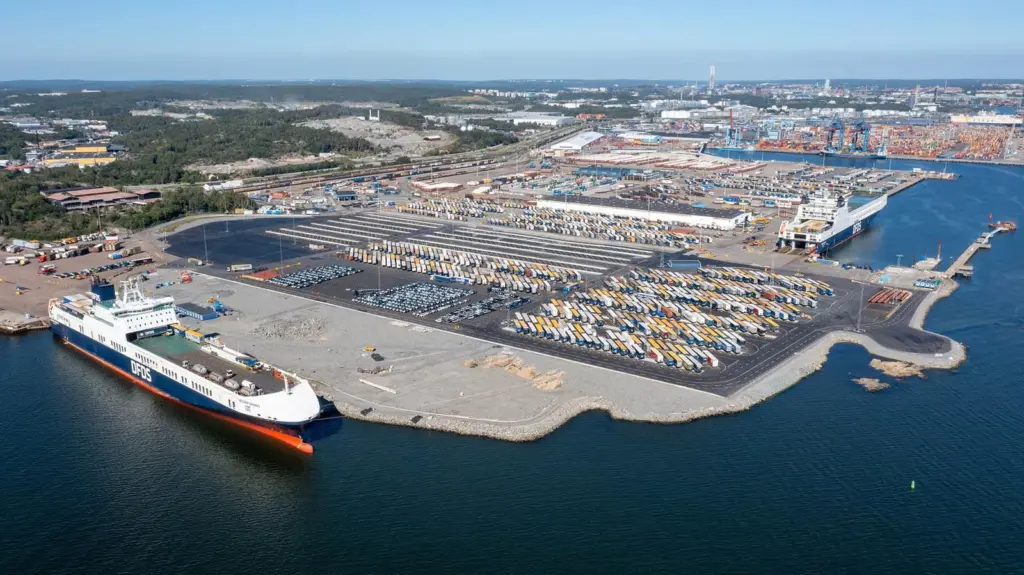
The brand new 144,000 sqm ‘Arendal 2’ terminal has been under construction for the past six years and will meet the increasing transportation needs of Swedish industry.
“This terminal began planning as early as the 1990s and then we talked about future-proofing,” said Göran Eriksson, chief executive of the Port of Gothenburg.
“Now that future is here, and this terminal is needed to meet the transportation needs of Swedish industry today, which are also expected to continue growing over time.”
Costing around €60m to build the terminal is part of the port’s strategy to concentrate its terminal operations in the outer port area, further from the city centre, and with direct connections to the port’s road and rail infrastructure as well as the local growing industrial cluster.
Stena Line relocation
Work has included filling, channelling and water purification for a future ferry terminal to accommodate Stena Line’s relocation from the centre of the city to the outer port area.
During construction, 180,000 cubic metres of contaminated materials from dredging in the Göta River have been encapsulated and stabilised to form the foundation of the terminal area, which has then been asphalted.
“We have hit two birds with one stone here, where we have both managed to clean the river and dispose of dredging material locally without unnecessary transportation,” said Eriksson.
Already, large parts of Arendal 2 have begun to be used by the terminal operator Gothenburg Roro Terminal, which previously had its operations divided between two different adjacent areas.
“Overall, Arendal 2 is a solution where the involved actors get even better conditions to conduct their respective operations while the Port of Gothenburg as a whole is further optimised and becomes more competitive,” concluded Eriksson.
Related Articles
 OPERATIONS
 OPERATIONS
 OPERATIONS