


Nearshoring or a ‘No-China’ policy?
There are far-reaching trends underway shaping container trades and, thus, port development. Uncertain political conditions and the erosion of China’s cost-advantages are redirecting attention to alternative strategies. Andrew Penfold looks at the driving forces…
The upheavals of the Pandemic and then the Ukraine war have led to a sharp reappraisal of supply chain security issues. The increased level of sabre rattling over Taiwan has also shaken up earlier complacencies about the desirability of relying on China as the primary source of manufactured and semi-manufactured goods. How will this pan-out and what are the implications for port investments by the public and private sectors?
On the one hand, these changes have been driven by increasing manufacturing costs in China as the economy moves up the value chain. This has seen a now well-established search for cheaper sources for manufactured goods. The pace of this was actually quite sluggish before the recent upheavals but has now accelerated sharply.
The strategic response for multi-nationals has been two-fold – on the one hand there has been a desire to move production closer to demand. For the US this means Mexico and the smaller central American states. For western Europe this means the lower cost parts of eastern Europe and also Turkey. The driving force here is partly lower costs but – more importantly – supply chain security. Alternatively, there has been a surge in the search for other low-cost Asian suppliers. This means the less developed economies in Southeast Asia and the Indian Subcontinent. Here the driving force is, and will remain, labour costs.
It’s far from clear how far this process is really one of ‘nearshoring’ and not simply a ‘no-China’ policy. Which of these two approaches become dominant is not clear, with a mixed approach probably the most likely outcome. The implications for port development of these competing strategies are quite different.
LABOUR COSTS ARE KEY
Manufacturing wages in China have risen steeply in the past few years. The Reshoring Institute has highlighted that China can no longer be considered a low-cost country. This reflects both China’s shift up the value chain and also its worsening demographic situation. The lowest cost countries identified by the Institute are now India, Mexico, and Vietnam – with other smaller Southeast Asian countries such as Myanmar and Bangladesh also recording very low wage rates. The relative level of productivity in these countries is also a significant issue, but the upward trend in the most competitive countries is further squeezing the pro-China argument.
The American Journal of Transport reported that China’s trade contracted sharply in July of this year as slowing global demand reduced the call for Chinese exports. But global conditions are only part of the story, with sharp increases in exports from the alternative emerging regional suppliers.
According to Chinese customs data overseas shipments dropped 14.5 per cent in dollar terms last July in contrast to the year-before level. Shipments to the US from China collapsed by 23.1 per cent this July and exports to other markets including Japan, South Korea, Taiwan, ASEAN, the EU, Brazil and Australia all dropped by double digit percentages.
The situation in the garment trade is indicative of the flight away from China, with labour costs running to around 25 per cent of delivered costs manufacturers have been focusing on cheaper locations. Bangladesh has been the main beneficiary in this sector, with the same pattern being manifested in other labour-intensive businesses.
SUPPLY CHAIN SECURITY
Recent developments have also been driven as much by concerns over stability and security of supply as basic production cost levels. The shift in favour of bringing production nearer to the market was seen as a hedge against trade sanctions and counter sanctions, together with other uncertainties that have disrupted container trade flows. Nearshoring is a partial reversal of the dynamic of international trade that has dominated industrial thinking for the past 20 years.
Indeed, increasing supply chain reliability was perhaps the most important objective of nearshoring, to ensure that supply chains continue to function smoothly despite increased global uncertainties.
IMPLICATIONS FOR PORT DEVELOPMENT
There are several constraints that will slow the development of new suppliers. These include a lack of a suitably skilled labour force and poor supporting infrastructure. But by far the most important in delivering on the potential is the availability of port infrastructure of a sufficient quality to allow containerised exports to reach the world’s major markets. It is here that these still nascent changes in trade structure offer the greatest potential.
A developing pattern is already apparent. The initial round of investment in – for example – Southeast Asia – focused on the development of smaller scale container handling facilities designed primarily to allow the feedering of containerised goods to regional hubs such as Singapore and Hong Kong. As demand increases, the justification for the introduction of larger scale terminals becomes a possibility and then a necessity. This pattern is well represented in Vietnam and somewhat lower down the scale is the driving force on Cambodia (see following article).
The development and financing of this evolutionary process will be the major challenge for the industry in coming years, especially if one of the motivating forces is to redirect trade away from China. Indeed, the ‘Belt and Road’ policy could well be seen as a force directing trade towards, rather than away from, Chinese influence.
This means developing port facilities that can initially handle feeder containers on a competitive basis and then the development of much larger terminals offering at least the potential for direct deepsea calls.
THE WAY FORWARD
Focusing on port investment in the new exporting zones has accelerated sharply in the recent past and this trend will continue.
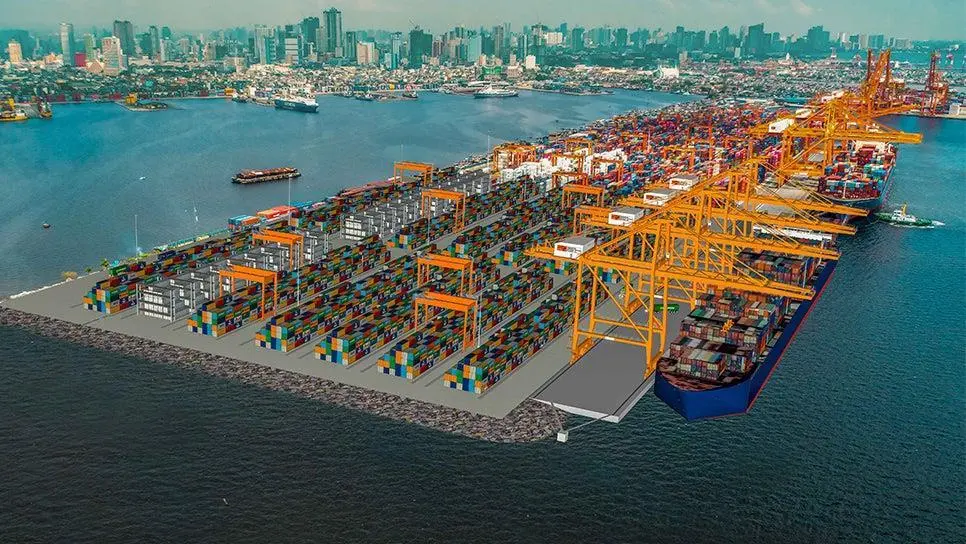
In India the recent decision to authorise the long-discussed project for a truly deepwater port to the north of Mumbai at Vadhavan is typical of the accelerating pace of demand. The port will offer a water depth of 20m allowing the largest liners to call and will have direct access to the major Indian hinterlands. The Adani project will involve a causeway to deepwater and should provide a capacity of 15m TEU in Phase I, rising to a significantly higher level in later phases. This represents the kind of generational change that will be required for the full maximisation of non-Chinese exporters.
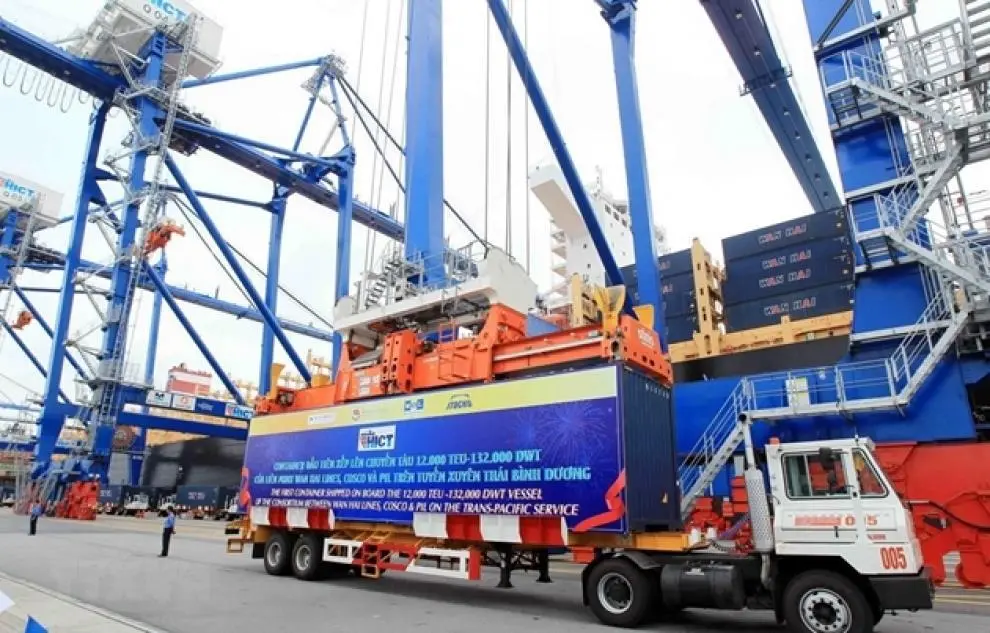
A very similar rationale is evidenced by the recent decision by APM Terminals in partnership with Vietnam’s Hateco Group to expand the capabilities and capacity of the northern port of Lach Huyen in Haiphong City near Hanoi. The project calls for the addition of two new deep-water berths as part of the efforts to expand Vietnam’s container ship capacity. The design includes the development of two berths with a total length of 900m each capable of accommodating container vessels of up to 18,000 TEU capacity. The first phase of the expansion will include five ship-to-shore gantry cranes and 14 rubber-tired gantry cranes. The timeline for development calls for the completion by end-2024 with operation from the first quarter of 2025.
This follows on from the earlier phases of Vietnamese port development that was focused on the south of the country.
These game changing investments will alter the dynamic of deepsea container flows.
Elsewhere, other more established ports in markets such as the Philippines are also the focus of additional investment based on a similar rationale. An eighth berth is to be added at ICTSI’s core MICT facility in Manila. The berth will also be designed to handle Megamax container vessels and is set to create another 400m of quay along with 12 hectares of yard space brining an additional annual capacity of 200,000 TEUs. Once again direct deepsea calls in the largest vessels is a driving force.
EVOLUTIONARY DEVELOPMENT
It is clear that the drive to find alternatives to China is seeing a steady evolutionary development with the move from smaller container feeder berths to larger deepsea facilities and then a rapid shift to regional Megamax-formatted hub terminal status. These trends are driven by economic and geopolitical factors and will be the driving forces for port development in the next hew years. The concept of ‘nearshore’ and ‘non-Chinese’ sourcing is complex and will shape container trade development in the coming period.
When assessing the future of trade and port development it is vital to differentiate between these two concepts. Nearshoring means a shift to more secure sourcing by means of geographical proximity and somewhat lower costs. ‘Non-China’ means the provision of port facilities to allow new suppliers to enter the already well-established deepsea east-west trade links. The former will see rapid investment in shortsea port facilities and overland linkages. The latter will entail large scale container port development carefully phased with demand expansion.
Balancing these different strategies will be central to successful investment.
Related Articles
 OPERATIONS
 OPERATIONS
 OPERATIONS