

Dublin Port begins historic wall repairs
Dublin Port has begun a €2.5 million programme of essential remedial works to repair the rock armour protecting the Great South Wall, following damage caused by December’s Storm Bram.
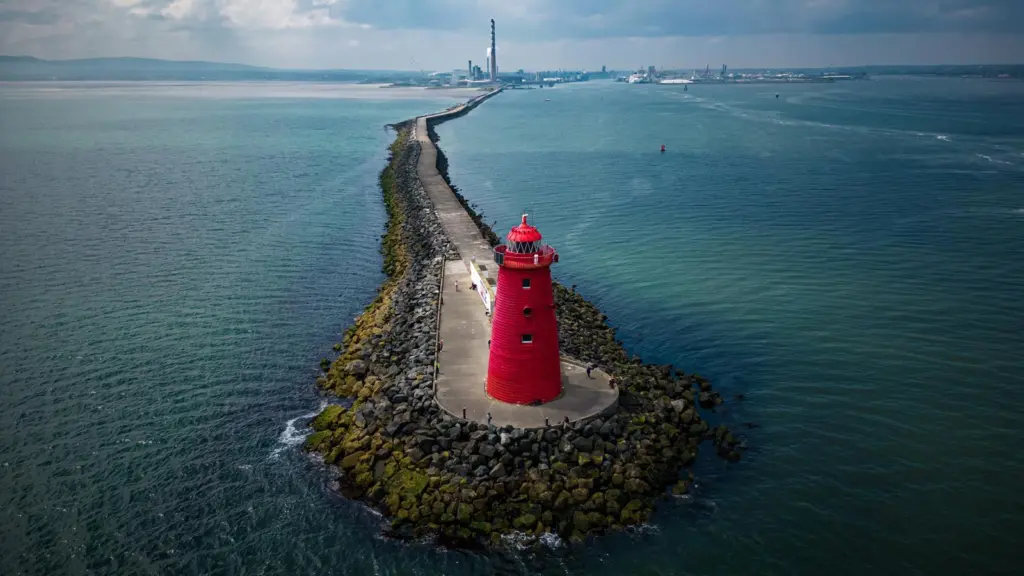
Built between 1720 and 1795, the Great South Wall is more than 230 years old and remains in its original form. It continues to safeguard the shipping channel into Dublin Port, supporting the safe movement of vessels that facilitate €165 billion in trade and 1.7 million passengers annually.
Sections of the wall’s rock armour were loosened and displaced during Storm Bram – the fifth strongest storm ever recorded on the Irish Sea – amid increasingly severe winter weather.
“With increasing wave heights there has been an exponential increase in the power of these waves,” explained Cormac Kennedy, head of commercial at Dublin Port.
“That means the wall will continue to encounter more frequent and more damaging storms, and we need to move swiftly to remediate recent damage. What we are doing now is the first phase of works, with more extensive rock armour placement planned over the coming years.”
READ MORE: Dublin Port expands reefer capacity
A five-week repair programme is now under way, focusing on replacing lost rock armour at the roundhead near Poolbeg Lighthouse using stone sourced from Arklow.
Works are being carried out by Murphy, with port customers advised of temporary sailing adjustments. A 100-metre section of the wall near the lighthouse is closed to the public during the works.
“As storms become more severe, we need to work quickly to protect this crucial piece of marine infrastructure,” said port engineer Eamon McElroy.
“Protecting the wall is a key component of our response to climate change, strengthening our infrastructure to protect the port and the national monument for decades to come.”
Visited by around 100,000 people annually, the nearly 5km-long wall works alongside the North Bull Wall to prevent silting at the mouth of the River Liffey and maintain safe harbour conditions.
Related Articles
 PORT & TERMINAL NEWS
 PORT & TERMINAL NEWS
 PORT & TERMINAL NEWS