


Port Louis Harbour energy efficiency
The Island of Mauritius, which is located some 2,000 km off the Eastern coast of Africa, is volcanic and surrounded by more than 150 km of white sandy beaches. It’s adorned by a transparent lagoon which is protected from the open sea by the worlds third largest coral reef. Kailash B Dhunnoo, Manager of the Technical Services at the Mauritius Ports Authority explains how to make the port more energy efficient and environmentally friendly.
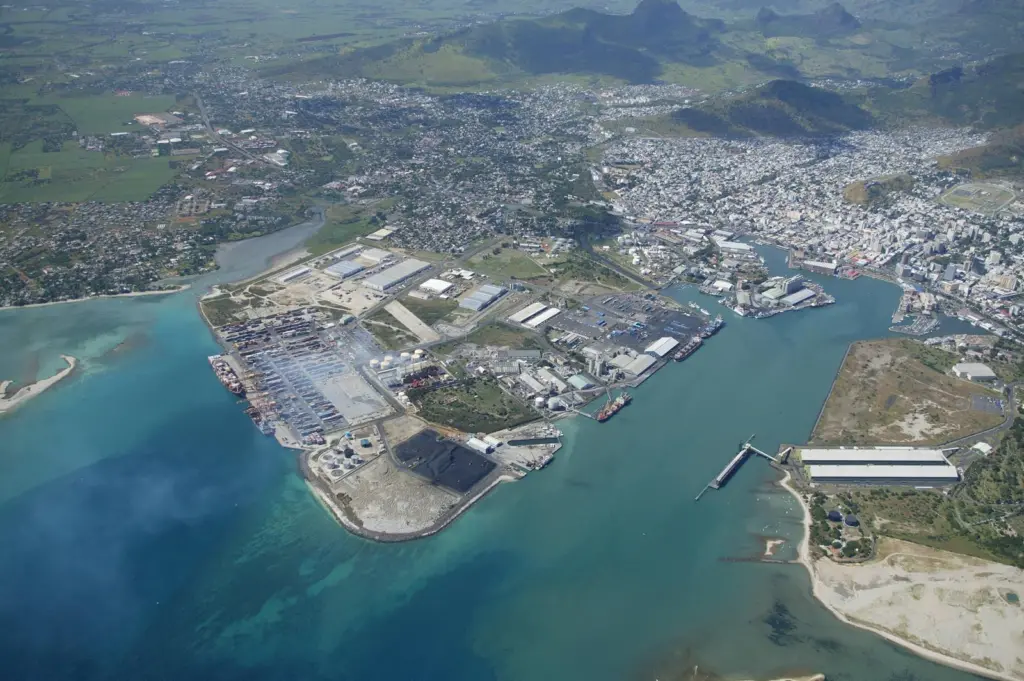
The island of Mauritius has a surface of 1,865 km², and is covered by ranges of lush mountains, fast flowing rivers, tropical forests and breathtaking panoramic views throughout the island.
Energy efficiency
Mauritius has a key geographical location at the heart of the Indian Ocean and is located at the crossroads between Africa and the Far East. Consistently rated the best destination for foreign direct investment in the region, Mauritius has been an established centre for international banking and finance for at least 20 years. As a result, the Republic of Mauritius is faced with unprecedented challenges such as increased dependence on energy imports, the need to limit climate change and to overcome the economic crisis. Energy efficiency is an important way to address these challenges. By improving the country’s security of supply, primary energy consumption can be reduced and energy imports decreased. It also helps to reduce greenhouse gas (GHG) emissions in a cost-effective way, thereby mitigating climate change. Shifting to a more energy-efficient economy would also improve the competitiveness of the industry as a whole, and the port of Port Louis Harbour in particular.
In addition, the high degree of volatility in oil markets has increased the awareness amongst local policy makers of the need to decrease dependence on fossil fuels by reducing energy consumption, using energy efficient technologies and increasing the use of sustainable energies. Recent initiatives undertaken in Mauritius in the field of energy efficiency and renewable energy are:
- the enactment of the Energy Efficiency Act;
- the setting up of the Energy Efficiency Management Office (EEMO) as a nodal agency for energy efficiency;
- the setting up of the Small Scale Distributed Generation (SSDG) scheme under which some photovoltaic plants have been implemented.
In line with the above, the Mauritius Ports Authority (MPA), which is the only, national Port Authority, intends to examine how a broad range of measures in strategic energy management can be introduced to make the port more energy efficient and environmental friendly. This initiative is in line with the Government Long Term Energy Strategy to adopt best practices to reduce energy consumption and to participate in the environmental protection. Besides leading to ample costs savings to the Authority, this will, more importantly, contribute to the reduction of carbon footprint and maintenance of the development of a green port. The MPA and the Cargo Handling Corporation Ltd (CHCL), the licensed Terminal Operator, are at present consuming electrical energy annually up to 7.5 million kilowatt hours (kWh) and some 2.5 million litres of diesel at the total costs of 158 million Mauritian Rupees.
Becoming a ‘Green Port’
Considering their extensive use of electricity and diesel as energy sources and the resulting carbon dioxide emissions, port operations have the potential to have a significantly negative impact on the environment. With this in mind, MPA intends to take active steps for the development of a green port, in order to reduce its carbon footprint and, at the same time to cut down costs as well as impacts on the environment. Soon, Port Louis Harbour will be amongst the few ports in sub-Saharan Africa to embark on an initiative to develop a Green Port. The continuously increasing energy costs are progressively getting more awareness by both MPA and CHCL. The global objective of the study due to be undertaken by the Mauritius Ports Authority is to examine how a broad range of measures in strategic energy management can be introduced to make the port more energy efficient and environmental friendly. An Energy Audit along with accompanying measures will provide an opportunity to achieve lower carbon footprint and lower energy bills whilst, at the same time, resulting in an increase in efficiency, competitiveness and, above all, a “greener” port. MPA intends to proceed with this ambitious project by developing a Strategic Energy Management Plan to make the port more energy efficient and environmental friendly.
This objective is broken down as:
(i) To conduct an energy audit of each site/facility and projects in the pipeline;
(ii) To elaborate on a strategic energy management plan which includes an action plan, comprising the short term, medium term and long term costs and benefits associated with the introduction of each of the energy efficiency (EE) measures, technologies and practices;
(iii) To assess the renewable energy potential;
(iv) To conceptualise the development of a Green Port.
Moreover, MPA envisages having consultations with relevant stakeholders in the port sector whilst conducting this assignment. A team comprising experts in the field of energy efficiency and energy audits (of large energy consumers), tugs and ships expert, port equipment specialist, renewable energy expert and CO2 reduction expert (environmentalist) will be mobilised by MPA. To conclude the project, a Closing Workshop with participants/stakeholders will be organised in order to disseminate the results of the different activities to relevant authorities, large energy consumers (industry and tertiary sectors), local consultants and companies involved in energy efficiency activities. The Terms of Reference (TOR) for the assignment was prepared in-house by MPA Technicians with the assistance of the Agence Française de Développement (AFD), and funding has been secured from the European Union (EU) under the Technical Cooperation Facility (TCF) II Framework. The Cargo Handling Corporation Ltd), as a major energy consumer, is fully committed to participate in this project. The Request for Proposals (RFP) is being floated by the EU. The study started at the end of 2012 in Mauritius and will be spread over a six month period.
Related Articles
 AFRICA GREENPORT
 AFRICA GREENPORT
 AFRICA GREENPORT