

Port of Tauranga’s investment strategy pays off
Dave MacIntyre discusses how a focus on risk-management has paid dividends.
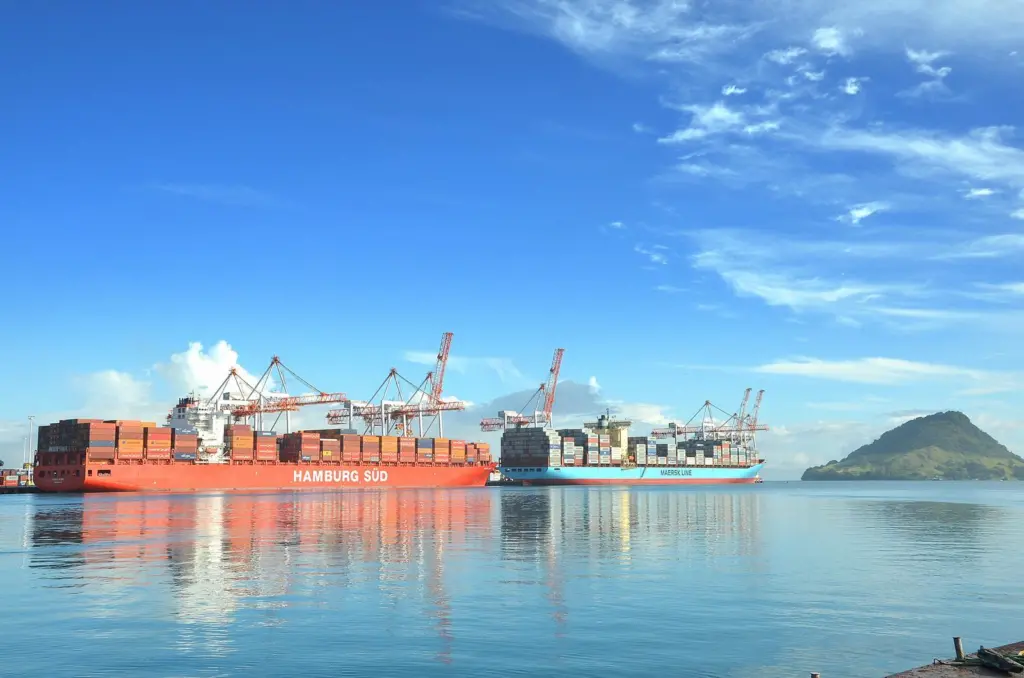
A huge capital dredging investment, underpinned by a strategy to prudently manage financial risk, is paying off for the Port of Tauranga.
Situated in the north east of the North Island, in the Bay of Plenty, Tauranga has evolved from being an almost-exclusively bulk and breakbulk port in the mid-1990s into New Zealand’s biggest container port, while maintaining bulk and breakbulk exposure.
It is also New Zealand’s biggest bulk port, primarily exporting logs, pulp, oil imports and fertiliser, which gives it a diversified income stream.
The NZ$350m (US$237m) capital investment programme has been the springboard to attracting calls from larger vessels, and the company’s latest results reflect the growth that has flowed from that. The port’s first quarter 2018-19 trade volumes grew 8.3% on the same period last year.
From July 1, 2018 to September 30, 2018, the port handled more than 6.6m tonnes of cargo. The increase was driven primarily by log exports, which were 14.7% higher compared with the previous corresponding period, and transhipped containers, which increased 11.4% in volume.
Overall container numbers increased 0.7% for the three-month period, to just under 296,000 teu, indicating that the port is on track to handle around 1.2m teu in a 12-month period. In 2018, it became the first New Zealand port to achieve a 1m teu throughput in a year.
Targeted full-year earnings are expected to be between NZ$96m and NZ$101m, compared with a record net profit after tax of NZ$93.4m for the year ended June 2018.
Considered risk management
Underpinning this growth has been the prudent risk management of the capital investment decisions, Port of Tauranga chief executive, Mark Cairns, told Port Strategy.
“An investment of NZ$350m may not be a big chunk of money to many port investors but it was to us. Our board needed comfort that it would have payback.
“We found that comfort first through a ten-year deal with Oji Logistics for paper and pulp exports and then secured a second ten-year deal with Kotahi [the logistics arm of dairy giant Fonterra] for dairy and other container throughput.
“That mitigated enough of our risk to proceed. We had the consents ready to go so we didn’t have to wait long. Subsequently, we have done a further ten-year deal with Tauranga Kiwifruit Logistics and Zespri [New Zealand’s kiwifruit exporter] to give us further confidence in the future.”
The payback has come faster than expected. Container volumes have increased 24% since the dredging was completed in October 2016.
“We got to 1m teu much quicker than we thought we would,” says Mr Cairns. “Our transhipment volumes have also exceeded expectations.
“It is a result of the bigger ships that have come as a result of the capital dredging programme. When we planned the dredging we were thinking we might attract ships in the 6,500-teu class. We had finished the dredging when Maersk indicated they were looking at 9,500-teu class. We had to get the dredger back to widen the channel.”
The transhipment volume growth is an important pointer to Tauranga’s role as a hub port, attracting the biggest boxships to call in Australasia.
Forward planning
Looking ahead, Tauranga is aware it needs to plan for continuing rapid expansion. International terminal planning expert TBA was brought in to advise on the layout of the Sulphur Point terminal.
Its advice resulted in a switch of emphasis, away from looking purely at the terminal yard capacity to focusing more on berth length as the constraining factor. As a result, Tauranga intends to extend its container berths south of the current wharves on existing port-owned land, as part of its focus on the next stage of cargo growth.
A ninth container crane has also been ordered for delivery in 2020. Future planned changes include installing automated gantry cranes and moving stacks of empty containers off-wharf to free up the terminal.
Mr Cairns believes that with the right investments, the terminal could be equipped to handle between 2.8m and 3m teu a year.
Of its 190 hectares in land holdings, Port of Tauranga has approximately 40 hectares of land still available to accommodate cargo growth.
Consents are already being sought for several of these future-proofing initiatives.
Related Articles
 NEWS
NEWS
 CONTAINER & CARGO HANDLING
 OPERATIONS