




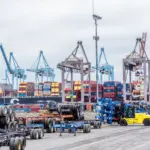

Long beach: building supply chain information
The Port of Long Beach’s digital Supply Chain Information Highway tool is being updated.
Already in its second phase of development, current field testing is fine-tuning its capacity to supply aggregated data that will assist logistics partners in better planning, scheduling, and tracking cargo movement in real time from origin to destination.
Three additional features are being added to the platform to further improve the efficiency and visibility of cargo shipments passing through the port’s facilities:
- A dashboard designed for beneficial cargo owners allows customers to access information about the location of their containers within the port complex, highlighting which containers have arrived, which are undergoing inspection by the U.S. Customs and Border Protection, and which are ready to be picked up.
- A public “track and trace” page allows users to access the most up-to-date information about the status of containers moving through the Port of Long Beach. After inputting a unique tracking number, the user will be presented with a detailed list tracing every step the container goes through from the time it is loaded onto a vessel until it is unloaded on the docks.
- A public port operations dashboard that contains much of the information currently found in the port’s Weekly Advance Volume Estimate, or WAVE Report, including projected container volumes, vessel calls and turn times for trucks accessing marine terminals.
Other participants collaborating in the project include the Port of Oakland, the Northwest Seaport Alliance, the Utah Inland Port Authority, Port Miami, the South Carolina Ports Authority and the Port of New York/New Jersey.
Related Articles
 DIGITAL
 PRODUCTS & SERVICES
 PRODUCTS & SERVICES