



X-ray vision
SECTOR ANALYSIS: MORE REGULATION AND A STRONGER FOCUS ON ILLICIT CARGO DRIVES CONTAINER X-RAY USAGE AND SOLUTIONS
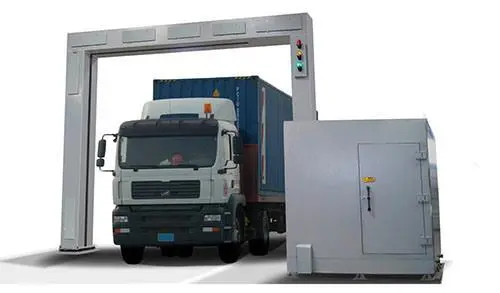
More stringent government security measures at borders and a greater focus on the illicit trafficking of goods, such as weapons and drugs, are among the factors behind the increased usage of container X-Ray systems at ports.
The global cargo container X-Ray inspection systems market size is forecast to grow from US$1.78 billion in 2024 to US$2.98 billion by 2032, at a CAGR of 6.6%, according to Fortune Business Insights’ Global Cargo Container X-ray Inspection Systems Market report. These figures combine the application of these systems at seaports, airports and border crossings/roadways, but the report underlines that the seaports segment will “lead the market” due to the rising demand for port security infrastructure. Underpinning this demand is the ability of such systems to boost security measures, preventing illegal activities and ensuring compliance with trade regulations.
Container X-Ray systems are rapidly developing when it comes to deploying innovative technology and data, as our company profiles below highlight. Fortune Business Insights’ report says: “In recent years, new X-ray inspection systems have been introduced to the market, and they have advanced features such as automatic detection algorithms, multi-energy imaging, and artificial intelligence, improving detection accuracy and efficiency.” There is also a move towards machine learning, which further enhances the accuracy of X-Ray systems.
AI, ALGORITHMS, INNOVATION AND MARKET EXPANSION
Astrophysics: Astrophysics has unveiled its next generation of X-Ray technology as well as artificial intelligence software (AI). It has developed its new VI3D™ X-Ray technology to counter the threat of terrorists and extremists constantly improving their methods to avoid detection in existing security scanners. The VI3D offers operators three viewing angles and 3D MotionView™ software with a “rocking” image display. It uses Astrophysics’ Enhanced Imaging™ (EI) software and a 23” touchscreen monitor. “For operators at critical infrastructure, aviation, and ports and border sites, this technology results in higher throughput, lower false alarm rates and heightened threat detection,” the US headquartered company says. It has also introduced Astrophysics AI, a fully-integrated AI software available for X-Ray scanners. The company says: “Astrophysics AI software’s deep-learning algorithms effectively model the synapses of the human brain. This allows it to analyse images, extract objects’ characteristics, and create models that help the software identify entire classes of objects (e.g. guns, knives). The AI’s threat detection continuously improves as it analyses more and more images, resulting in an ever-expanding catalogue of threats it can readily identify along with constantly-improving threat detection capabilities.” The proprietary software identifies dangerous objects hidden within scanned images, even if those objects are rotated, vary in size or are partially obscured. Once a threat is identified, the software highlights its location in a box and alerts nearby screening personnel to conduct a physical inspection. Astrophysics says that one of the main benefits of this automation is that it eliminates human error. The AI software can be incorporated into existing Astrophysics scanners and has universal compatibility with all standard X-Ray scanners. Astrophysics Inc. designs, builds, and delivers X-Ray scanners for security around the world.
Nuctech: Nuctech scanners operate in ports and land borders to fight against smuggling and drug trafficking. China-headquartered Nuctech’s range of container inspection products cover fixed, relocatable, mobile and rapid scan systems. It singles out its Intelligent Image Recognition System which it is continually developing by optimising the AI algorithm and improving its accuracy to ensure customs clearance services are “fast, accurate and efficient”. The Intelligent Image Recognition System can compare and analyse the scanned-images of cargo and vehicles automatically, and quickly identify contraband such as firearms, knives, drugs, ivory products and high-taxable commodities. Without opening the container, it inspects the contents inside, which enables inspection staff to identify contraband quickly and accurately within seconds. If no contraband is detected, the Intelligent Image Recognition System is able to give permission to release the container automatically, saving time on the inspection procedure duration. Nuctech products are used in more than 170 countries and regions around the world.
OSI Systems: US-headquartered OSI Systems’ security division has won a contract valued at approximately US$5 million from a Latin American customer to provide port security solutions, including installation and integration support. Among the solutions to be provided are the Eagle® P60 high-energy, drive-through cargo and vehicle inspection system, Z Portal® high-throughput, drive-through inspection system, and the VM500 drive-through radiation monitoring portal. Deepak Chopra, Chairman and CEO, OSI Systems notes: “We are pleased to further our ongoing efforts to enhance global security and proud to offer our leading systems, which are designed to deliver efficient and accurate inspection of cargo and vehicles at port and border crossings.” OSI Systems is a vertically integrated designer and manufacturer of specialised electronic systems and components for critical applications in the homeland security, healthcare, defense, and aerospace industries.
Smiths Detection: UK threat detection and screening technology company Smiths Detection has launched a range of recent initiatives and developments. In January it announced that it had been selected to take part in an EU Horizon programme to develop a maritime customs border control screening system (METEOR) to deliver portable screening technology for cross border containers. The METEOR consortium will deliver a vapour based portable scanner for the non-intrusive inspection of large-volume shipments. The new technology will automatically provide fast high-quality detection and identification, with a low false alarm rate, without needing to open the container. The consortium will initially focus on the detection of narcotics, with the view that the technology can also be applied to the detection of other known threats such as explosives. It is also collaborating with See True, the supplier of artificial intelligence threat detection software, to integrate its threat products with Smiths Detection’s X-Ray screening equipment. The move is part of Smiths Detection’s ongoing Ada Initiative that seeks to accelerate the adoption of open architecture (OA) across areas including ports. Hardware, software and algorithms from different product suppliers can be plugged together using OA, enhancing security outcomes. Smiths offers the latest augmented X-Ray technology which it says will help “revolutionise detection by substantially increasing efficiency.” It claims that compared to standard X-Rays, “the vastly superior image quality offered by augmented X-Ray technology means that more data is captured in each scan, which enables operators to get a much clearer picture of where objects are located within cargo and what material they are made of”. For example, images will have a significantly enhanced resolution and almost eight times as many pixels, and as much as 60 times more data can be captured from each scan.
VMI Security: Among its suite of systems for the port and customs sector, Brazil-headquartered VMI Security offers the Spectrum Cargo system, a high energy scanner for trucks and containers. It includes a video monitoring kit with X-Ray camera, four-unit image viewing station with network connection and a high penetration function, marking of suspicious images and data analysis report. Images can be exported to an encrypted viewing application developed by VMI. There is an automatic material discrimination software and automatic discrimination of organic, mixed, inorganic and heavy metals by colourisation.
Recent uptake: In 2023 it was announced that the Port of Ponta do Félix, located in the Brazilian state of Paraná, now has a Spectrum Cargo system in full operation. VMI Security notes: “Thanks to its high-resolution scanning, the Spectrum Cargo can identify potentially dangerous items or contraband, providing more rigorous and rapid control of operations, as well as increasing safety for operators.” Developed and manufactured in Brazil, the Spectrum Cargo is equipped with LINATRON, which VMI Security calls “the most modern and reliable linear accelerator in the world”. In addition, the device features an OCR system, traffic lights, and barriers. It can inspect up to 150 vehicles per hour and perform real-time self-diagnostics.
Westminster Group: The UK-headquartered company provides both container X-Ray screening solutions as well as management and operation of container screening in ports. Westminster Group explains that it can work on a Build-Operate-Transfer (BOT) or Public-Private-Partnership (PPP) scheme with port operators to ensure that container screening operations are running at optimum performance by providing all the required investment, expertise, maintenance and training required. Its port solutions include the Container X-Ray Scanning Portal, used to inspect containers for contraband, explosives, weapons and the verification of manifests. Westminster’s work within ports includes Ghana’s Tema Container Port, a US$1billion investment project by MPS, which started operating in 2019. Extending the port’s capacity from 1 million TEU to over 3.5 million TEU per annum, the port has advanced automated processing systems including container screening solutions, ensuring that all containers are screened upon entering or leaving the port. Westminster and local partner Scanport were selected to provide the container screening solution at the port under a five-year renewable contract. Westminster explains that as the technical partner, it deployed a team to the port to put in place all the required solutions.
Related Articles
 EQUIPMENT
 EQUIPMENT