



Transhipment deals for Salalah
The Port of Salalah has, alongside its general cargo offering, attracted a degree of transhipment so it is now in the process of adding to its feeder network in order to support lines without their own service.
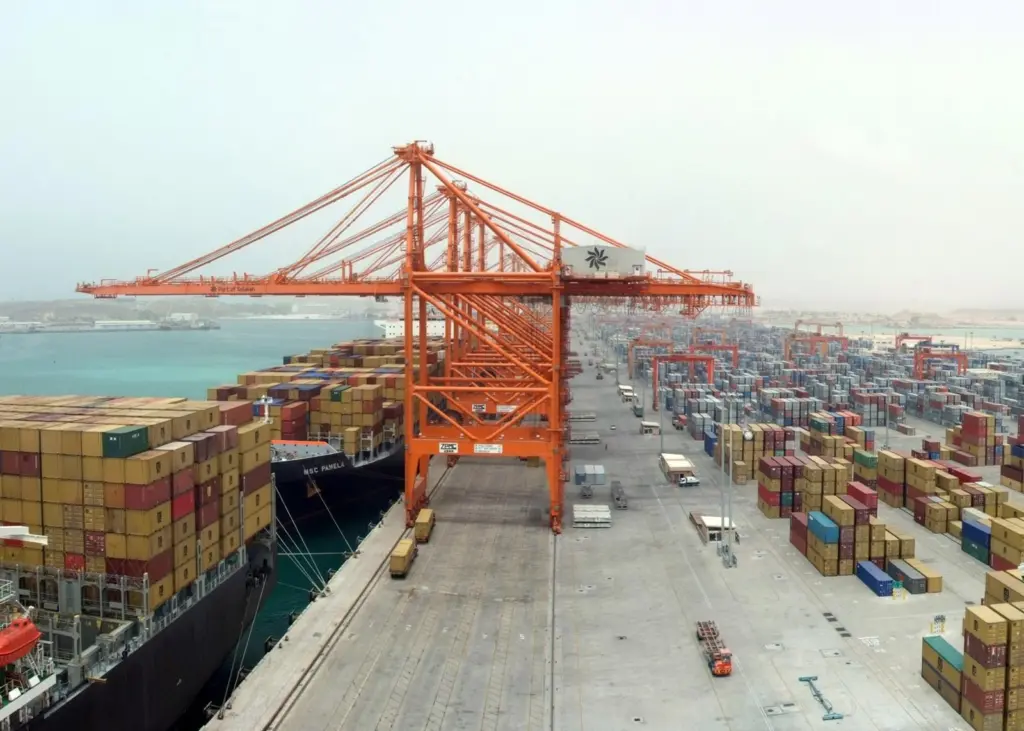
Although these lines have yet to come in, Salalah chief executive Peter Ford told Port Strategy that the port was already “in the process of negotiation with reputable feeder companies” for a solution.
Further, he says that Salalah “won’t make the mistake of looking too much at simply the size or the name on the ship” when planning the berths as this leads to blockages. “You have to look at total cargo flows, rather than simply push the bigger ships through first,” he said.
Although Salalah has reached the area’s number two spot, the Mr Ford shared a timely warning about transhipment’s Teflon qualities.
He explained to PS that despite the port’s good location on the rim of the Indian Ocean, right at the major crossroads of the east-west shipping lanes, “deepwater and location still isn’t enough”.
Initiatives to make the transhipment activity stick to the port have included working with a government initiative, the Salalah Free Zone. This benefits from a trade agreement that was signed between Oman and the US last year, and it offers to meet the distribution, material processing, and assembly market needs. “It gets the cargo in, and adds value by assemblage or processing.
“Moreover, since the local market is comparatively small, the Free Zone has realised it can take advantage of the relationship with the port to go out into other, more distant regions – which broadens cargo possibilities for all concerned.”
Related Articles
 PORT & TERMINAL NEWS
 PORT & TERMINAL NEWS
 PORT & TERMINAL NEWS