




First Liebherr cranes
Oman is getting its first ever Liebherr container cranes.
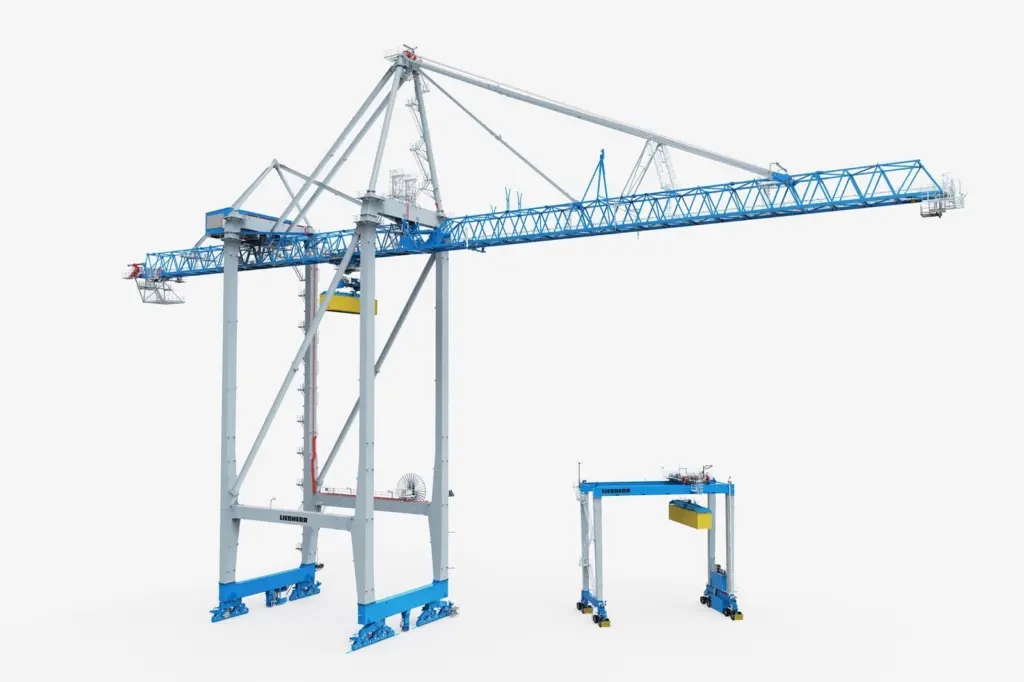
Liebherr has won a contract to supply automated, remote-controlled ship to shore (STS) container cranes and rubber tyre gantry (RTG) cranes to the greenfield Port of Duqm in Oman. The four STS cranes and 12 RTG cranes, along with remote operator stations (ROS), will be delivered in late 2022.
Gerry Bunyan, managing director – sales for Liebherr Container Cranes, said: “Liebherr are very happy to have been awarded this project in Oman. Liebherr have for many years supplied STS and RTG cranes throughout the Middle East, but these will be the first Liebherr container cranes in Oman.
“These are also our first cabinless and automated cranes in the region and we look forward to seeing the cranes being deployed, and playing the lead role in expanding the services offered by the Port.
“The new Liebherr cranes have been designed with the future in mind. Their size and the extensive automation features will ensure that the Port of Duqm will be able to efficiently, safely and predictably handle the world’s largest container vessels for many years to come.”
Ready for largest container vessels
The new STS container cranes will be capable of handling the world’s largest container vessels and feature an outreach of 71m, a back reach of 18m and a lift height over rail of 50m. The cranes have a safe working load of 65t under twinlift spreader. Supplied without a cabin the cranes will be operated utilising a combination of remote control and automation.
Automation will take care of the majority of the cycle with operator intervention only required when operating below a predefined safe height. Each Liebherr STS will be connected to its own dedicated ROS.
Mesh technology
The centrally located remote operation facility will also host the ROS for control of the automated RTGs. The cabinless RTGs feature automation over the stack with remote control only required for container pick or place from the truck trailers, or for exception handling. Four ROS operators will operate the twelve RTGs.
The diesel powered RTGs can stack eight containers and a truck lane wide and one over 6 containers high. Data communications in the container yard will be handed by a mesh network. This decentralised system sees multiple access points positioned throughout the yard providing a high speed and stable 2/4 data network delivering the required latency and high bandwidth communication necessary for remote control.
The deepwater Port of Duqm development is a greenfield project and part of the ambitious SEZAD project (Special Economic Zone of Authority at Duqm). It is being developed into an integrated, multimodal logistics hub.
Related Articles
 DIGITAL
 PRODUCTS & SERVICES
 PRODUCTS & SERVICES